









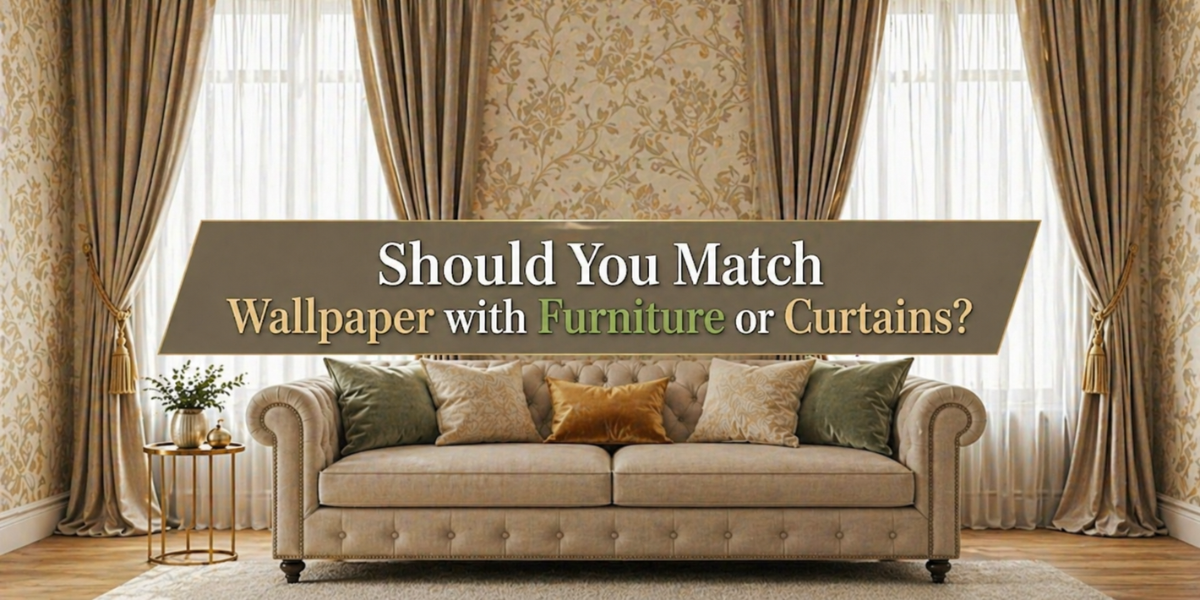
Wallpaper need not be matched exactly with either furniture or curtains. Instead, the goal is to create coordination, usually by aligning wallpaper with your main furniture first, and then using curtains to tie the entire look together.
A well-designed room comes together through the balance of wall decor, furniture, and curtains, each influencing the overall look and feel of the space.
However, many Indian homeowners struggle to decide whether to match or contrast these elements. In this blog, with insights from Magicdecor’s experts, you’ll explore combinations that work, what to avoid, and how to pair these three elements in a way that feels cohesive.
Wallpaper vs Furniture vs Curtains: What Should You Match First?
If you’re deciding what to match first, let this table help make the process easier and uncomplicated:
| Element | Which Should Come First? | Reasons Why | How to Match it? |
| Furniture | First | It is permanent and expensive | Wallpaper and curtains should complement its colour and material |
| Wallpaper | First or Second | Sets the mood and visual impact | If a bold design is used, keep the furniture and curtains subtle |
| Curtains | Last | Most affordable to change or update | Use curtains to tie together colours from both wallpaper and furniture |
The Impact of Pairing Wallpaper with Furnishings
Wallpaper has long held a decorative significance, complementing a variety of design elements in a room. From curtains and furniture to even cushions, it helps tie everything together. The impact of pairing them all are:
- The room feels put together rather than disconnected.
- The right pairing can elevate the look of the space.
- Coordinated design elements set the mood and atmosphere.
Golden Rules for Matching Wallpaper with Decor
With thousands of wallpaper designs available, choosing the right pattern to match your furniture and window dressings isn’t a child’s play. Follow our experts’ golden rules for proper matching:
-
Use the 60-30-10 Rule and Your Problem is Solved
It’s a classic decor rule that helps create a cohesive colour palette in the space. The dominant colour should be 60% overall. That includes your wall background. The 30% should be a secondary colour that supports the dominant one. And the 10% is your accent colour that you can have fun with.
-
Follow the 80/20 Rule
Another popular approach is the 80/20 rule. The 80% of your room should have a cohesive and neutral style, while the remaining 20% to trends, bold accents, and personal flair.
How to Match Wallpaper with Curtain Fabrics and Furniture
Our experts have gathered insights on how to match wallpaper with curtain fabrics and furniture:
-
Start with a Theme
First and foremost, you need to decide a design theme for your curtain fabrics and furniture, as it makes the process easier.
If you’re leaning towards a traditional aesthetic, damask or floral type wallpapers pair well with textured curtains.
Therefore, choosing a theme will give you clarity of what pattern, colour, and textures to choose.
-
Pick a Colour Palette
Next, discuss the role of colour harmony in your furniture and curtains to find the matching wallpaper.
You can choose a dominant shade, an accent tone, and a blend of tones or either go for various shades of neutrals. For instance, dark wallpaper against lighter furniture or curtains.
The aim is to achieve a cohesive design without clashing or overwhelming the space.
-
Balance of Patterns and Solids
Both furniture and curtains have distinct subtle, small, or large-scale patterns. Analyse the pattern of your curtains and windows to choose a wallpaper design accordingly.
If you have geometric-patterned curtains you can get a similar wallpaper design after considering the size. Alternatively, if your wallpaper is simple, you can opt for heavy patterned curtains for sophistication.
Ensure one element stays understated while the other makes a statement.
-
Simple to Intricate Textures
Textures bring depth and interest and collectively enhance the high aesthetics. Here’s how:
- A velvet sofa pairs well with linen or silk curtains
- A sheer or plain curtain balances a textured wallpaper.
- Leather sofas match well with matte fabric curtains.
-
Match Functionality
While focusing on colours, patterns, and textures is important, functionality should guide your choices as well.
For example, in a living room that sees guests, stunning wallpapers, rich curtain fabric, and comfortable furniture is essential. Similarly, in bedrooms, heavier curtains may be preferred for privacy and light control.
-
Lighting Impact
Natural and lighting artificial light affects how colours in the room appear. For example:
- Dark curtains make the room feel cosy but small.
- Sheer or light-coloured curtains let natural light through.
Consequently, if:
- Less amount of light reaches your room, choose wallpaper with metallic or glossy finishes and curtain textures with minimal patterns.
- If you’ve installed enough artificial lighting, dark wallpapers and heavy curtains might be a good fit for your space.
How to Match Colors Without Overdoing It
You can match the colours of your wallpaper, furniture, and curtains as long as you avoid overdoing it. Here’s how:
- Stick to a Limited Colour Palette: A simple palette of 2-3 main colours keeps the space cohesive.
- Use the 60-30-10 Rule: Distribute colours in this way:
–60% dominant colour (walls or furniture)
–30% secondary color (furniture or textiles)
–10% accent colors (curtains, cushions, decor)
- Mix Shades: Instead of matching the exact same colour everywhere, use different shades of it.
- Repeat Colours in Small Doses: Pick one colour from your wallpaper and repeat it lighting in cushions, curtains, or decor.

Bold vs Subtle: Choosing the Right Pattern
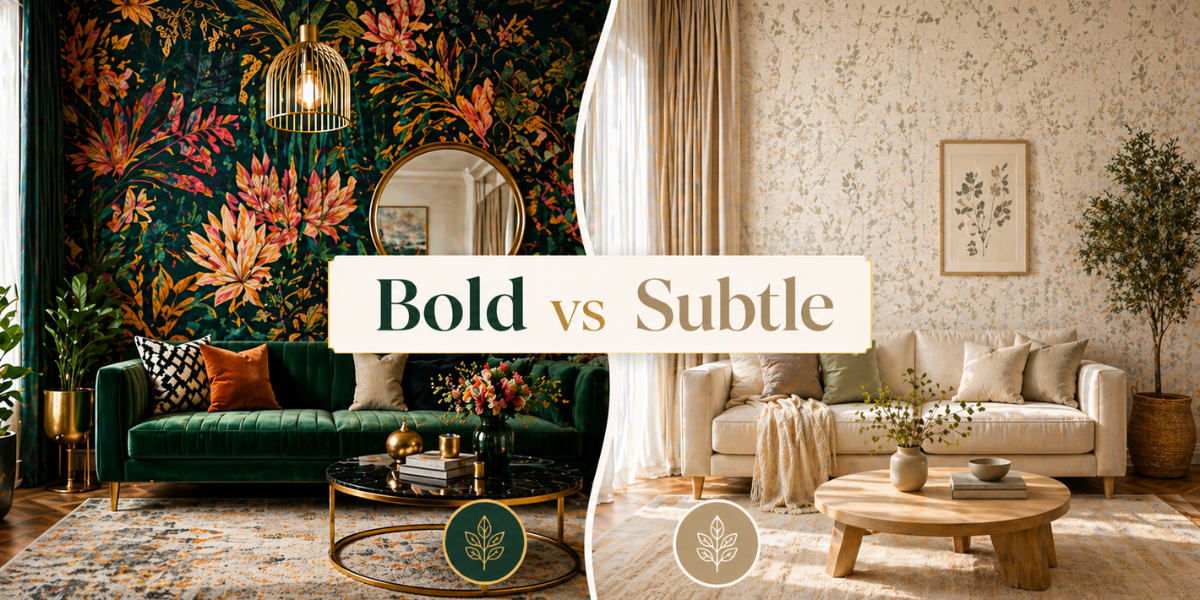
If you’ve spent time scrolling through Pinterest boards, you’ve probably seen homes experimenting with bold, colour-infused wallpapers as well as soft, understated palettes. But you aren’t sure which among the two is right for your space. Let us help:
- When to Go Bold
–Ideal for feature walls or statement walls.
–Works best when furniture and curtains are kept simple.
–Strong prints, large motifs, or vibrant colours to create a focal point.
- When to Keep it Subtle
–Perfect for smaller rooms or low-light spaces.
–Soft textures, pastels, or minimal prints.
–Allows more flexibility with furniture and curtain choices.
How Lighting and Room Size Affect Your Choices?
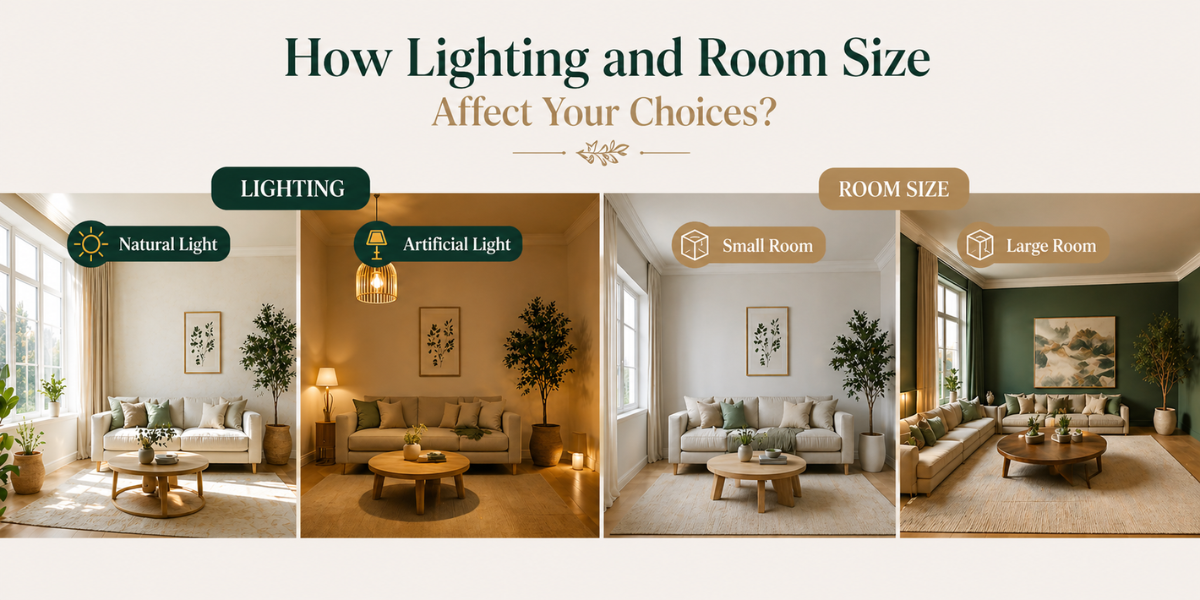
Lighting and room size does, in fact, affect your choices on curtains, wallpaper, and furniture. Here’s an understanding of its impact:
-
Small Rooms
- Wallpaper: Opt for light-coloured and minimal patterned wallpaper.
- Furniture: Choose sleek and space-saving furniture.
- Curtain Fabric: Go for sheer or light curtains to let natural light in.
-
Large Rooms
- Wallpaper: Darker colours and bold patterns for depth and dimension.
- Furniture: Large and statement furniture pieces.
- Curtains: Layers or heavier curtains with rich fabrics.
-
Natural Light
- Wallpaper: You can experiment with darker shades or bold prints.
- Furniture: Soft furnishings and textures.
- Curtains: Heavy curtains or blinds to control excessive light.
-
Low-Light Rooms
- Wallpaper: Stick to lighter shades and reflective finishes.
- Furniture: Avoid dark furniture.
- Curtains: Light, airy curtains
Matching Based on Interior Design Styles
-
Traditional and Classic
- Opt for classic wallpaper patterns like florals, damask, or subtle stripes.
- Match wallpaper with wooden furniture and textured curtains.
- Use rich colours like beige, gold, or deep greens.
- Keep fabrics slightly luxurious yet timeless.
-
Modern and Minimalism
- Stick to neutral or monochrome colour palettes.
- Choose plain or very subtle textured wallpaper.
- Pair with sleek, multifunctional furniture pieces.
- Curtains should be sheer and light.
-
Bohemian and Eclectic
- Mix patterns, colours, and textures freely.
- Use landscape or abstract wallpapers as a bold and artistic backdrop.
- Combine different fabrics and prints in furniture and curtains.
-
Contemporary
- Experiment with geometric or abstract wallpaper designs.
- Style neutral furniture.
- Use curtains to soften or balance strong design colours.
Role of Furniture Material and Finish
The material and finish of your furniture play a crucial role in how well your wallpaper and curtains come together. Here are some furniture materials and finishes:
- Wooden Furniture: Natural wood tones work best with earthy, muted, or textured wallpapers. Dark wood also pairs well with classic prints.
- Glossy and Polished Finishes: Furniture with glossy or polished finishes tends to reflect light, making it ideal for pairing with matte wallpapers.
- Metal and Modern Materials: Materials like chrome, matter, or iron suit geometric and contemporary wallpaper designs.
- Fabric Materials: Sofas and chairs with fabric upholstery should either complete or subtly contrast the wallpaper.
- Matte Finishes: Matte furniture finishes create a soft and understated look and pairs well with bold or detailed wallpapers.
Real-Life Matching Scenarios
Now, let’s look at some real-life wallpaper-furniture-curtains combinations below:
-
Cohesive Neutrals with Light Contrast
Image Credits: Design Cafe
This setup uses a cohesive neutral palette where wallpaper, curtains, and furniture stay within the shades of beige and brown. The wallpaper features a soft geometric pattern while the curtains are kept in a slightly different tone of beige. Meanwhile, the furniture is in a greyish-beige shade.
Why it Works:
The variation in tones within the same colour family prevents the space from looking monotonous.
Tip:
When working with neutrals, mix different shades and add one element with a statement pattern.
-
Overloaded Patterns
Image Credits: House of Hackney Fabric
This setting features heavily patterned curtains, floral upholstered furniture with a similar half panel wallpaper design. While each element reflects a traditional and classic style, combining multiple bold patterns creates visual clutter.
Why it Doesn’t Work:
Every element competes for attention and there is a lack of contrast that makes the space overwhelming.
Tip:
When working with bold or traditional patterns, limit them to one or two elements and balance the rest with subtle textures.
-
Statement Wallpaper with Balanced Elements
Image Credits: Homes and Gardens
This combination highlights a statement, full-room wallpaper coverage that immediately draws attention and sets the tone for the entire space. To balance this, the curtains and furniture are kept minimal in the same undertone as the wallpaper.
Why it Works:
The strong visual impact of the wallpaper is softened by the use of light and minimal curtains and furniture.
Tips:
When using statement wallpaper, keep surrounding elements like curtains and furniture in lighter, simpler tones to let the wall stand out.
-
Statement Wallpaper with Light Wooden Furniture
Image Credits: Asian Paints
This wallpaper-furniture-curtain combination features a statement wallpaper with light wooden furniture and soft, airy curtains. The wallpaper acts as a focal point, while the light wood tones of the furniture bring in warmth. The light and sheer curtains allow natural light in, preventing the room from feeling closed in.
Why it Works:
The contrast between the wallpaper and the light, natural elements keep the space inviting, bright, and comfortable.
Tips:
When pairing statement wallpaper with wooden furniture opt for lighter wood finishes and breathable fabrics in small rooms.
Common Mistakes to Avoid
These common pitfalls should be avoided to prevent unbalanced matching of design elements:
- Using bold wallpaper with bold furniture.
- Choosing dark-colored and heavy-patterned wallpaper in smaller rooms.
- Using thick, patterned curtains in low-light rooms.
- Not matching wallpaper texture with furniture finish–heavy textures with neutral furniture.
- Overmatching everything in the exact same colour.
Magicdecor’s Expert Tips for Perfect Pairing
Here are some tips our experts recommend for achieving the perfect pairing:
- Start with a dominant element–furniture– and build around it instead of trying to match everything at once.
- Stick to a cohesive colour palette and pick undertones.
- Mix patterns carefully by pairing bold design with subtle elements.
- Use textures and small accents to tie wallpaper, furniture, and curtains together.
Wallpaper Matching Checklist
- Choose a clear colour palette with 2-3 main shades.
- The wallpaper should complement the tone and finish of your furniture.
- Curtains should tie the entire room together.
- Avoid overloading all three elements with heavy patterns and the same colour.
- Match the combination with room size and lighting.
- Keep the undertones consistent throughout all elements.
FAQs
- Should wallpaper match the sofa or the curtains?
Not necessarily in the same colour. They can be matched in varied undertones of one dominant colour to create cohesiveness and contrast.
- Can I mix different patterns in wallpaper, furniture, and curtains?
Yes, but balance is key. Combine one bold pattern–wallpaper– with more subtle elements–light curtains or furniture– with one common linking colour.
- How do I choose between a statement wall and statement furniture?
It’s best to let only one element stand out. However, your personal preference wins, so you can choose both, provided you style them in a balanced manner.
- Should curtains always be lighter or darker than the wallpaper?
There’s no fixed rule, but curtains usually work best when they either soften a bold wallpaper with lighter tones or add depth to a light wall. Similarly, if the room is low-light, it’s best to opt for lighter curtain fabrics.










 Material Preview
 Digital Snapshot
 Design Selection
