









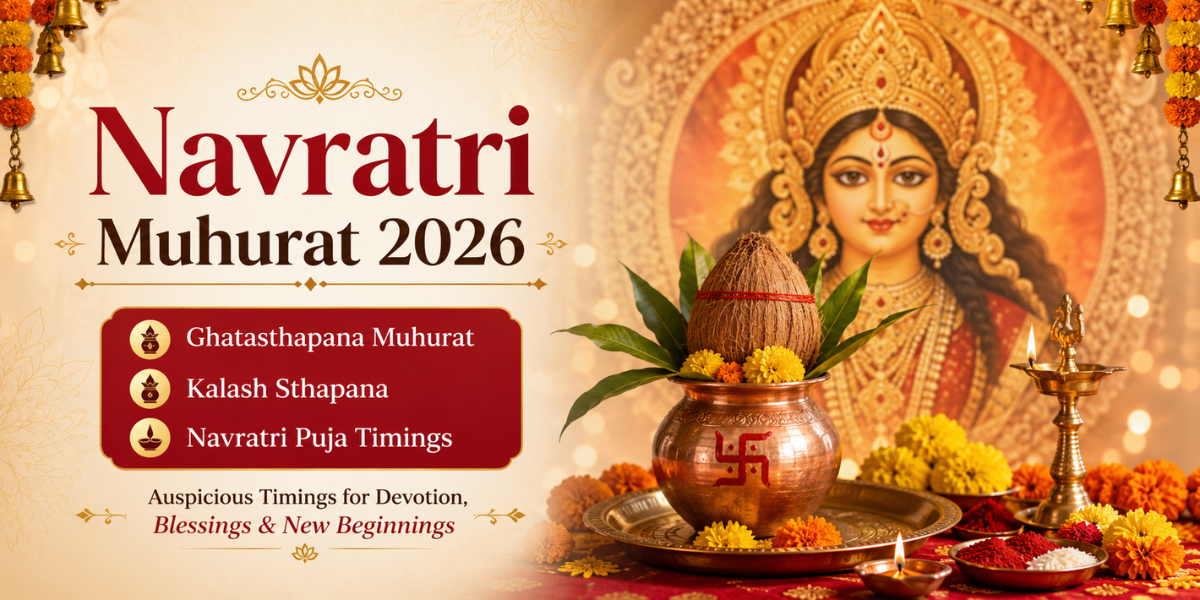
Every year, Navratri begins not with the first garba night or festive decorations, but with an auspicious moment that sets the tone for the celebrations ahead. Choosing the right Ghatasthapana muhurat is an important part of welcoming Goddess Durga and observing the festival according to tradition.
In this guide, you’ll find the Navratri muhurat 2026, along with key dates, timings, and rituals to help you celebrate meaningfully.
What is Navratri?
Navratri is a 9-day festival dedicated to honouring Goddess Durga, celebrating her victory over evil with prayers, fasting, and Garba dance. The festival lasts for nine days, during which various forms of the Devi are worshipped with colours associated with each day. While practices vary across regions, the festival has three phases: the first part focuses on Goddess Durga, the second part on Goddess Laxmi, and the final part centres around Goddess Saraswati.
Navratri 2026: Ghatasthapana Muhurat, Date & Puja Timings
Here’s the full table showcasing all the Ghatasthapana muhurat, date, and puja timings:
| Date | Sunday, October 11, 2026 |
| Tithi | Pratipada |
| Pratipada Tithi Starts | 09:19 PM on Oct 10, 2026 |
| Pratipada Tithi Ends | 09:30 PM on Oct 11, 2026 |
| Ghatsthapana Shubh Muhurat | 06:19 AM to 10:12 AM on Oct 11, 2026 |
| Ghatsthapana Abhijit Muhurat | 11:44 AM to 12:31 PM on Oct 11, 2026 |
What is Ghatasthapana and Why is it Important?
Ghatasthapana, also known as kalash sthapana, is one of the significant rituals that marks the beginning of the 9-day Navratri festival. It is the invocation of Goddess Shakti, and as per the Scriptures, doing it at the wrong time might bring Goddess Shakti’s wrath.
In order to receive the heavenly blessings from all the forms and manifestations of Lord Durga, Ghatasthapana is very important.
Navratri Puja Samagri Checklist
Here’s a list of everything you need for the Ghatasthapana samagri:
For the Kalash
- Brass or copper Kalash (pot)
- Clean water–Gangajal
- 5 mango leaves
- A whole coconut (with husk)
- Red cloth to wrap the coconut
- Mauli/ Kalawa sacred thread
- A coin (silver or any)
- Betul nut
- Akshata (rice mixed with turmeric)
For the Base and Puja
- A clay or wooden plate
- Red cloth for the chowki
- Maa Durga photo or idol
- Ghee diya
- Chandan or gulab incense sticks
- Fresh flowers (preferably red hibiscus)
- Bhimseni camphor for aarti
Step-by-Step Ghatasthapana Vidhi
The window for Ghatasthapana opens at 6:52 AM, so ideally be prepared by 6:30 to begin the vidhi:
- Preparation for Ghatasthapana
Begin preparing for the festival by cleaning the puja space an evening before. Gather all the puja thali essentials and sprinkle a little Gangajal around the space to purify it. In the morning itself, spread a clean red cloth on the chowki where you’ll place the kalash and set up Goddess Durga’s idol in the centre.
- Setting up the Kalash
Fill the brass or copper kalash with clean water. Add a silver coin, a few grains of akshat, a betul nut, and a small amount of sandalwood powder. Tie the Mauli thread around the neck of the pot to seal the energy inside. Arrange some mango leaves around the rim.
- Place the Coconut
Wrap a coconut in a red cloth to represent the head of the Goddess herself. The coconut should face you and that’s when the kalash begins to take the form of the divine mother.
- Invoking Goddess Durga– Sthapana
During the muhurat windows—6:52 AM to 7:43 AM—place the kalash on the seed bed. Chant the mantra of day 1’s Goddess, Maa Shailputri to invite her divine blessings.
- Light the Akhand Jyot
Immediately after the installation, light a ghee diya near the kalash. Ideally, the diya should stay lit for the entire duration of 9 days—this is called Akhand Jyot.
- Offering Bhog and Performing the Morning Aarti
Offer fresh flowers, fruits, and Day 1’s bhog. Light incense sticks and perform the aarti using your panch deep diya.
Ghatasthapana Dos and Don’ts
Here are some do’s and don’ts to observe during the festival period:
Do’s
- Do perform Ghatasthapana during the auspicious time on the first day on Navratri.
- Do ensure the puja space is tidy and spiritually prepared before setting up the kalash.
- Do perform aarti, offer flowers and prasad, and maintain a peaceful atmosphere throughout the 9 days.
Don’ts
- Don’t perform the ritual outside the auspicious muhurat.
- Avoid using damaged or uncleaned puja items.
- Avoid unnecessary arguments or negative behaviour during the festival.
Day-wise Goddess Worship During Chaitra Navratri

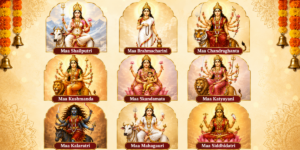
Here’s a breakdown of each Goddess worshipped on each of the nine-day Navratri festival:
- Day 1: Maa Shailputri (Goddess of Mountain)
The first day is dedicated to Maa Shailputri, the daughter of the King of mountains, Himavat. She is depicted riding a bull and holding a trident and a lotus flower. Worshipping her helps in establishing a strong spiritual foundation.
- Day 2: Maa Brahmacharini (Goddess of Penance)
On the second day, we worship Goddess Brahmacharini whose name literally translates to “she who practices penance”. Depicted walking barefoot, holding a rudraksha mala in one hand, and a kamdalu pot in the other, she signifies self-control and wisdom.
- Day 3: Maa Chandraghanta (Goddess of the Bell)
The third day of Navratri is for Maa Chandraghanta. She gets her name from the half-moon shape on her forehead that resembles a bell. She is often depicted with ten arms, holding many weapons, and sitting on a tiger.
- Day 4: Maa Kushmanda (Cosmic Creator)
On the fourth day, devotees worship Maa Kushmanda, the creator of the universe. She is believed to reside at the core of the sun, controlling its heat and light. Her energy is important for bringing life into existence.
- Day 5: Maa Skandamata (Mother or the War God)
The fifth day belongs to Maa Skandamata, the mother of Lord Skanda (Kartikeya). She is depicted with four arms, holding an infant in her lap while being seated on a lotus. She is the epitome of maternal love and pure compassion.
- Day 6: Maa Katyayani (Radiant Warrior)
The sixth day is dedicated to Maa Katyayani, a fierce warrior incarnation of Lord Durgaa. She symbolises the destruction of ego and negative forces, making her a crucial deity for unmarried individuals.
- Day 7: Maa Kalaratri (The Fierce Destroyer)
On the seventh day, devotees celebrate Maa Kalaratri, revered as the fierce destroyer of evil and darkness. Worshipping her grants protection and fearlessness from calamities.
- Day 8: Maa Mahagauri (Symbol of Purity)
On the eighth day, devotees celebrate Maa Mahagauri, also known as Maha Ashtami. Worshipping her washes away all past sins and cleanses the devotees’ mind.
- Day 9: Maa Siddhidatri (Giver of Perfections)
The final day of Navratri is devoted for Maa Siddhidatri, also known as Maha Navami, the supreme giver of perfections. She is depicted as being seated on a lotus holding a Chakra, conch, and mace. Worshipping her marks the conclusion of the nine-day fast.
Navratri 2026 Nine-Day Colour List
Here’s a comprehensive table on the 9-day colour journey of Navratri, what each colour represents, and the Goddess associated with each day:
| Day | Date | Colour | Goddess | Significance |
| Day 1 | Oct 9 | Yellow | Shailputri | Energy and positivity |
| Day 2 | Oct 10 | Green | Brahmacharini | Growth and peace |
| Day 3 | Oct 11 | Grey | Chandraghanta | Courage |
| Day 4 | Oct 12 | Orange | Kushmanda | Happiness |
| Day 5 | Oct 13 | White | Skandamata | Purity |
| Day 6 | Oct 14 | Red | Katyayani | Power |
| Day 7 | Oct 15 | Royal Blue | Kalatari | Protection |
| Day 8 | Oct 16 | Pink | Mahagauri | Compassion |
| Day 9 | Oct 17 | Purple | Siddhidatri | Wisdom |
Navratri Fasting Rules and Rituals
Here are some Navratri fasting rules and rituals:
- Avoid grains such as wheat and rice.
- Steer clear of lentils and legumes.
- Use flours like buckwheat, rajgira, and singhara for cooking.
- Eat fast-friendly food like fruits, vegetables, nuts and seeds, and dairy products.
Navratri Decoration Ideas for Your Home
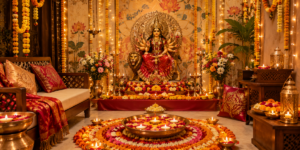
Here are some simple but effective decoration ideas that will have your home shining and glowing for Navratri:
- Magnificent Maa Durga’s Idol: Bring a beautiful idol of Maa Durga and decorate the space around the puja room with flowers, lights, and fragrance.
- Gold Metal Urli Bowl: Fill a metal urli bowl with fresh flowers and scented candles to welcome guests and create a festive atmosphere in your home.
- Festive Wallpapers: Adorn the plain walls of your home or puja room with spiritual or festive wallpaper designs that puts everyone in a festive mood.
- Vibrant Furnishings: Use silk or brocade fabrics for your curtains and swap plain cushion covers for embroidered ones for an affordable festive makeover.
- Flower Garlands: Place large floral arrangements at the entrance of your home or the mandir space.
Final Thoughts
Navratri is a celebration of faith, strength, and new beginnings, and observing its ritual at the right muhurat. Whether you’re performing Ghatasthapana at home, observing fasts, or taking part in community celebrations, planning ahead can help you celebrate each day with devotion and peace of mind. May the nine divine nights bring prosperity and blessings to you and your family.
FAQs
- When is Navratri in 2026?
Navratri will be celebrated on Sunday, 11 October 2026, which falls on the Pratipada tithi.
- When is the puja time for Navratri 2026?
The most auspicious time for puja is the Shubh Muhurat, which is approximately 06:19 am to 12:00 PM on 11 October 2026.
- Is it necessary to fast on all 9 days?
Not necessarily no. You can either choose to fast on the first day, fifth day, or the eighth day. Some devotees choose to fast on the first and last day.
- What are the essential items required for Navratri puja?
Common puja essentials include a kalash, coconut, mango leaves, red cloth, kumkum, incense sticks, fruits, diya, sweets, and an idol or an image of Goddess Durga.








 Material Preview
 Digital Snapshot
 Design Selection
