









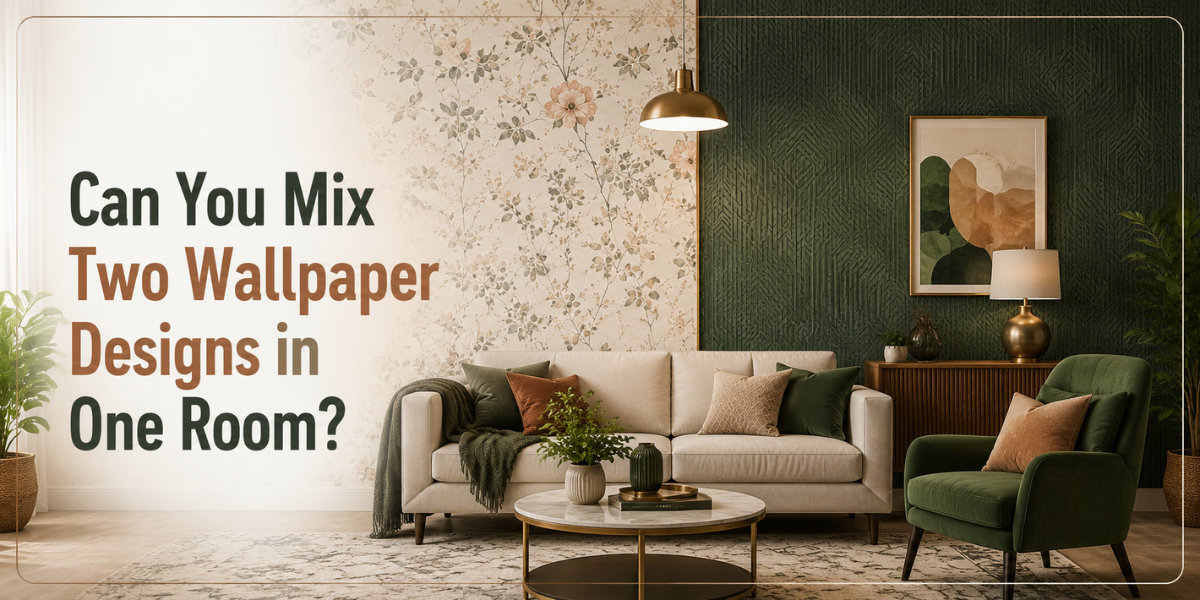
Yes, you can mix two wallpaper designs in one room. When paired thoughtfully, both wallpapers add depth, visual interest, and texture within the same space.
Thinking about using two wallpaper designs in the same room but unsure how to make them work together? While mixing wallpaper patterns can create a striking, designer-inspired interior, choosing the wrong colours or patterns can make the whole project go haywire.
Therefore, in this blog, our experts share practical tips on how to combine two different wallpaper designs in one room with confidence, helping you create a room that feels bold and balanced.
Why Mix Wallpaper Designs in One Room?
Combining two different wallpaper designs in one room adds character and dimension. It’s an interior design technique that has been gaining momentum, and for good reasons:
- It helps create ‘zones’ in open layouts and gives them their own character.
- It highlights architectural features like alcoves, niches, and accent walls.
- It allows you to experiment with multiple aesthetics in one room.
How to Mix Two Wallpaper Designs Without Overwhelming the Room
Confidently embrace two wallpaper designs in a room, here are some practical steps to follow:
- Define a Colour Scheme
Before you start browsing patterns, you should definitely take a look at colour choices. Choose a shared colour scheme to make multiple wallpaper patterns feel like they belong together. For example, if you fall in love with a floral design in earthy tones, try pairing it with a pattern that shares similar tones.
- Play with Pattern Scale
The success of mixing two patterns successfully? Contrasting pattern scales. Pair large-sized patterns with a more delicate, minimal design. This way, the patterns don’t compete with each other and balance the room really well.
- Establishing Design Theme
Another detail to remember when mixing two wallpaper patterns in a room is sticking to one interior design theme. Ensure the patterns are in one theme so as to avoid the risk of creating a busy room.
- Create Purposeful Zones
In order to avoid overwhelming the room with a lot of patterns, try to use one pattern to define a space. For instance, try wallpapering one section of the room–behind the bed or inside a reading nook.
- Let Texture be a Pattern Too
Both the wallpaper choices you pick need not have patterns. You can mix one heavily-patterned design with a textured one–like faux grasscloth or concrete– for a more subtle, layered effect.
Wallpaper Combinations That Work Well Together
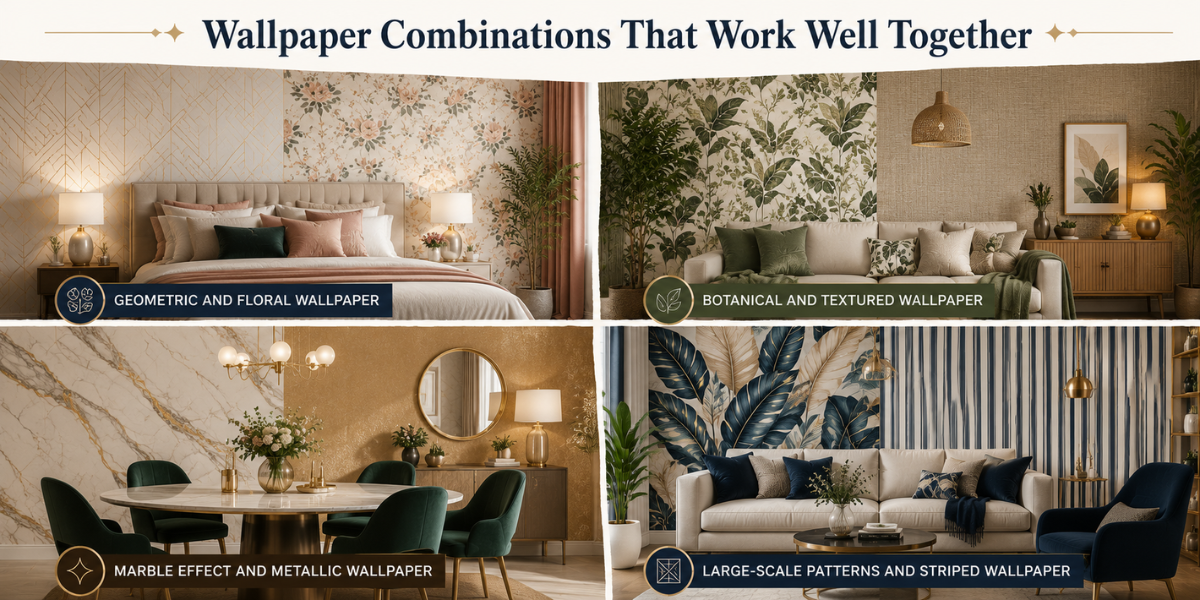
Here are some popular wallpaper combinations to try in a room:
- Geometric and Floral Wallpaper
The clean, structured lines of geometric wallpaper balance the softness of floral patterns. This combination works especially well in modern, Scandinavian, and contemporary interiors.
- Botanical and Textured Wallpaper
Paring botanical wallpaper with textured design, such as grasscloth-effect or concrete, creates a layered interior. While botanical print brings beauty and colour, textured wallpaper brings texture and depth.
- Marble Effect and Metallic Wallpaper
Marble or stone-effect wallpaper offers a timeless, luxurious foundation, while metallic wallpapers featuring gold or silver accents add a refined touch of glamour. Together, they create a sophisticated look that works well in dining and living rooms.
- Large-Scale Patterns and Striped Wallpaper
Large-scale wallpaper designs, whether they feature oversized florals, tropical leaves, or abstract art, pair really well with striped wallpaper. Together, they create a statement that works particularly well in contemporary and modern spaces.
How to Coordinate Colours When Mixing Wallpapers
If you’re finding it difficult to decide which wallpaper colours will work well together, don’t worry. Here are a few simple design principles that make the process so much more easier:
- Start with a Dominate Hue
If you’re fallen in love with a wallpaper, suppose say with dusty pink, let that dominant colour guide your second wallpaper choice for a naturally coordinated look.
- Match Background Tones
Even if the patterns differ, choosing wallpapers with similar background colours creates a seamless, cohesive design that feels intentional rather than mismatched.
- Mix Patterned and Plain Wallpapers
You don’t need two bold patterns to make an impact. Pair a statement print with a textured or subtle plain wallpaper to create balance.
- Repeat an Accent Colour
Pick one accent colour–such as green, navy, or gold–and ensure it appears in both wallpapers. This simple connection helps tie the designs together beautifully.
Should Both Wallpapers Be the Same Material?
Not necessarily. While using the same wallpaper material can create a more consistent finish, different materials can also work well. Here’s how:
- Using the same material ensures consistent texture, durability, and installation.
- Mixing different materials can offer depth and contrast, provided the colours and patterns complement each other.
- If one wall experiences more traffic than the rest.
Accent Wall vs Full-Room Wallpaper Combinations
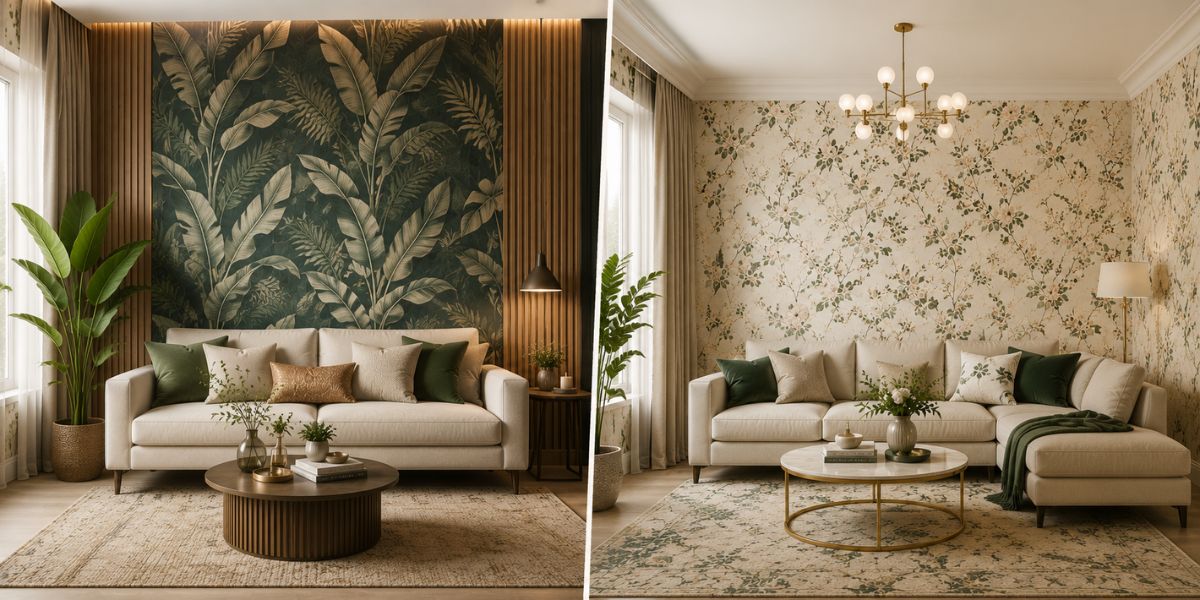
Let’s look at the table below to understand which wallpaper combinations is ideal for your space:
| Accent Wall Combination | Full-Room Wallpaper Combination |
| A bold wallpaper is used on a single accent wall, while a subtle one is applied to remaining walls | Two subtle wallpapers are used throughout the room |
| Creates a strong focal point | Creates a more immersive experience |
| Easier to coordinate with furniture and decor | Demands more attention to colour palettes |
| Best for bedrooms, living rooms, and dining areas where one wall deserves emphasis. | Best for open-plan spaces and rooms with architectural features |
Ideal Wallpaper Placement Ideas
The placement of each wallpaper is just as important as the designs themselves. Position them in the following ideal areas:
- Create an Accent Wall: Use the bolder wallpaper on one accent wall and a subtle design on the remaining walls for a cohesive look.
- Highlight Architectural Features: Apply a contrasting wallpaper inside alcoves, around fireplaces, or within wall panels to draw attention to these details.
- Define Different Zones: In open-plan rooms, use different wallpapers to visually separate areas such as the dining, living, or workspace.
- Frame Key Furniture Pieces: Place a statement wallpaper behind the bed, sofa, or dining table, and use the other wallpaper on surrounding walls.
How to Match Wallpaper with Furniture and Decor
To successfully match the wallpapers with your furniture and decor, here are some steps and tips you need to consider:
- Let One Wallpaper Take the Spotlight
If one wallpaper features a bold pattern, keep larger furniture pieces in neutral colours so the room doesn’t feel visually crowded.
- Echo Colours from Both Wallpapers
Choose cushions, rugs, curtains, or artwork that incorporate colours found in each wallpaper. This helps connect the two designs into one cohesive scheme.
- Coordinate Furniture Finishes
Whether your furniture is wood, metal, or upholstered, stick to one or two consistent finishes throughout the room to maintain visual harmony alongside the mixed wallpapers.
- Use Decor to Bridge the Designs
Decorative pieces such as vases, throws, lamps, or wall art can blend colours and textures from both wallpapers, making the transition feel natural.
Common Mistakes to Avoid
Avoid these common mistakes when mixing two wallpapers in a room:
- Using two bold, competing patterns that fight for attention instead of creating balance and harmony.
- Ignoring the room’s colour palette, resulting in wallpapers that clash with the furniture and decor.
- Mixing too many colours or styles without a unifying element to tie the designs together.
- Overlooking the room’s size and lighting, which can make mixed wallpapers feel overwhelming in the space.
How Magicdecor Helps You Pair Wallpaper Designs with Confidence?
Magicdecor offers help in the following ways:
- Our extensive collection of wallpaper designs makes it easy to find wallpapers that work beautifully together.
- Whether you prefer non-woven or textured wallpaper, we offer options that suit your room’s requirements and personal style.
- Our professional installation services ensure both wallpaper designs are applied seamlessly and precisely.
- With our paid design assistance and custom-sizing, you can create your own personalised interior.
FAQs
- Can you use two different wallpapers in one room?
Yes, you can use two different wallpapers in one room as long as they complement each other in colour, pattern, or style.
- How do you match two wallpaper patterns?
Pair one bold pattern with a subtle design, maintain a cohesive colour palette, and repeat common accent colours to create a harmonious look.
- Where should you place two different wallpapers in a room?
A popular approach is to use one wallpaper on an accent wall and the other on the remaining walls. You can also use different wallpapers to highlight architectural features or define separate zones.
- Can you mix two different wallpaper materials?
Yes, you can mix wallpaper materials, but they should be suitable for the room’s conditions and ideally have similar durability and finishes.










 Material Preview
 Digital Snapshot
 Design Selection
