









Realistically, wallpaper lasts anywhere between 5-7 years. However, if high-quality, durable material is chosen, it is well-maintained, and professionally installed, then it can last up to 15 years.
From heavy rainfall in tropical zones and dry humidity in desert areas to scorching summers in sub-tropical zones, India is a land of many diverse weather conditions. This variation in weather conditions may make you think twice before installing wallpaper instead of paint.
Therefore, to learn more about the durability of wallpaper in Indian homes, the factors that affect longevity, and whether it’s worth installing in your home or not, read this blog below.
Average Wallpaper Lifespan by Material
Let’s first take a look at the lifespan of wallpaper based on the material:
-
Vinyl-Based Wallpaper
Vinyl-based wallpaper material is one of the best and practical choices for Indian homes because its protective surface resists moisture, stains, and everyday wear. It can last up to 10 years.
-
Non-Woven Wallpaper
Non-woven wallpaper is considered the second-best option for Indian homes because its breathable structure can last 10-15 years.
-
Textured Wallpaper
Textured wallpaper is often used to create a luxurious and visually rich atmosphere in interiors. The average lifespan of a textured wallpaper is somewhere between 10 to 15 years.
How Indian Climate Affects Wallpaper Lifespan
India’s diverse climate influences how well wallpaper performs over time.
- High Humidity and Monsoons: India receives plenty of rainfall that can cause moisture to build up in walls, which leads to wallpaper edges lifting or adhesive weakening.
- Long Intense Summers: Most Indian regions experience intense summers that gradually cause the wallpaper to peel.
- Dust and Pollution: In many Indian cities and towns, dust settles on wall surfaces and objects daily.
Factors That Affect Wallpaper Longevity
The lifespan of a wallpaper often boils down to the following factors:
-
Climate and Humidity
High humidity and moisture can weaken the adhesive causing it to bubble, peel, and grow mould. Weather conditions in India, especially during the monsoons, may lead the wallpaper to peel faster. In some cases, a lack of proper ventilation also affects wallpaper longevity.
-
Wallpaper Materials
Choosing the wrong type of wallpaper material for the room also affects the lifespan. Choosing traditional, paper-based wallpaper for kitchens and bathrooms is not ideal as it does not resist water and moisture.
-
Surface Preparation and Installation
The way the wall surface is prepared and the wallpaper is installed greatly impacts the longevity. If the wallpaper surface is not smooth or primed before installation, even high-quality wallpapers fail to perform well.
-
Maintenance and Cleaning
Neglecting to maintain and regularly clean the wallpaper surface can significantly reduce its lifespan. Failing to care for it allows dirt, moisture, and sunlight to permanently damage the surface and weaken the adhesive.
How Various Rooms Affect Wallpaper Lifespan
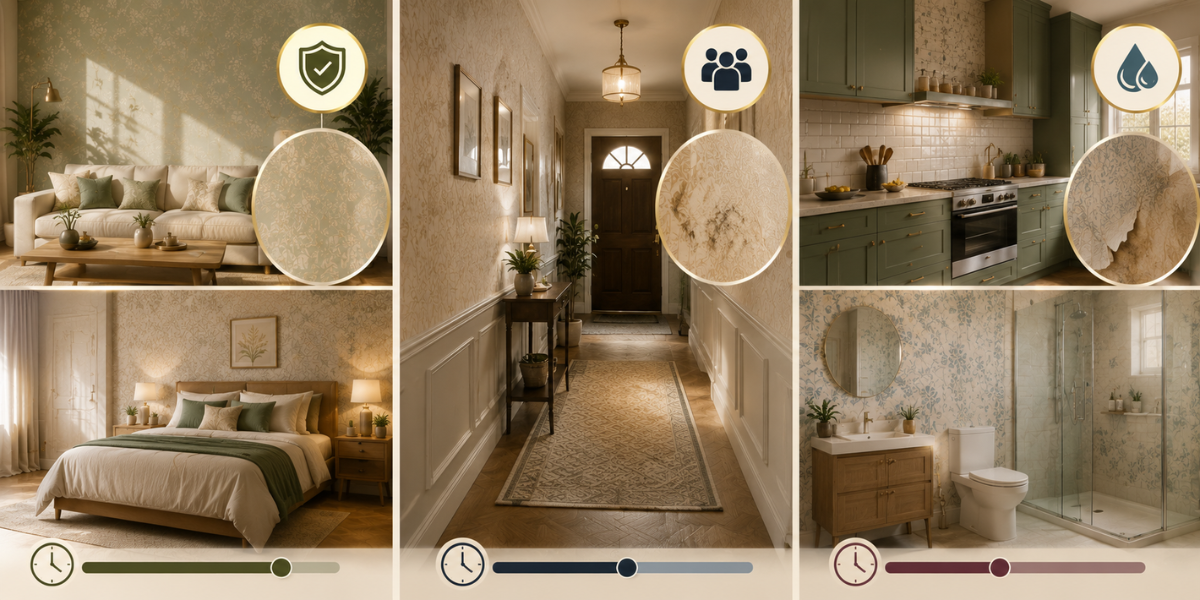
Various rooms affect the longevity of wallpaper due to environmental conditions and amount of traffic.
-
Living Rooms and Bedrooms
Wallpaper is believed to last 10-15 years in living rooms and bedrooms as they are low-traffic areas with moderate humidity. The risk wallpapers have is the exposure to constant sun.
-
Hallways and Entryways
Hallways and entryways are high-traffic areas in Indian homes that are often subjected to bumps, greasy handprints, and scuffs. The wallpaper, in these areas, may last up to 5-7 years.
-
Kitchens and Bathrooms
In Indian homes, the kitchen and bathroom are the most used places, often experiencing a lot of traffic. Therefore, the wallpaper in these areas may last up to 2-5 years because humidity, heat, and physical wear weaken the adhesive.
Environmental Factors That Influence Wallpaper Lifespan
These environmental factors also play a role in reducing the lifespan of a wallpaper:
- Humidity and Moisture: High humidity and moisture speedily soften adhesive grip, causing the wallpaper to peel, bubble, and grow mould.
- Direct Sunlight: Prolonged exposure to sunlight can cause the wallpaper to discolour, fade, and embrittle.
- Indian Weather Conditions: Extreme swings in temperature due to India’s diverse weather conditions causes the wallpaper physical stress, leading to peeling seams.
- Ventilation: Inadequate airflow or ventilation threatens the life of a wallpaper as it traps humidity and moisture.
Does Wallpaper Quality Affect How Long It Lasts?
Yes, and no. Wallpaper quality certainly plays a role in how long it lasts, but it isn’t the only factor that determines its lifespan. Budget-friendly wallpapers are generally more prone to tearing, peeling, and showing signs of wear. Premium wallpapers, on the other hand, are made with more durable materials that resist fading, hide wall imperfections, and maintain their appearance for many years.
However, even high-quality wallpaper won’t last if it is installed on an unprepared wall, applied incorrectly, or exposed to excessive moisture or poor indoor conditions.
How to Choose the Right Wallpaper for Indian Homes
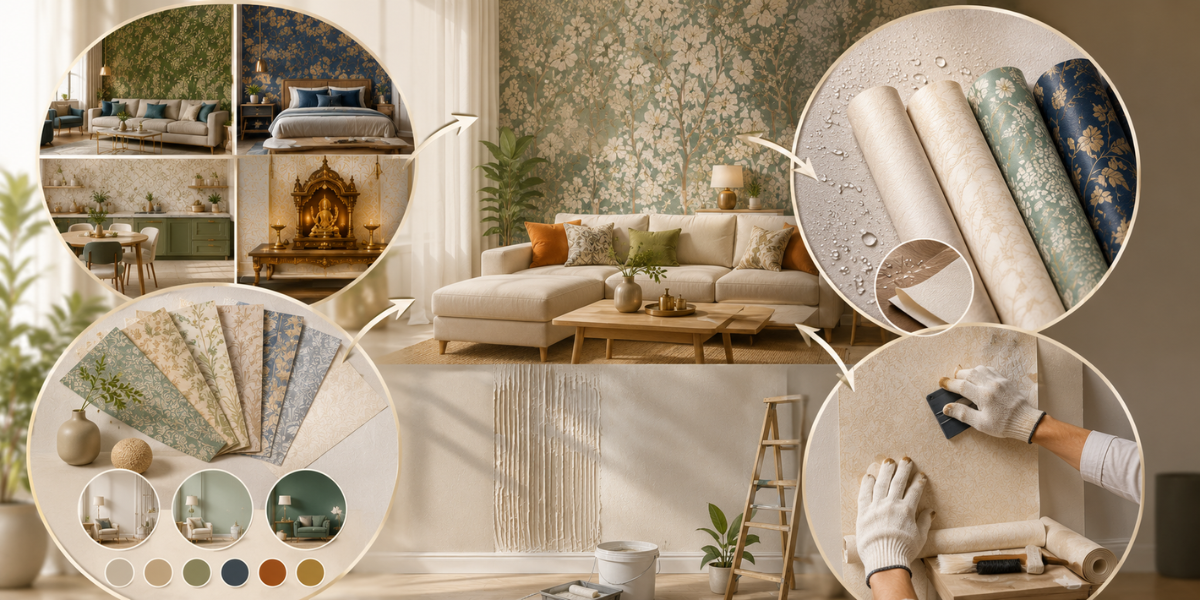
Here are some steps on how to choose the right wallpaper for your home:
-
Room-Wise Selection
The pattern, colours, and material you choose should depend on the room’s function. For instance, living rooms should have vibrant colours and non-woven material to draw attention, while kitchens should have playful patterns with humidity-resistant material.
-
Choosing the Wallpaper Material
The material of the wallpaper you’re choosing should be lasting, tear-resistant, and easy to maintain. Non-woven and vinyl-based options are the perfect pick for Indian homes and weather conditions.
-
Colour and Pattern Selection
Depending on the size of the room and the amount of natural light it receives, choose a wallpaper pattern and colour accordingly. For compact rooms, light colours and minimal patterns are beneficial and vice versa for large rooms.
-
Wall Preparation and Installation
Proper wall preparation and installation is just as important as wallpaper selection. Make sure the walls are dry, smooth, and free from cracks. Otherwise, there are chances of peeling and bubbling. For more assurance, choose professional installation services instead of DIY.
How to Extend the Lifespan of Your Wallpaper
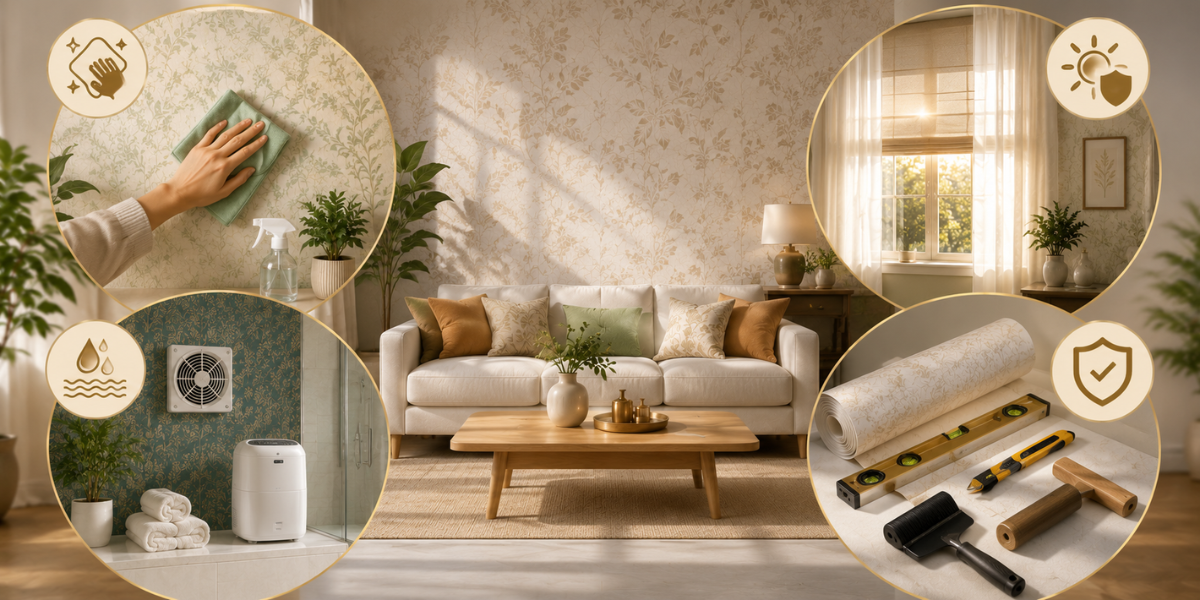
Stretch the lifespan of your wallpaper with the following precautions and measures:
-
Regular Cleaning
Wipe the wallpaper regularly with a microfibre cloth to remove any dust buildup. Apart from this, use a mild cleaning solution to clean spots and stains.
-
Protection from Sunlight
Install window blinds or use sheer curtains to protect the wallpaper from direct sunlight during peak sun hours.
-
Moisture Control
Use exhaust fans or dehumidifiers in kitchens and bathrooms to prevent peeling and mould growth.
-
Preventative Measures
You can take preventative measures by repairing peeling edges immediately with an adhesive, keeping the furniture 2 inches away from the surface, and inspecting the wallpaper periodically for mould growth or damage.
Signs When Should You Replace Your Wallpaper
If you’re wondering whether your wallpapers are due for a replacement, here are some signs to look for:
-
Physical Wear and Tear
The most obvious sign that the wallpaper needs changing is visible damage. Peeling, bubbling, and curling seams signal adhesive breakdown. Tears and dents affect the overall appearance of the wallpaper.
-
Fading and Discolouration
When the wallpaper loses its vibrancy and colour, the effect is diminished–making it dire to replace it. Sometimes, this occurs naturally because of wallpaper age, and other times due to prolonged exposure to sun.
-
Tough Stains and Spots
You know it’s time to replace your wallpaper when persistent stains from smoke from kitchen, permanent grease, and food spills won’t hide no matter how much it is cleaned.
-
Damage from Moisture or Mould
Unchecked or trapped moisture behind wallpaper can cause serious damage like musty odours, mould growth, and dark spots.
Common Mistakes That Reduce Wallpaper Lifespan
When you’re installing wallpaper in an Indian home you cannot overlook these common mistakes:
-
Applying Wallpaper on Cracked, Dusty Walls
Wallpaper may conceal minor wall imperfections but major flaws like cracks, holes, and textured surfaces may affect the lifespan of the wallpaper in the long run.
-
Choosing the Wrong Wallpaper Material
Not all wallpaper materials are suitable for the Indian climate. Delicate, paper-based wallpaper will struggle with moisture and humidity. Which is why durable materials like vinyl are a better choice.
-
Not Protecting the Wallpaper from Environmental Conditions
In India, weather conditions shift dramatically—we experience scorching summers, cold winters, and heavy rains. Without simple precautions like ventilation, sun protection, or moisture control, these seasonal changes will impact its durability.
-
Ignoring Wall Dampness
Do not install wallpaper on damp, leaking walls as it will cause the wallpaper to immediately peel and bubble. Treat the wall first and then apply the wallpaper.
Maintenance Tips to Extend the Life of Your Wallpaper
Here are some maintenance tips you must follow to extend the longevity of your wallpaper:
- Regular Dusting: Lightly dust the wallpaper surface with a soft cloth or microfibre to prevent dust buildup.
- Spot Cleaning: To remove stains and grime, use a mild cleaning solution and warm water and gently wipe away the stain.
- Avoid Direct Sunlight: Use curtains or blinds to protect wallpapers from receiving direct sunlight for long hours.
- Control Indoor Moisture: Maintaining proper ventilation through open windows, exhaust fans, and dehumidifiers helps reduce moisture buildup.
Refresh Your Walls, With Confidence
Wallpaper is durable and beautiful, and the right conditions should be made to allow it to thrive. Granted, it won’t last forever. However, if high-quality wallpaper is chosen, suitable material is selected, and it is well maintained, wallpaper can last up to 15 years, outlasting paint.
FAQs
-
Is wallpaper more durable than paint?
Yes, wallpaper can last longer than paint, is more durable, and requires less frequent touch-ups or replacements.
-
What is the lifespan of wallpaper in India?
High-quality wallpaper in Indian homes can typically last between 8-15 years, depending on the material, wall condition, environmental factors, and maintenance.
-
Is wallpaper replacement expensive?
Costs can vary depending on room size and material. However, wallpaper offers long-lasting value and durability, often outlasting paint.
-
Is peel-and-stick wallpaper suitable for Indian homes?
Yes, peel and stick wallpaper can work well in Indian homes, especially in rental spaces or temporary decor.











 Material Preview
 Digital Snapshot
 Design Selection
