








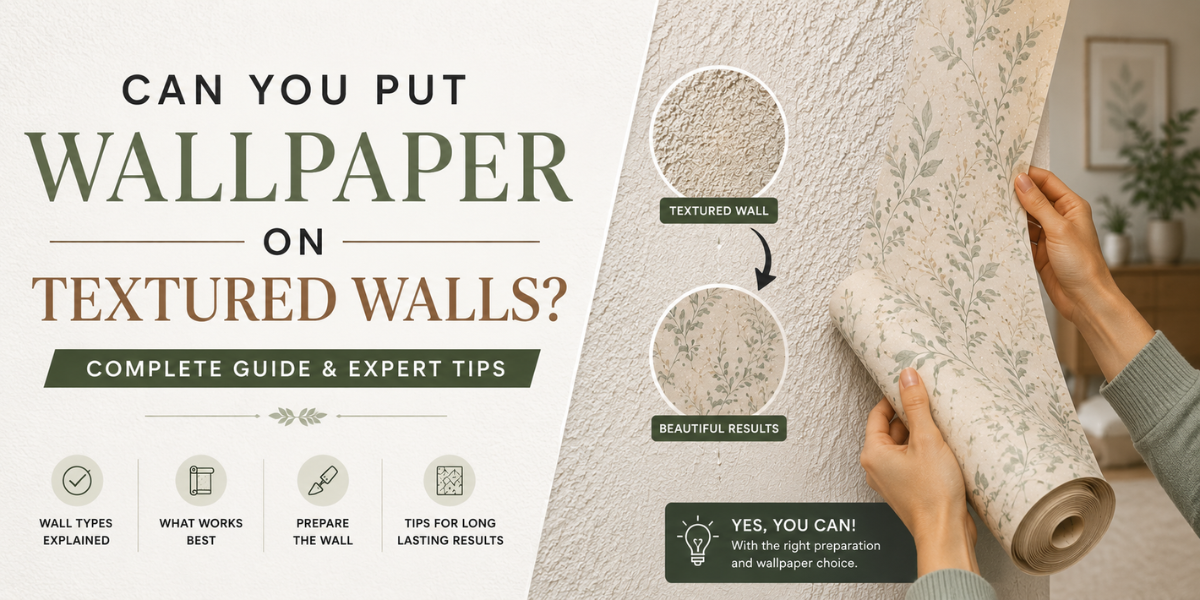
Yes, you can apply wallpaper on textured walls but the results largely depend on the type of wall texture and the wallpaper material you choose. Some lightly textured walls can adhere to a wallpaper, while heavily textured surfaces require thorough wall preparation.
Wallpapering your walls is one of the easiest ways to refresh your interiors, but textured walls can sometimes throw a spanner into your decorating plans. From popcorn ceilings to orange peel walls, these uneven surfaces may homeowners wonder whether wallpaper can actually last long-term.
If you, too, want to find a solution to wallpapering your textured walls, we will break down the types of textured walls found in Indian homes, the best wallpaper materials to use on them, and the important wall preparation steps to follow in this blog below.
Why are Textured Walls a Challenge for Wallpapers?
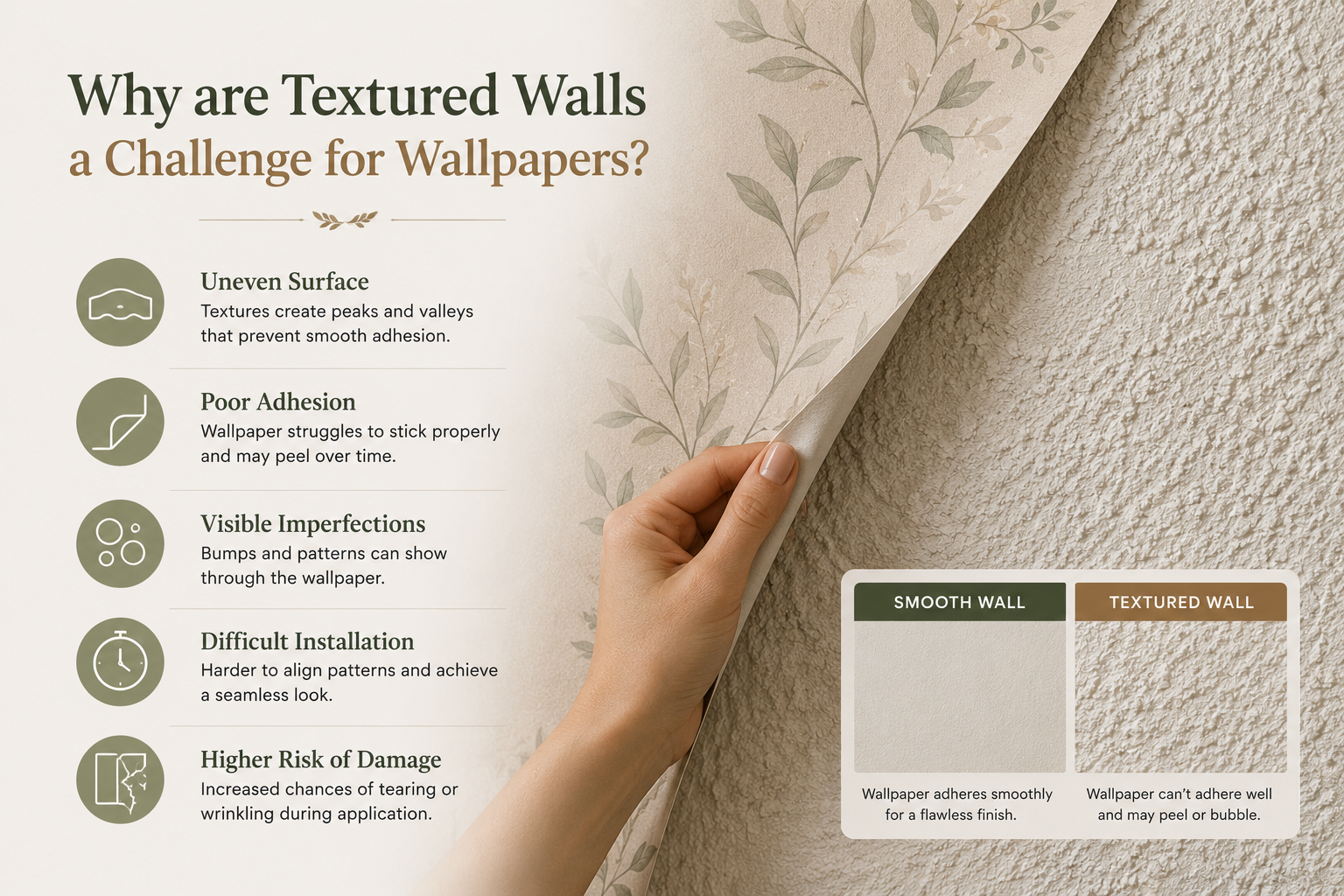
Let’s be honest, textured walls and wallpapers don’t always make the best team and here’s why:
- Adhesion Issues: Wallpaper only makes contact with the ‘peaks’ of the textured wall, preventing it from fully adhering to the wall. Over time, it will likely sag or peel.
- Aesthetic Concerns: Once the wallpaper is installed, the uneven textures on the wall are made known. This noticeability takes away the aesthetic appeal of the wallpaper.
- Pattern Misalignment: On smooth walls, the patterns are straightforward and aligned, but on textured wall surfaces, tiny misalignments due to bumps, ruin the entire look.
- Potential for Moisture Buildup: Moisture can get trapped inside the microscopic air gaps of the wall texture, leading to potential mould growth.
Lightly Textured vs Heavily Textured Walls
Certain textured walls are suitable for wallpapering. Here’s a table distinguishing between lightly textured and heavily textured walls:
| Aspect | Lightly Textured Walls | Heavily Textured Walls |
| Appearance | Small bumps or subtle textures | Rough finishes and deep grooves |
| Wallpaper Suitability | Usually suitable for wallpaper | Difficult for wallpaper to adhere well |
| Adhesive Compatibility | Can stick smoothly | Poor adhesion due to uneven surface |
| Preparation Needed | Light sanding and priming | Extensive sanding and priming |
| Best Wallpaper Type | Non-woven and light vinyl | Textured and thick vinyl only after wall smoothing |
How to Identify Your Wall Texture Before Wallpapering
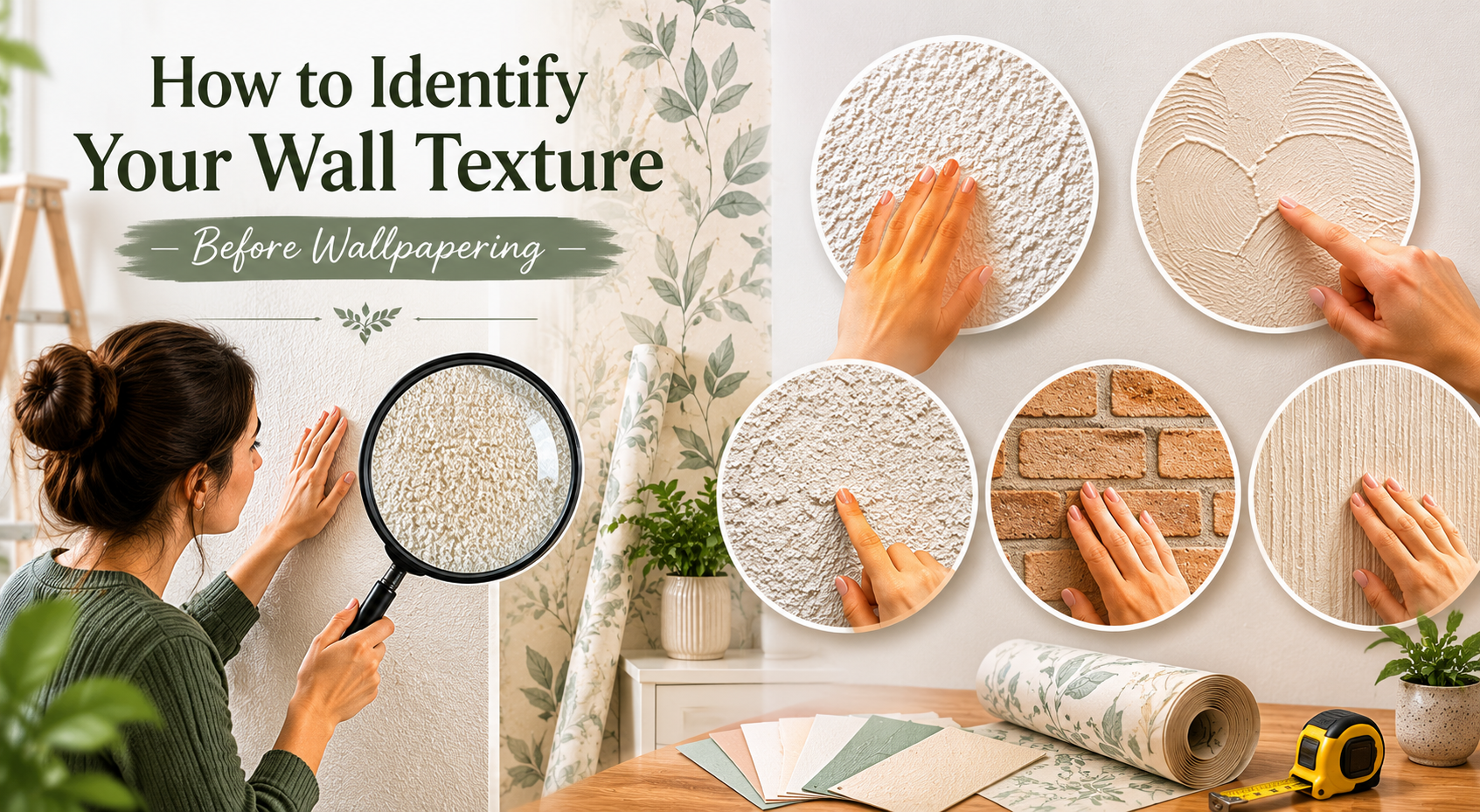
Here’s a breakdown of common wall textures found in Indian homes:
1. Orange Peel
Just as its name suggests, this wall texture resembles the skin of an orange with subtle dimpled surfaces. If you have this texture, you can install wallpaper easily as it does not create much adhesion issues or show visible bumps. A little sanding may be required.
2. Knockdown
Knockdown walls have a slightly raised, mottled appearance that gives a slightly rustic feel. While not as dramatic as other textures, it can still cause adhesion issues and makes seams challenging to align.
3. Popcorn
Popcorn textures, also known as acoustic ceiling texture, feature small raised bumps that resemble popcorn. This wall texture provides both visual interest and sound absorption, however, pose a challenge for wallpapers.
How to Prepare Textured Walls Before Wallpapering
Here’s a step-by-step guide to help you prepare your textured walls for wallpaper:
Step 1: Clean Your Walls
Start by thoroughly cleaning the wall to remove dust, dirt, and grime. Use a solution of mild soap and water, and scrub the walls gently with a sponge. Let the walls dry completely after cleaning.
Step 2: Fix Any Holes or Cracks
If you have any cracks or nail holes in the walls, now’s the time to fill it. Use plaster or cement to fill the holes and sand them smooth when dry.
Step 3: Sand the Walls
Use a sanding block or fine-grit sandpaper to smooth out all the textures on the wall if they are too textured. Work in sections to keep it manageable.
Step 4: Apply Primer
You can finish the process by applying a layer of primer to seal the surface and ensure the wallpaper adheres properly. Allow it to fully dry before installing the wallpaper.
Best Wallpaper Materials for Textured Walls
The following wallpaper materials can handle the unique challenges of textured walls:
1. Textured Wallpapers
Textured wallpapers like grasscloth or embossed are thick, durable, and ideal for concealing wall imperfections like cracks, dents, or irregular textures.
2. Non-Woven Wallpaper
Non-woven are one the ideal wallpaper materials for Indian homes as it not only hides minor wall imperfections but is also breathable and easy to install.
3. Thick Vinyl or Heavy Grade Wallpaper
These wallpaper materials are the go-to options for textured walls, especially in high-traffic areas as they are thick enough to hide textures and imperfections.
Wallpaper Materials to Avoid on Textured Walls
It’s equally important to know which materials may not last long on textured walls. Here are those wallpaper materials that are suitable on textured surfaces:
- Peel and Stick Wallpaper: Self-adhesive wallpapers often fail to grip textured surfaces properly, leading to early peeling due to air bubbles.
- Traditional Paper Wallpaper: Since paper wallpapers are thinner and more delicate, they tend to show every bump and groove underneath.
- Fabric Wallpaper: Fabric-based wallpapers may not bond evenly on rough textures and can wrinkle during installation.
Does Peel-and-Stick Wallpaper Work on Textured Walls?
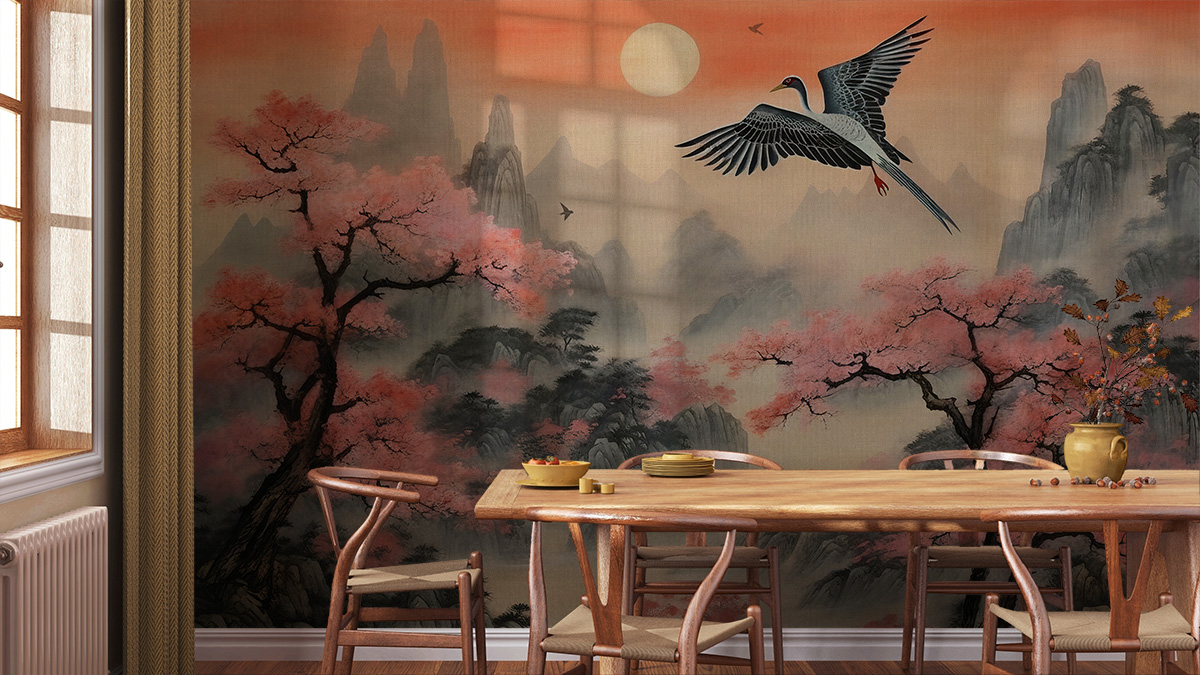
Peel and stick wallpaper generally does not work well on textured walls because it is primarily designed for smooth surfaces and easy removal. The adhesive may struggle to grip uneven textures, causing peeling or air bubbles.
While high-quality, thicker peel and stick wallpapers may work on lightly textured walls, the results are usually temporary and may not last as long.
Best Wallpaper Designs for Textured Walls
Here are some wallpaper designs that distract the eye and help conceal wall imperfections:
1. Floral and Botanical Prints
Floral and botanical prints wonderfully help conceal wall imperfections by providing a dramatic backdrop featuring layered flowers, leaves, and branches in various colours.
2. 3D Effect Designs
3D designs are one the top wallpaper choices for hiding away any flaws on the walls. The 3D illusion distracts the eye away from the visible bumps and textures on the walls and on to the design.
3. Abstract Art
Abstract art features irregular lines and shapes that are intentionally unpredictable. This abstractness hides away any possible wall imperfections like cracks or bumps.
4. Stone or Brick Effect
Highly embossed or faux effect textures like stone, brick, or stucco are great designs that draw the eye away from textured surfaces.
Professional Installation vs DIY
Installing wallpaper on textured walls can be slightly challenging. While some homeowners prefer doing it themselves, some others may prefer professional installation.
Here’s a quick comparison to help understand which option works best:
| Aspect | DIY Installation | Professional Installation |
| Cost | More budget-friendly | Higher upfront cost |
| Expertise Required | Requires patience and careful preparation | Handled by experts |
| Risk of Mistakes | Higher chances of peeling or bubbles | Lower risk due to professional techniques |
| Time Required | Can be time-consuming with wall preparation and installation | Faster |
| Final Finish | Results may vary depending on individual expertise | Cleaner and more seamless |
When You Should Avoid Wallpapering Textured Walls
You should avoid wallpapering textured walls in the following circumstances:
- When the wall has severe textures like popcorn or heavy orange peel that make smooth application difficult.
- When you want a flawless and seamless wallpaper finish like a mural, as textured walls can cause visible bumps and distort the entire image or design.
- When the wall has not been properly prepared through sanding or priming before installation.
Maintenance Tips for Long-Lasting Results
Follow these maintenance tips to prolong the life of your wallpaper:
- Daily Cleaning: Clean the wallpaper gently using a soft microfibre cloth or damp sponge to prevent dust buildup.
- Proper Ventilation: Ensure proper ventilation in high-humid areas, such as kitchens and bathrooms, to prevent mould growth.
- Address Problems Early: Check the edges occasionally and reapply adhesive if you notice any lifting corners or peeling edges.
- Preventive Measures: Keep sharp objects and furniture away from the wallpaper to prevent scratches, tears, or dents.
Common Mistakes to Avoid
Avoid these common pitfalls:
- Skipping wall preparation is one of the biggest mistakes as textured walls need proper sanding, cleaning, and priming.
- Using thin or low-quality wallpaper can make bumps and textures more visible underneath the surface.
- Choosing peel and stick wallpaper for heavily textured walls.
- Not choosing a suitable wallpaper material for your textured wall surface.
Wallpaper Installation Checklist for Textured Walls
- Inspect the wall texture and identify whether it is lightly or heavily textured.
- Repair cracks, holes, or damaged sections before installation.
- Sand or add primer to heavily textured walls for a smoother surface.
- Choose thick and suitable wallpaper materials for textured walls.
- Opt for professional installation for best and long-lasting results.
How Magicdecor Helps Solve This Challenge
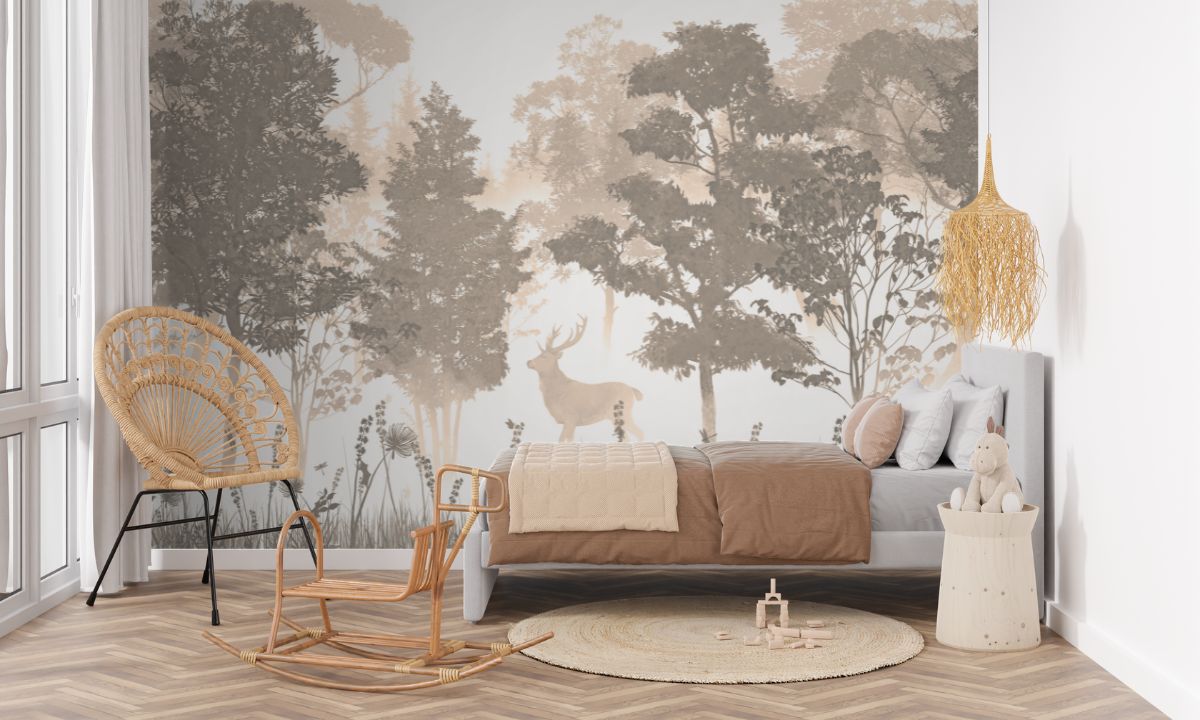
Magicdecor helps solves the challenge of wallpapering textured walls by offering the following solutions:
- Wide Range of Wallpaper Materials: From non-woven wallpapers to premium canvas textures, we offer a variety of materials that work well on textured walls.
- Quick Fix Magnetic Options: As the name suggests, these magnetic wallpapers are designed for quick application and can work on walls with minor imperfections like unevenness or slight texture.
- Premium Paper Quality: Our wallpapers are printed on 250-350 GSM paper for better durability and luxurious texture.
- Professional Installation Services: To ensure smooth and proper wallpaper application on textured walls, we offer professional installation services across all major cities in India.
FAQs
- Can I use regular wallpaper on a textured wall?
Regular wallpaper may work on lightly textured walls but heavily textured surfaces usually require thicker wallpaper materials and proper wall preparation for better adhesion.
- Can I remove wallpaper from a textured wall?
Yes, wallpaper can be removed from textured walls, although the process may require extra care to avoid damaging the wall underneath.
- How long does it take to wallpaper a textured wall?
The installation time depends on the wall condition and preparation required. If you have a lightly textured wall, then it may take a few hours. However, if you have a heavily textured wall surface, then it may take a bit longer.
- Do textured walls need preparation before wall installation?
Yes, preparing textured walls through cleaning, sanding, and priming helps create a smoother surface the improves adhesion and wallpaper durability.









 Material Preview
 Digital Snapshot
 Design Selection
