









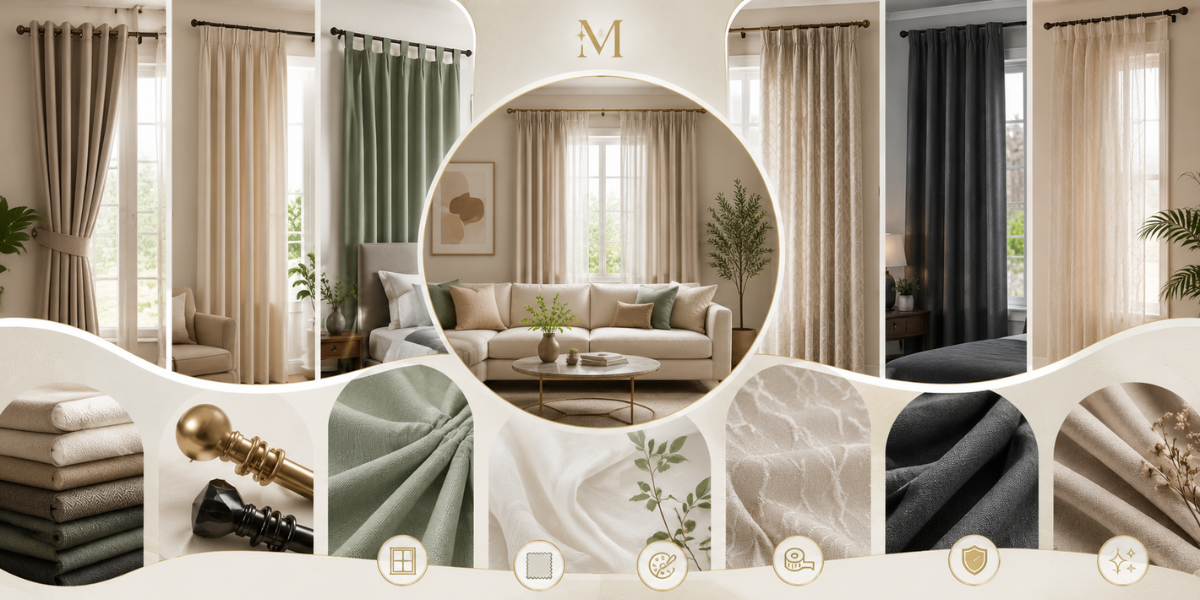
The different types of curtains in interior design include eyelet curtains, blackout curtains, rod pocket curtains, layered curtains, panel curtains, cafe curtains, thermal curtains, sheer curtains, and many more.
A room can have beautiful furniture, a carefully chosen wall colour, and unique decor piece, yet still feel incomplete. More often than not, the missing element is the curtain.
In interior design, curtains are not merely fabric panels covering a window, they help provide privacy, control light, and define the character of a room.
In this blog, we’ll explore the different types of curtains, their unique features, and how to choose the right option for every room in your home.
Why Understanding Curtain Types Matters
Curtains may seem like a simple furnishing choice but they vary significantly in terms of fabric, thickness, heading style, and appearance. Understanding the different types of curtains can help you choose an option that complements your decor and also meets the practical needs of your room.
What Should Curtains Actually Do?
Curtains have the following core functions in a room:
- Offer Privacy: Curtains help shield your room from outside views, creating a more comfortable and secure living space.
- Control Light: From filtering sunlight to completely blocking it out, curtains allow you to manage the amount of light entering a room.
- Offer Style: Curtains introduce colour, texture, and pattern, helping you reinforce your chosen interior design style.
- Reduce Glare and Noise: Heavier curtains or drapes can minimise screen glare and help soften outside noise, making rooms feel more peaceful.
Curtains vs Drapes: What’s the Difference?
While both curtains and drapes are fabric window treatments, they differ in certain features and characteristics. Here are their key differences:
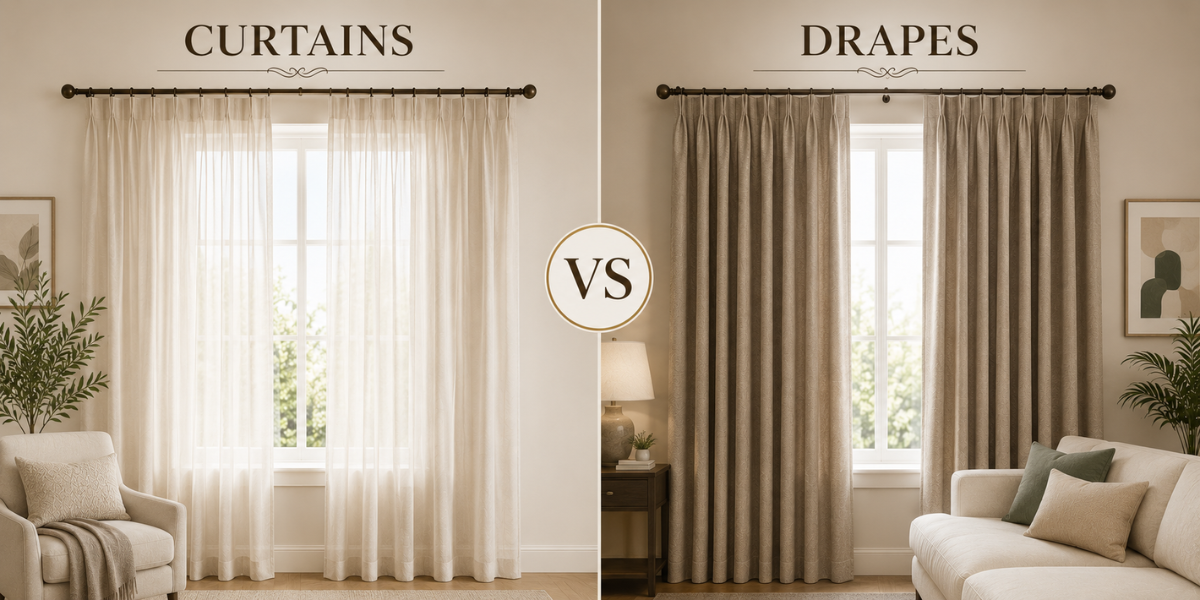
| Aspect | Curtains | Drapes |
| Fabric Weight | Heavy, formal fabrics (damask, velvet) | Light, casual fabrics (cotton, polyester) |
| Length | Various lengths (sill, apron) | Floor-to-length or designed to ‘puddle’ on the floor |
| Lining | Unlined or thinly lined | Heavily lined with thermal or blackout |
| Price | More affordable | More expensive |
| Washing | Machine washable | Requires professional cleaning |
| Best Use | Bedrooms and kitchens | Elegant dining and living rooms and media rooms |
15 Types of Curtains Explained (With Best Use Cases)
The 15 popular types of curtains in interior design include:
-
Blockout Curtains
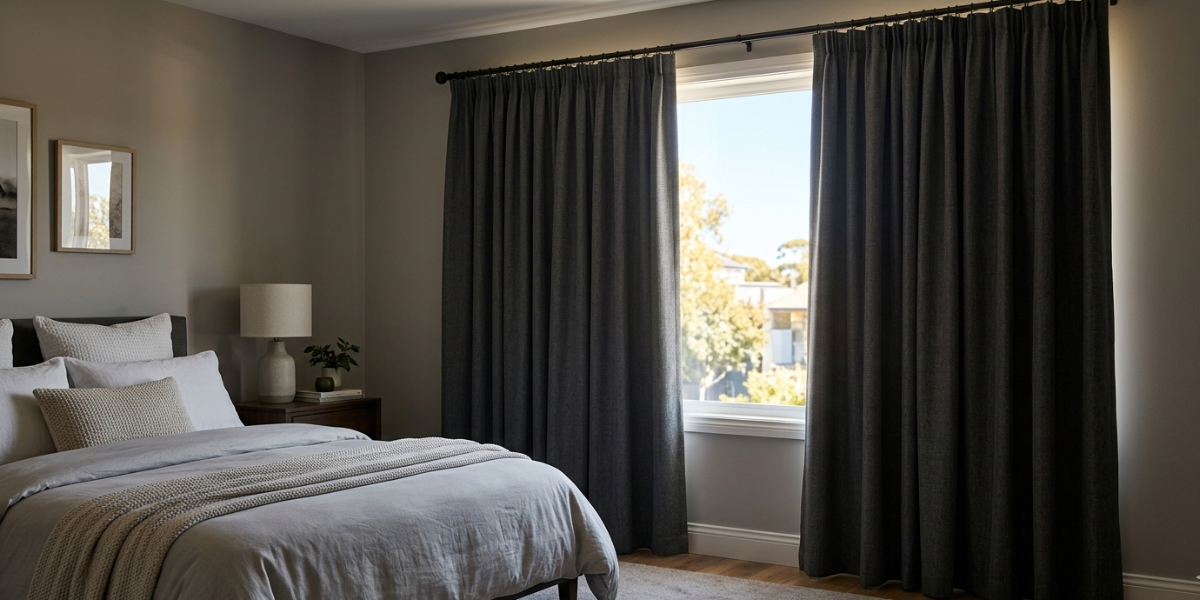
Blockout curtains, also known as blackout curtains, are made from dense, opaque fabrics to block out nearly all light. They are ideal in bedrooms, nurseries, and home theatres as they offer complete darkness, privacy, and noise reduction.
-
Sheer Curtains
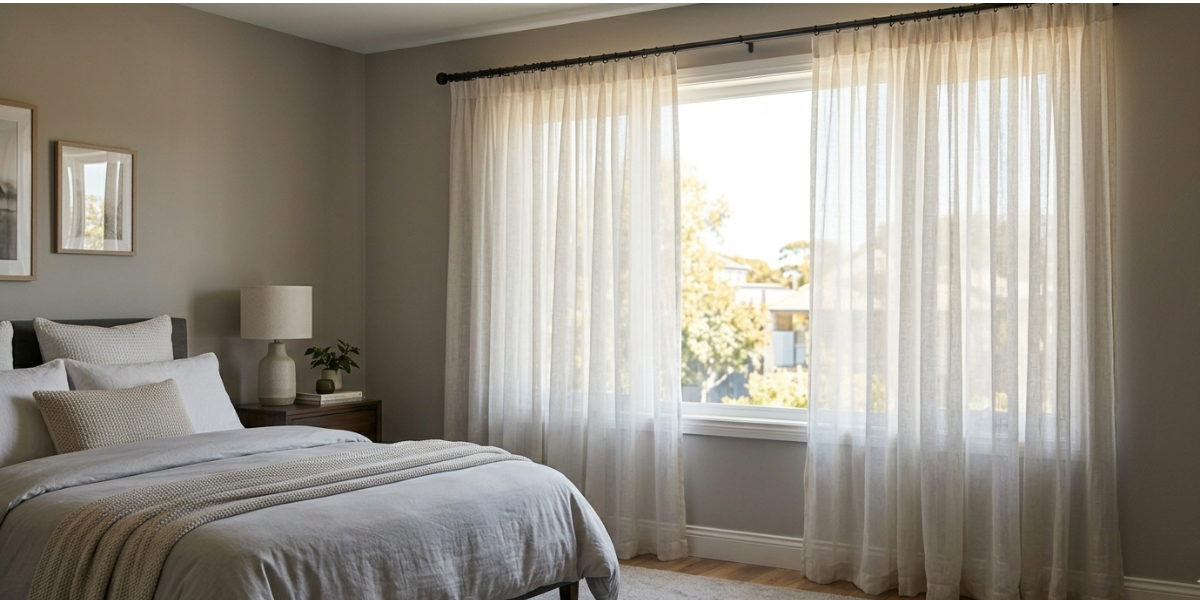
Sheer curtains are made from lightweight, translucent fabrics that allow light to filter in while maintaining privacy. Their transparent nature creates a breezy and romantic ambience, perfect for sunrooms, living rooms, and bedrooms.
-
Eyelet/ Grommet Curtains
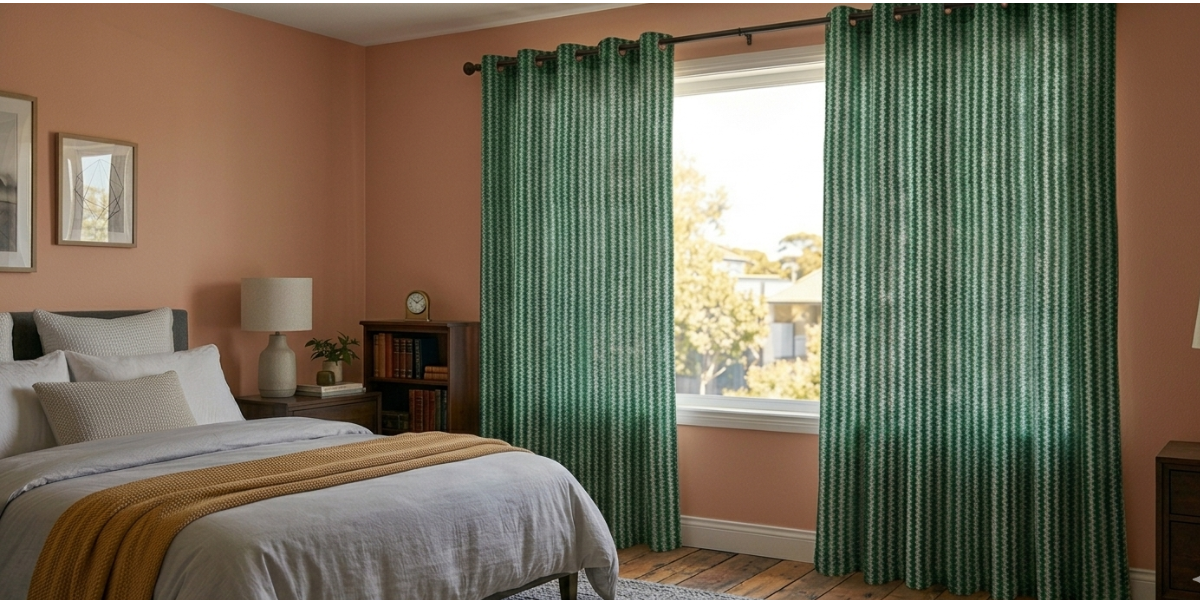
Eyelet curtains, also known as grommet curtains, have metal ringed eyelets that effortlessly slide on a rod. They create uniform pleated waves, making them a perfect choice for bedrooms and living rooms for a sleek, contemporary look.
-
Pinch Pleat Curtains
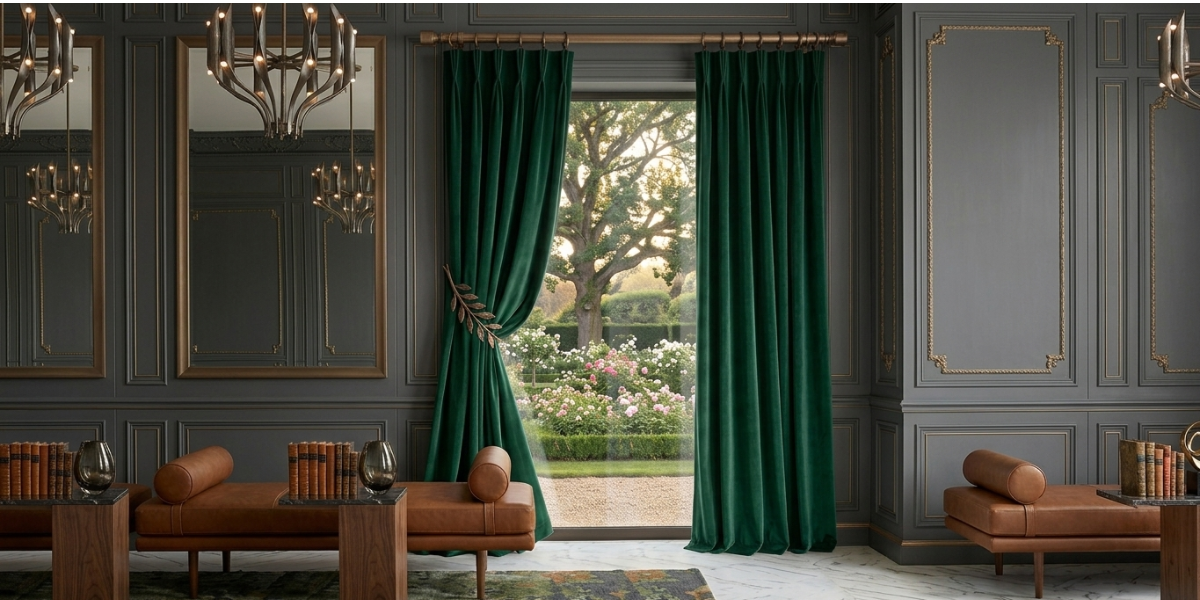
Pinch pleat curtains feature tightly pinched folds at the top, giving them a decorative header and a structured appearance. They are commonly used in living rooms and dining rooms for extra fullness and elegance.
-
Pencil Pleat Curtains
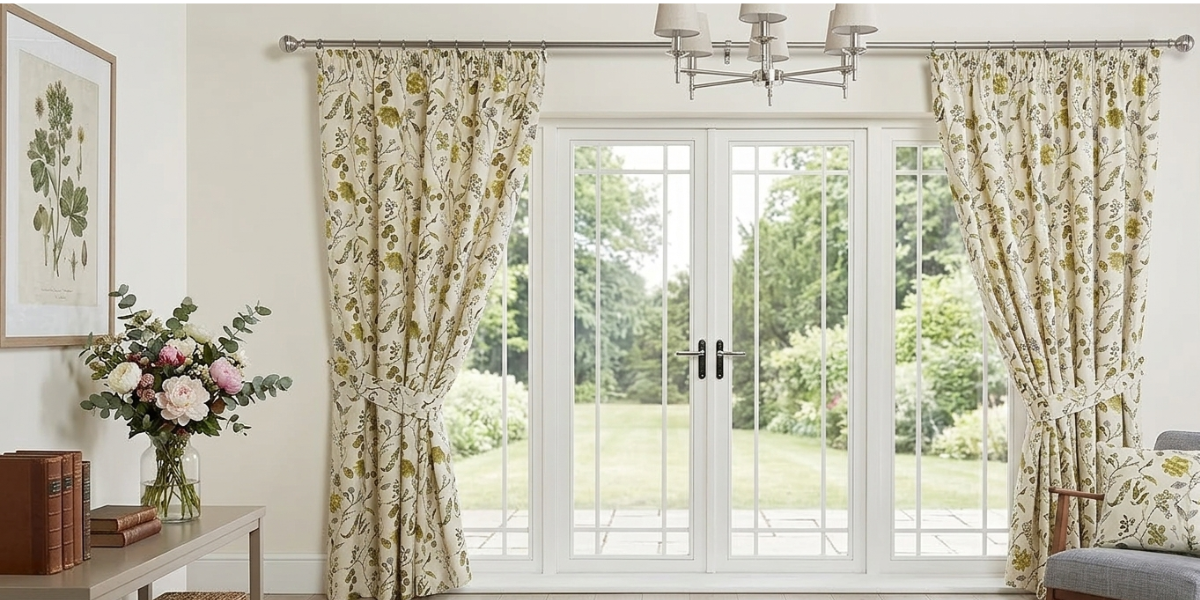
Pencil pleat curtains are tightly gathered at the top to resemble a line of pencils laid side by side. They are ideal for both formal and casual settings, and work beautifully in almost any room.
-
Rod Pocket Curtains
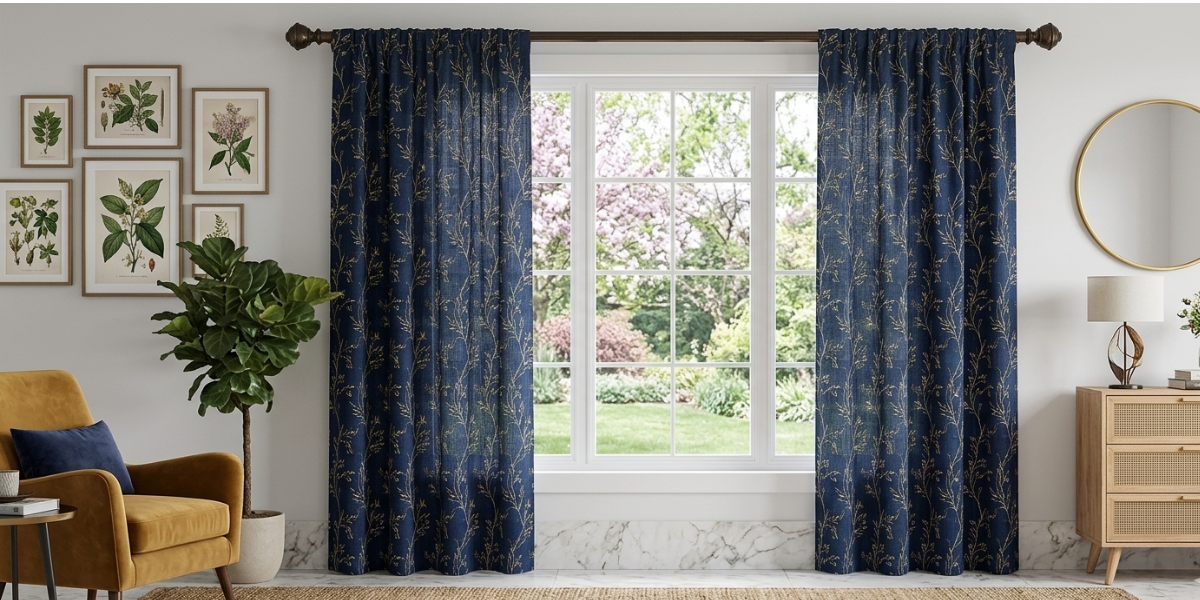
Rod pocket curtains have pockets sewn across the top through which the rod slides in, concealing it entirely. They are a classic curtain style, providing a neat and tailored look, popular in traditional living rooms and bedrooms.
-
Layered Curtains
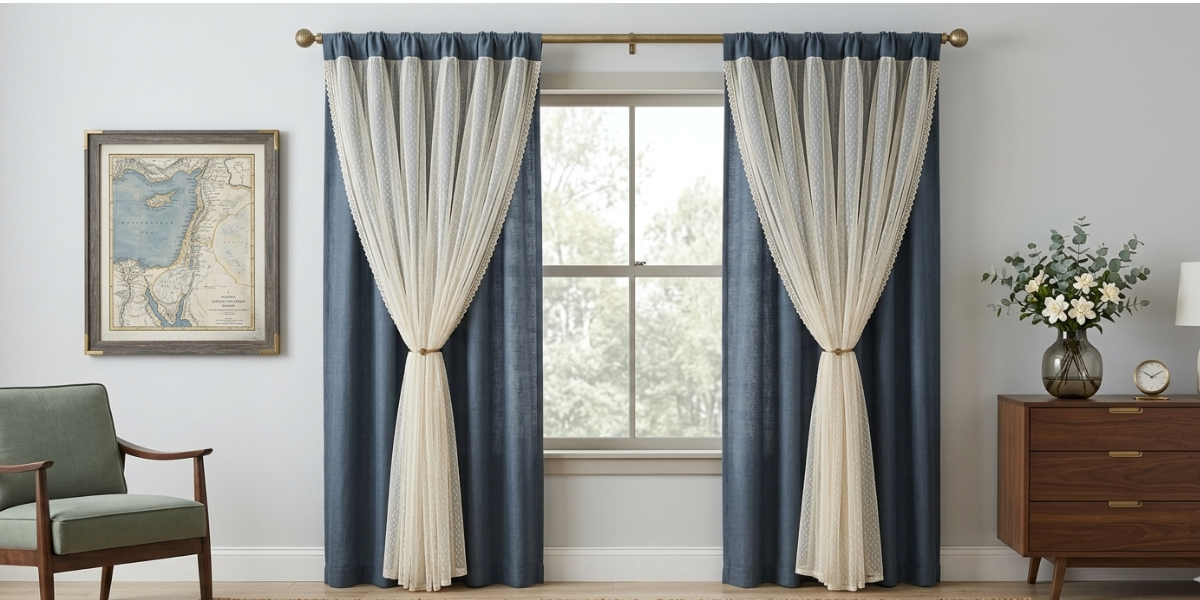
Layered curtains combine multiple curtain fabrics, such as grommet and sheer, for a decorative and luxurious look. They are perfect in spaces where you want to adjust light and visual interest.
-
Panel Curtains
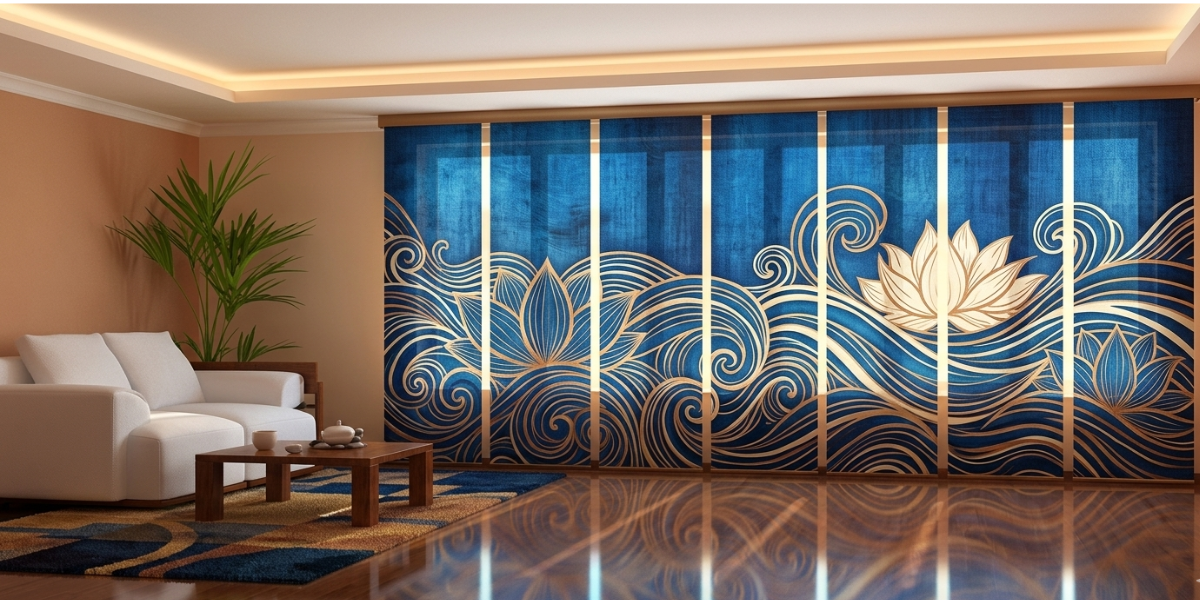
Panel curtains are large fabric curtains that can be drawn or left open. They are ideal for larger windows as they provide a symmetrical, balanced look, and offer excellent coverage.
-
Cafe Curtains
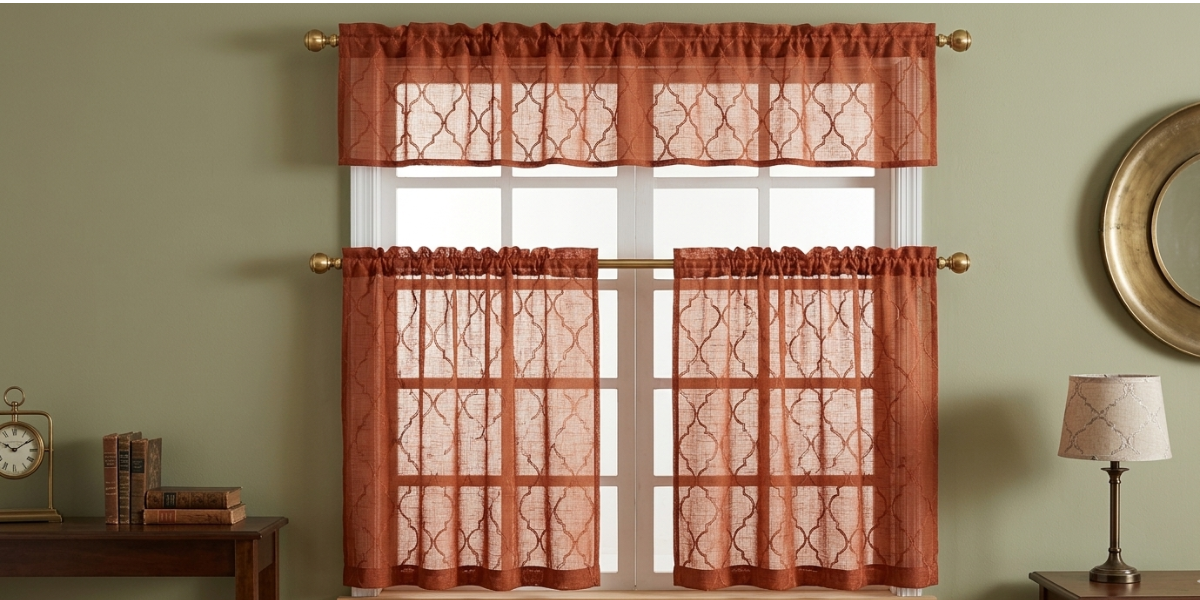
Cafe curtains, also known as half curtains, cover only the half of a window, allowing natural light in while still maintaining privacy. They are commonly used in kitchens and bathrooms to create a charming, cosy atmosphere.
-
Tab Top Curtains
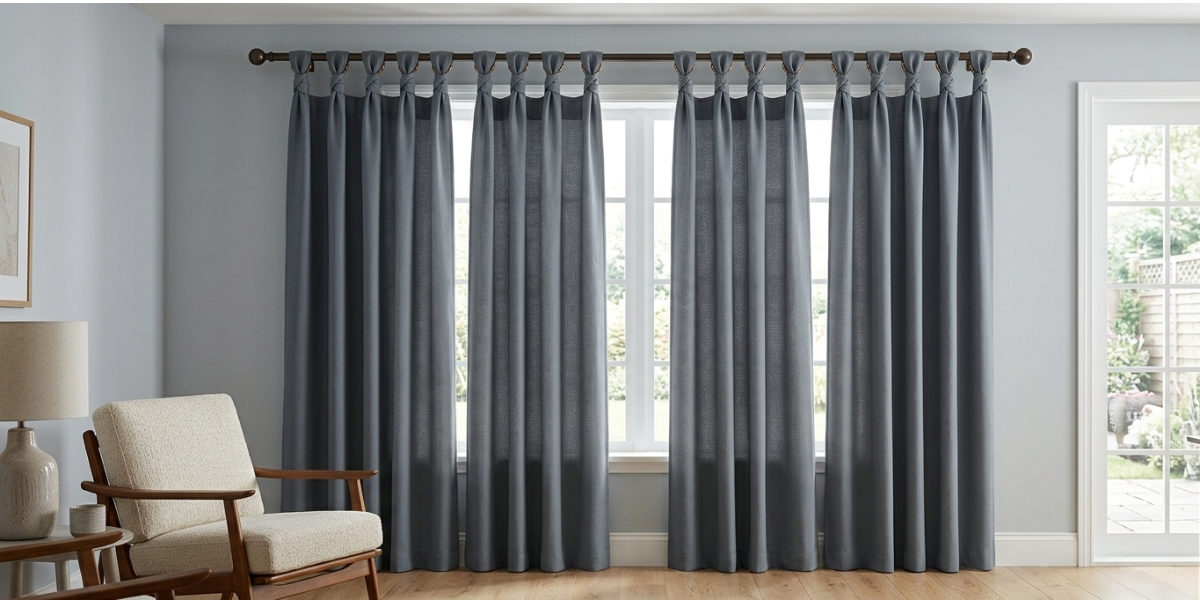
Tab top curtains have fabric loops or ‘tabs’ sewn at the top, which slide over the rod. They are easy to hang and offer a casual, relaxed look, perfect for rustic settings like patios or a beach house.
-
Thermal Curtains
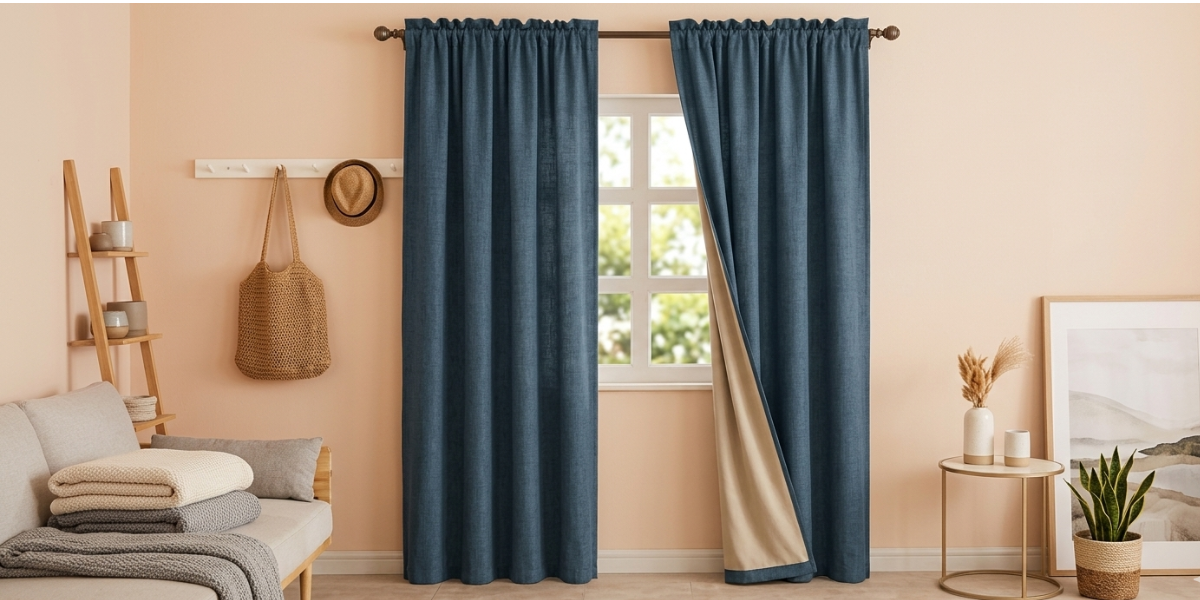
Thermal curtains feature special insulating materials that help regulate room temperature. They are commonly used in living rooms and bedrooms in colder climates as they help retain heat and reduce energy bills.
-
Goblet Pleat Curtains
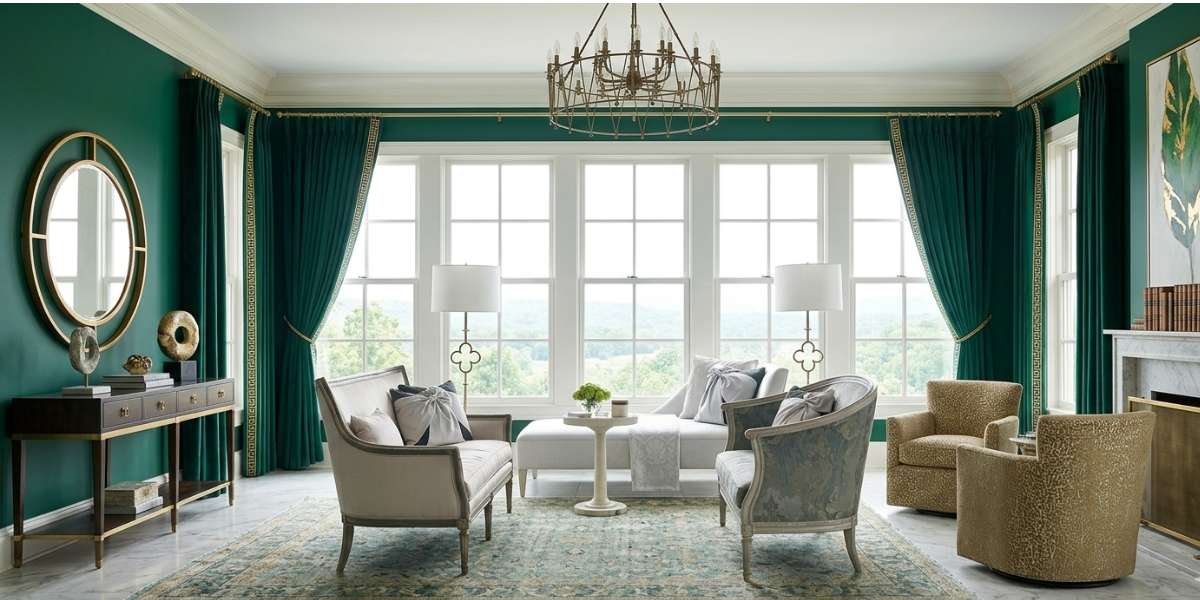
Goblet pleat curtains are curtains where the pleats are shaped like goblets as the top is often stuffed to maintain the shape. They are best suited in formal spaces like living rooms and dining rooms where a sophisticated look is desired.
-
Box Pleat Curtains
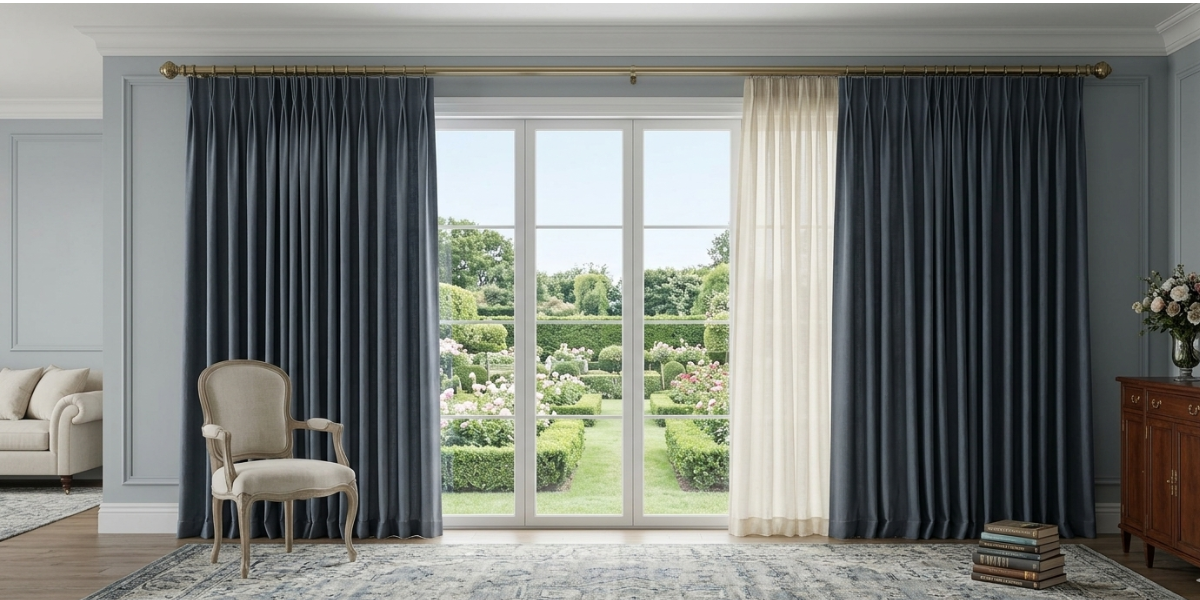
Box pleat curtains feature tailored, rectangular folds that form a neat, boxy look. Their uniform, formal design is perfect for contemporary settings like home offices, living rooms, and dining spaces.
-
Wave Fold Curtains
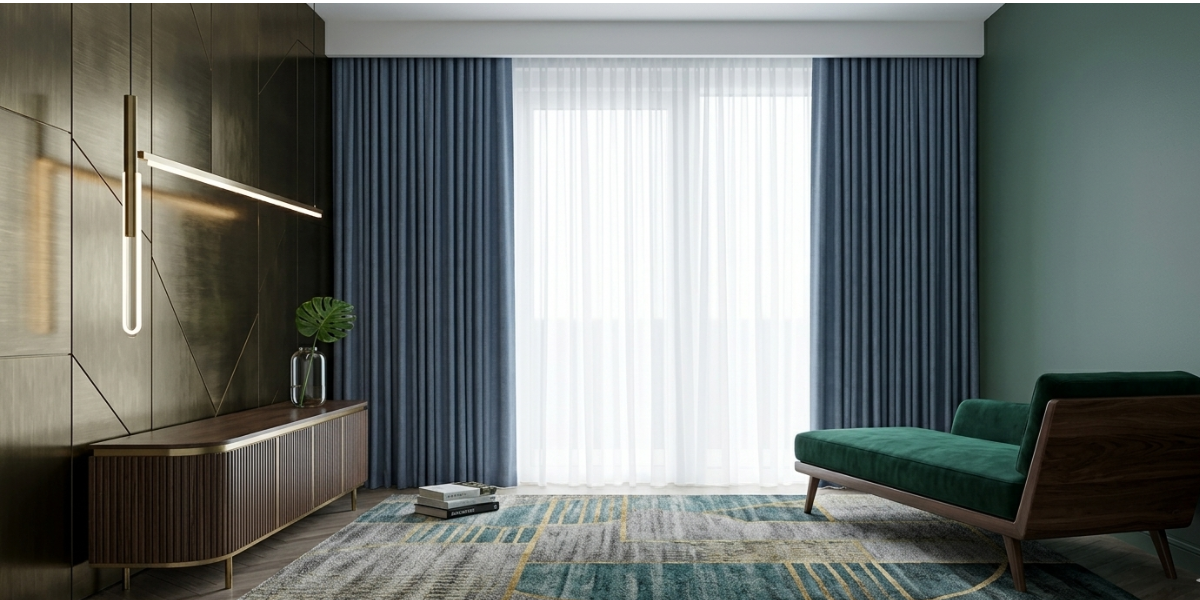
Wave fold curtains, also known as ripple fold or an S fold, hang in continuous waves, making them an appealing choice for modern and contemporary homes. They have a streamlined design and glide smoothly on a track.
-
Acoustic Curtains
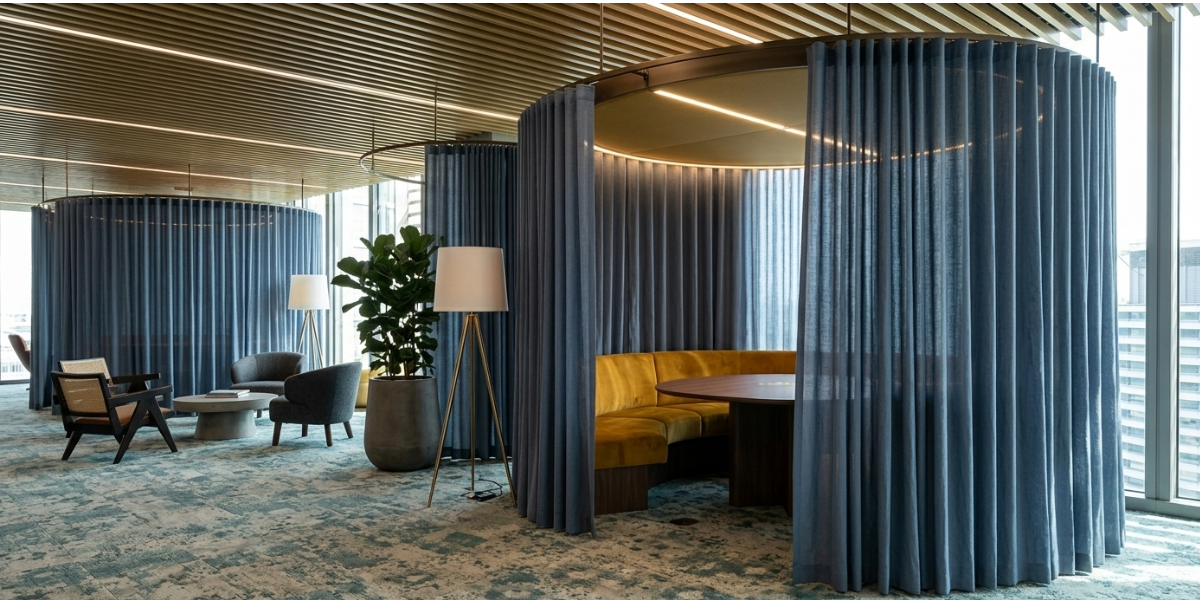
Acoustic curtains, also known as soundproof curtains, are designed with densely woven materials to absorb sound and prevent it from travelling through. They are an excellent choice for homes near constant traffic, or spaces that require a quiet environment like home office or bedroom.
Best Curtain Types for Different Rooms
Depending on the function and mood of the room, here are so me suggestions for best curtain type:
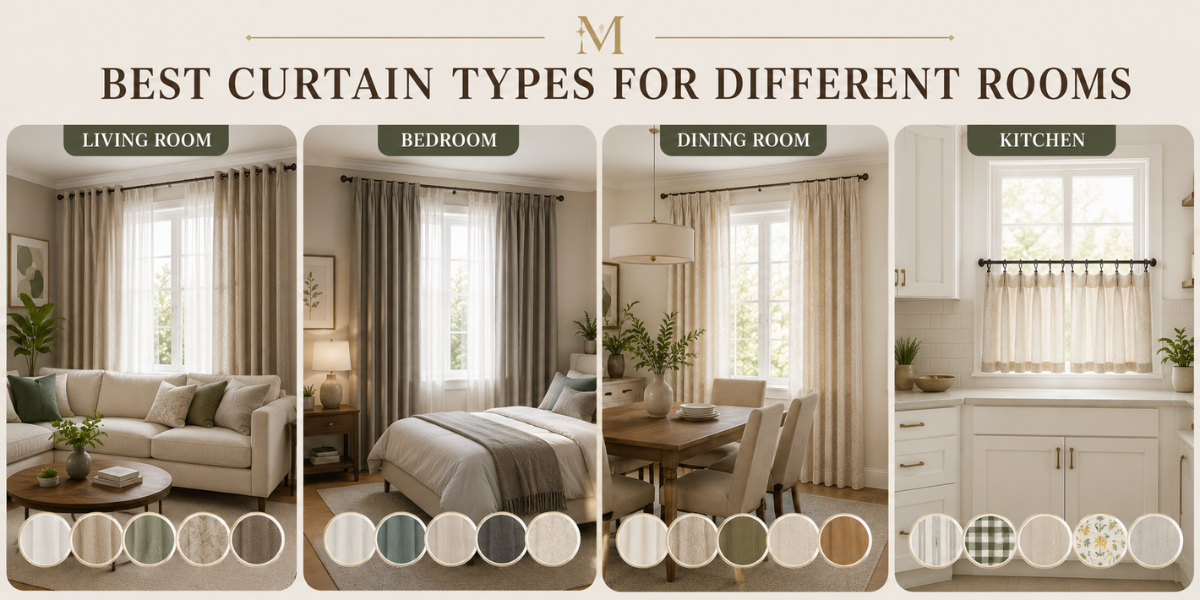
1. Living Room
Since the living room is the social and central space of your home, the curt
ains should be functional and stylish.
Best Curtain Types: Grommet curtains, layered curtains, or pinch pleat curtains.
2. Bedroom
Bedrooms benefit from curtains that promote privacy and restful sleep, without sacrificing natural light.
Best Curtain Types: Blackout curtains or layered curtains.
3. Dining Room
The dining space needs elegant window treatments that elevate formal gatherings, dinner parties, and family meals.
Best Curtain Types: Pinch pleats, tailored panels or floor-length drapes.
4. Kitchen
Kitchens require curtains that allow natural light while maintaining a bright and airy feel, so as to prevent humidity and heat buildup.
Best Curtain Types: Cafe curtains or sheer curtains.
How to Choose the Right Curtains for Your Space
You can choose the right curtain for your space through the following steps:
-
Determine the Function of the Room
Start by considering the function of the room. Bedrooms may require blackout curtains for better sleep and privacy, while living rooms need light-filtering or layered curtains.
-
Choose the Right Fabric and Weight
The curtain fabric influences both the appearance and functionality. Lightweight fabrics such as cotton create an airy feel, while heavier fabrics like velvet and silk offer better privacy and light blocking.
-
Consider the Ideal Curtain Length
Curtain length can significantly impact a room’s visual appeal so choose accordingly. Floor-length curtains create a more elegant and spacious look, while shorter styles such as cafe curtains are better suited for kitchens for practicality sake.
-
Select the Right Colour, Pattern, and Texture
Choose curtain colours and designs that complement the room’s existing decor or the function. Natural and pastel colours create a timeless look, while patterned curtains introduce visual interest.
Curtain Fabric Guide: What Works Best?
There is a wide variety of curtain fabrics, all used for different purposes and requirements. Here are some common curtain fabrics often found in interior design:
- Cotton: One of the most popular choices due to its versatility, ease of maintenance, and durability.
- Linen: Has a natural and airy texture that adds elegance to any room. Its light-filtering properties makes it a great choice for drapes.
- Velvet: Velvet is dense, luxurious, and ideal for adding richness and sophistication to any space. They work best in formal settings.
- Silk: Silk is a go-to curtain material for a touch of luxury and opulence. Its smooth texture, light weight, and natural sheen elevates rooms.
- Polyester: Polyester is affordable, durable, and easy to maintain, making it an excellent choice for high-traffic rooms or homes with kids.
- Voile: Voile is a sheer and lightweight material that creates a delicate and airy feel, perfect for layering with velvet and blackout fabrics.
Popular Curtain Patterns & Designs
There are a plethora of curtain patterns and designs and these are among the most popular:
-
Floral Curtains
Florals are quite popular on curtain fabrics, bringing charm, softness, and a touch of nature indoors. They are ideal for bedrooms, living rooms, and cottage-style interiors as the floral scale ranges from small and delicate to large, bold blooms.
-
Abstract Curtains
Abstract curtains feature artistic patterns, shapes, and colour combinations that are perfect for contemporary spaces. They also work well in modern living rooms, creative workspaces, and minimalist interiors.
-
Geometric Curtains
Geometric curtains showcase structured patterns such as lines, ovals, and spirals, adding a sense of order and sophistication. They are ideal for modern Scandinavian, and contemporary spaces.
-
Striped Curtains
Striped curtains offer a classic design that never goes out of style. Depending on the stripe direction and thickness, they can visually alter a room’s proportions while adding subtle texture.
How to Match Curtains with Wallpaper & Wall Colours
-
Match to the Room’s Colour Palette
Choose curtains that complement one or two colours already present in the wallpaper or wall paint.
-
Balance Patterns Carefully
If the wallpaper features bold prints, opt for solid-coloured curtains to prevent overwhelming the space with colours and textures.
-
Consider Contrast
Contrasting curtains can create a striking focal point, while similar shades offer a softer and more seamless appearance.
-
Coordinate with Undertones
Ensure the warm or cool undertones of the curtains align with those of the walls to maintain consistency.
-
Take Room Size into Account
Lighter curtain fabric colours can make a room feel open and brighter, whereas darker colours add depth and create an intimate atmosphere.
Curtain Ideas for Small Rooms & Apartments
You can decorate your small room or apartment with curtains in the following ways:
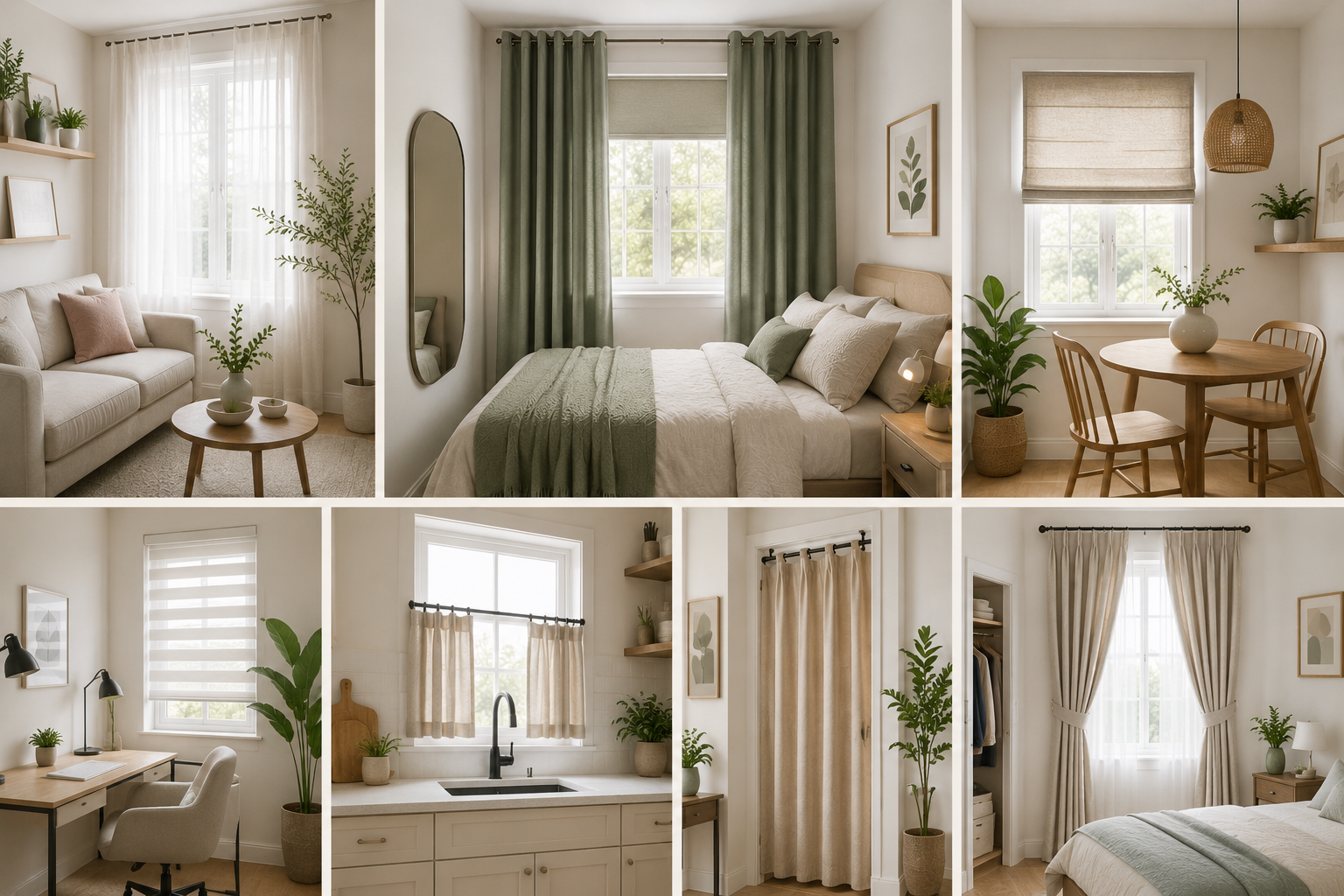
- Hang Curtain Rods High: Mount your curtain rod closer to the ceiling and choose floor-length curtains to create the illusion of height.
- Select Light-Coloured Fabrics: Choose sheer or light-coloured curtain fabrics to let natural light in and enhance brightness.
- Side Curtains: Consider getting curtains on either side of the window that helps frame it and allow natural light to flow through.
- Go Bold in Small Doses: If the rest of your space is minimal, you can go bold with your curtain pattern or colour. Just match the scale of the pattern to your window size.
Curtain Accessories That Complete the Look
Here are some curtain accessories that elevate the look of your curtains:
- Holdbacks and Tiebacks: Help keep the curtains neatly gathered when open.
- Rings and Hooks: These accessories ensure smooth movement along the rod.
- Finials: Decorative pieces attached to the ends of curtain rods.
Maintenance Tips for Curtain Fabrics
Follow these cleaning and maintenance tips to stretch the life of your curtains:
- Dust Regularly: Use a vacuum cleaner with a soft brush attachment or gently clean with a cloth to prevent dust buildup.
- Follow Care Labels: Always check the manufacturer’s cleaning instructions before washing, dry cleaning, or ironing them.
- Wash Gently: Delicate fabrics like velvet or silk often require gentle washing cycles or professional cleaning.
- Address Stains Promptly: Treat spills and stains as soon as possible to prevent them from setting into the fabric.
- Rotate Curtains Occasionally: Switching curtain panels periodically can help ensure even wear and fading.
Common Curtain Matching Mistakes
Avoid these common mistakes to create a cohesive and harmonious interior:
- Selecting an inappropriate fabric for the space.
- Overmatching colours and patterns.
- Pairing bold curtains with busy or heavily patterned wallpaper.
- Not following through the maintenance or cleaning requirements.
What Works Best for Indian Homes?
Given India’s diverse climate, varying temperatures, and busy households, the ideal curtain should have the following key qualities:
- Low-Maintenance Fabrics
- Breathable and Lightweight Materials
- Privacy Without Blocking All Natural Light
- Good Heat and Sunlight Control
- Versatile Colours and Patterns
How Magicdecor Helps
At Magicdecor, you will find a plethora of roller shades and blinds all offering the following features just as much as a curtain:
- Premium Sun Protection: Our roller blinds and shades are crafted using high-quality 350 GSM fabric for light control and sun protection.
- Safe for Families: Made from VOC-free and non-toxic materials, our shades are safe for both children and pets.
- Custom-Made Fit: Each shade is tailored to the exact dimensions of your windows, ensuring a seamless fit and a polished finish.
Curtain Buying Checklist
- Choose the right curtain fabric and weight for the space.
- Consider the rooms’s colour scheme.
- Ensure the curtains suit the room’s function.
- Look for easy-care and washable fabrics.
- Assess fabric durability and quality.
FAQs
- Which type of curtain is best for bedrooms?
Blackout curtains are often the preferred choice for bedrooms because they help block extra light, provide utmost privacy, and create a more relaxing sleeping environment.
- What fabric is best for curtains in high-traffic areas?
Polyester is deemed suitable for high-traffic areas as it is durable, low-maintenance, and stain-resistant.
- How often should I clean my curtains?
Curtains should be cleaned every 3-6 months to remove dust and allergens. Lighter fabrics like cotton and linen may require frequent cleaning, especially in high-traffic areas.
- Which curtain fabrics are best suited for Indian homes?
Cotton, linen, sheer, and polyester are popular choices due to their durability, ease of maintenance, and suitability for India’s varied climate conditions.











 Material Preview
 Digital Snapshot
 Design Selection
