








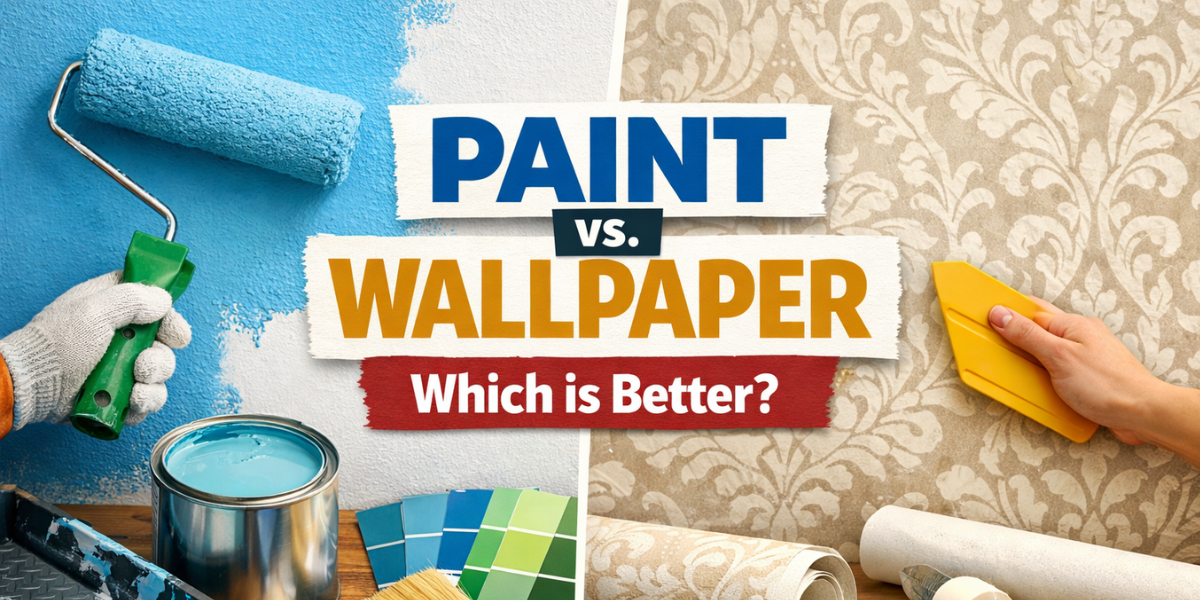
If you’re looking to know whether paint or wallpaper is better, it really comes down to these:
- Choose paint if you want a budget-friendly, low-maintenance option that offers easy touch-ups.
- Choose wallpaper if you want a visually striking, customised, and long-term durable design.
Many Indian homeowners prefer painting their house because, frankly, that is what most of us have grown accustomed to. For years, it has been considered the most durable choice for Indian weather conditions.
However, now that wallpaper has entered the picture, the ongoing dilemma– wallpaper or paint– has owners conflicted. What once felt like an obvious choice has now become a genuine conundrum.
Therefore, in this blog, Magicdecor’s experts will walk you through everything you need to know about paint vs wallpaper, helping you find an option that truly suits your home and your lifestyle.
Paint vs Wallpaper: Key Differences
Let’s understand paint vs wallpaper better through the table below:
| Aspect | Paint | Wallpaper |
| Visual Impact | Clean, simple, and minimal | Rich, detailed, and visually striking |
| Durability | Prone to chipping, scratches, and fading | Resistant to everyday scratches and scuffs |
| Upfront Cost | Lower | Higher |
| Long-Term Value | Higher (needs repainting every few years) | Lower (lasts longer without replacement) |
| Maintenance | Easy to clean and simple to touch up | Wipeable surface and hard to repair if damaged |
| Application | Takes 5-7 days for preparation and application | Takes an hour or more for application |
| Moisture Resistance | Excellent at resisting moisture | Moisture-resistant options withstand moisture |
| Removal | Easy to paint over | Time consuming and requires specialised process |
| Lifespan | 5-7 years in typical Indian households | 10-15 years with good quality and installation |
Design & Visual Impact: Paint vs Wallpaper
The design and visual impact of paint and wallpaper are as follows:
1. Paint
- Offers a smooth, uniform finish that keeps the space looking neat.
- Works well for modern and minimalist interiors.
- Wide range of shaded but limited in pattern and textures.
- The visual impact is moderate, best for those who prefer a simple and timeless aesthetic.
2. Wallpaper
- Instantly adds texture, depth, and character to a space.
- A plethora of designs, patterns, colours, and prints are available to choose from.
- Can make a room feel luxurious, moody, or dramatic based on selected design.
- The visual impact is high and works best when you want the walls to stand out.
Pros and Cons of Painting the Wall
The pros and cons of painting are as follows:
1. Pros
- Versatility: Painting offers an endless options of colours and finishes you can choose from to fit your style and interior decor.
- Cost-Effective: Painting is generally cheaper than wallpapering, especially for budget-friendly makeovers.
- Easy to Clean: Painted walls, especially with good quality and high sheen, are easy to clean and maintain.
- Simple Application: Painting is simple to simply, requiring less specialised expertise as compared to wallpaper.
2. Cons
- Limited Texture: Painted walls offer a flat look compared to wallpaper, providing little texture or tactile appeal.
- Time-Consuming Preparation: Painting requires extensive preparation and application time as it involves sanding, priming, and drying time.
- Shows Imperfections: Unlike wallpaper, paint does not help conceal wall imperfections. In fact, it highlights it even more.
- Low Durability: Painted walls are prone to chipping, fading, and damaging over time, especially in high-traffic areas.
Pros and Cons of Wallpapering a Wall
The pros and cons of wallpapering are as follows:
1. Pros
- Durability: High-quality wallpapers can last up to 15 years, outlasting paint that requires repainting every few years.
- Variety of Aesthetics: Wallpaper comes in a plethora of colours, designs, and textures to suit various interior styles and personal preferences.
- Hides Imperfections: Wallpaper is excellent at concealing uneven surfaces, cracks, and nail holes that would otherwise highlight.
- Easy to Maintain: Modern wallpapers and vinyl-coated options are easy to wipe and maintain.
2. Cons
- High Upfront Cost: Wallpaper can be quite expensive due to high-quality materials and labour costs.
- Professional Installation: Wallpapering requires proper wall preparation and expertise to ensure patterns match and seams are straight.
- Hard to Repair: If wallpaper is damaged, repairing a specific spot or a panel is challenging due to colour and pattern match.
- Removal Challenges: Stripping wallpaper is time-consuming and challenging to avoid damaging the wall surface underneath.
Paint vs Wallpaper: Cost Breakdown
Here’s the cost breakdown of paint vs wallpaper in the Indian market:
| Aspect | Paint | Wallpaper |
| Materials | ₹8 per sq. ft. for distemper paint to ₹80 per sq. ft. for premium or textured paint. | ₹30 per sq. ft. for basic vinyl or paper-based options; ₹500 per sq. ft. for premium non-woven and fabric options. |
| Labour | ₹10-₹50 per sq. ft. depending on the city, paint type, and complexity. | Installation costs start from ₹10 per sq. ft., depending on the city |
| Total | ₹18- ₹130 per sq. ft. | ₹40-₹510 per sq. ft. |
Paint vs Wallpaper: Which Lasts Longer?
Among the two, paint vs wallpaper, which do you think lasts longer? Let’s find out below:
1. Paint
- Lifespan: Paint lasts around 5-7 years with frequent touch-up every 3-5 years.
- Durability: Scratches, scuffs, and stains are visible over time.
- Sunlight Exposure: Does not fade easily under constant sun exposure.
- Humidity Tolerance: Ideal for high-traffic and high-humidity areas.
2. Wallpaper
- Lifespan: Wallpaper can last up to 15 years when maintained well over the years.
- Durability: It can withstand everyday scuffs and scratches.
- Sunlight Exposure: Prone to fade under prolonged, direct sun exposure.
- Humidity Tolerance: Not ideal in high-humidity areas as it causes bubbling and peeling.
From the above, we can deduce that wallpaper lasts longer and performs better over time. Although, you can choose paint for high-traffic and high-humidity environments.
Installation Time and Effort
1. Paint
- Furniture needs shifting and floor protections add to the effort.
- Requires wall preparation such as cleaning, taping, priming, and painting.
- Requires 2-3 coats for an even finish.
- Drying time between coats can take hours or even days.
- Needs proper ventilation during and after application.
- Post-painting cleanup is required due to paint splashes and mess.
2. Wallpaper
- Requires accurate measuring and proper wall preparation.
- Pattern alignment is very crucial, therefore patience and precision is required.
- Installation is usually complete within a few hours to one day, depending on how many walls.
- Typically requires skilled installation for perfect fit and long-term results.
- Little drying time to allow the adhesive to bond well.
Moisture, Heat, and Indian Home Conditions
Indian walls have seen it all– food splashes, intense summer heat, stubborn monsoon moisture, and the constant shift in weather conditions, all while adapting to our everyday lifestyle. Therefore, let’s see how paint vs wallpaper handle these conditions:
1. Paint
- Handles heat well, especially near stoves and hot appliances.
- More resistant to humidity in bathrooms and kitchens when using moisture-resistant paints.
- Less prone to peeling in fluctuating Indian weather conditions.
2. Wallpaper
- Can struggle in humid conditions as it may peel, bubble, and form mould over time unless vinyl options are chosen.
- Not ideal for areas with direct water and sunlight exposure.
- Requires proper wall preparation and installation to withstand Indian weather conditions.
Rental-Friendly Options: Which Does Not Cause Damage?
Are you thinking of decorating your rental home but unsure which option between the two will leave no damage to the wall? Fret not–let’s look at the differences between paint vs wallpaper:
| Aspect | Paint | Peel-and-Stick Wallpaper |
| Application | Requires full painting process | Simply peel and stick |
| Ease of Removal | Requires repainting can restore original look | Can be peeled off easily |
| Wall Damage Risk | No damage if repainted back to original colour | Designed to be removable without damage to the walls |
| Flexibility | Not flexible once done | Easy to remove, resposition, or replace |
| Ideal Use | Long-term rental with permission | Short-term rentals or frequent decor changes |
Maintenance, Cleaning, and Repair
1. Paint
- It is easy to wipe and manage with a damp cloth.
- Scratches, chips, or marks are easy to fix with touch-up paint.
- Requires repainting after every 3-5 years to maintain appearance.
- No need for full wall treatment for small damages.
2. Wallpaper
- Requires more careful care and cleaning to maintain its visuals.
- Easy to clean with a soft microfibre cloth and mild cleaning solution.
- Damaged sections often require replacing the entire panel.
- Peeling edges can be glued with an adhesive but tears are hard to fix.
Eco-Friendliness and Safety
The age-old question of which option is safe for your family and is ecologically sound. Let’s settle this once and for all:
1. Paint
- Traditional paints release VOCs (Volatile Organic Compounds) into the air, which can affect indoor air quality.
- Exposure to long-term VOCs can cause headaches, dizziness, and irritation.
- The process of sanding, priming, and painting can trigger sensitivities.
- Odour or fumes can linger for days.
- Eco-friendly paints are available but may come at a higher cost.
2. Wallpaper
- Many modern wallpapers are made using FSC-certified paper.
- Printed using water-based, VOC-free inks, making them safer for indoor air quality.
- Premium wallpapers are generally safe for families and pets due to minimal chemical emissions.
- No fumes or strong odours are released during and after installation.
- Certain types, especially vinyl wallpapers are non-biodegradable.
When Should You Choose Paint vs Wallpaper?
You should choose paint or wallpaper in the following conditions only:
Choose Paint If:
- You’re working with a tight budget.
- The space you’re decorating is a high-traffic area.
- The room is moisture-prone.
- You’re painting exterior walls or sun-exposed areas.
- You want an easy and quick refresh every few years.
Choose Wallpaper If:
- You want a bold visual impact or statement wall.
- You’re looking for luxurious textures and premium finishes.
- The walls have minor imperfections you want to conceal.
- You prefer a long-lasting finish that can last 10 years without touch-ups.
- You want a more customised and unique look.
Common Mistakes to Avoid
Before choosing between paint and wallpaper, a few of these missteps can lead to disappointing results if not considered:
- Ignoring wall condition before application.
- Choosing traditional wallpaper for high-humidity rooms like bathrooms and kitchens.
- Not ordering wallpaper samples or testing paint shades in your room lighting before finialising.
- Assuming all wallpapers are renter-friendly.
- Poor measurement and planning that leads to overordering and wastage.
- Not hiring professional installation survive for large-scale murals or complex wallpaper patterns.
Conclusion: Which One Is Right for You?
While there isn’t a clear winner and an option that is better than the other, both paint and wallpaper come with their fair share of advantages and disadvantages. Paint makes sense for homeowners looking for a budget-friendly solution and flexibility. On the other hand, wallpaper is ideal for those who prefer long-term decor and customisable designs.
Both options work well in Indian homes, but the right choice depends on your space, the level of wear and tear it will face, and the kind of value you expect from the given option. Once these factors are clear, the decision becomes much easier.








 Material Preview
 Digital Snapshot
 Design Selection
