








Choosing between textured and smooth wallpaper mainly depends on the following:
- If you want to add a tactile appeal or hide small wall imperfections, choose textured finish.
- If you prefer a clean, modern, and minimal look, smooth wallpaper finish is better suited.
We already know that wallpapers change the entire feel and look of a room and are one of the easiest ways to decorate an Indian home today. But once the design is chosen and settled, you often ponder whether to choose a textured or a smooth finish.
For many homeowners installing wallpaper for the first time, the difference isn’t obvious. Some finishes add depth and riches while others keep the walls simple and modern.
Therefore, in this blog, we’ll explore the differences, advantages and disadvantages, and ideal uses of each type, helping you make an informed decision.
Understanding Wallpaper Finishes
There are two types of wallpaper finishes. They are as follows:
1. What is a Smooth Wallpaper?
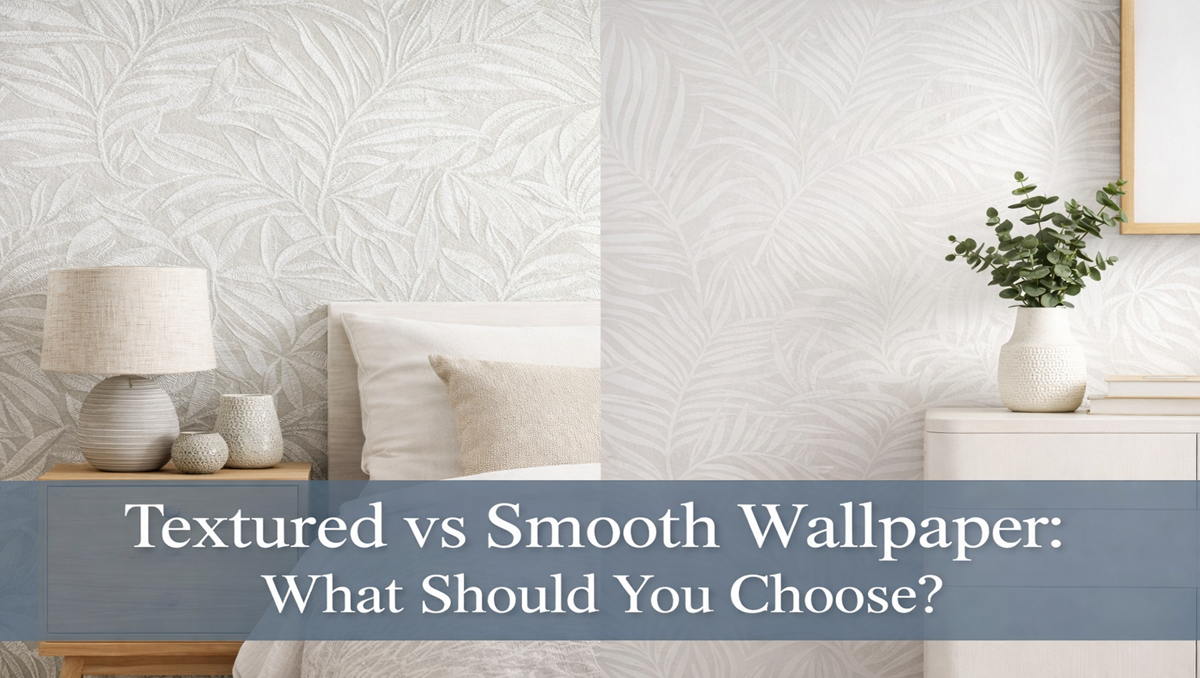
Smooth wallpaper has a flat and even surface that gives walls a clean and polished appearance. It works well in modern and minimalist interiors where a clean and contemporary look is desired.
2. What is a Textured Wallpaper?
Textured wallpaper features a raised or embossed surface that adds depth and dimension to a wall. This wallpaper finish is ideal for those who want to add tactile appeal or a sense of luxury to their space.
Types of Textured Wallpaper
Textured wallpapers come in various different finishes such as:
1. Fabric or Linen Texture
This type of textured wallpaper mimics the texture of a fabric, giving walls a warm and premium feel. It is often used in living rooms and bedrooms where a sophisticated texture makes the space more inviting.
2. Embossed Texture
Embossed wallpapers consist of raised patterns that add depth and dimension to the wall. They offer a subtle 3D depth that makes it a visually engaging and prominent texture than smoother ones.
3. Flocked Texture
Similar to embossed, flocked wallpaper features a soft, velvet-like raised surface. This texture gives walls a luxurious and dramatic appearance and is commonly used in formal spaces such as living rooms and dining rooms.
4. Grasscloth Texture
Made from natural fibres such as jute or bamboo, grasscloth wallpapers offer an organic and earthy texture. It is very popular in spaces where homeowners want to introduce a natural, handcrafted touch.
Textured vs Smooth Wallpaper: Key Differences
Here’s a clear distinction between a textured and smooth wallpaper:
| Aspect | Textured Wallpaper | Smooth Wallpaper |
| Surface | Has a raised or embossed surface | Has a flat and even surface |
| Visual Impact | Adds tactile feel and depth | Highlights patterns and colours |
| Wall | Can help hide minor wall imperfections | Works best on well-prepared, smooth walls |
| Maintenance | Requires more careful cleaning because of the textured areas | Easier to wipe and maintain due to the smooth surface |
| Best Use | Works well for accent walls and rooms that need visual statement | Ideal for full-room wallpapering or spaces with detailed, large patterns. |
Pros and Cons of Choosing Textured Wallpaper
1. Pros
- Hides Imperfections: Textured wallpapers are excellent at concealing wall imperfections such as bumps, small cracks, and dents.
- Adds Depth & Dimension: They add a tactile, luxurious feel to walls, enhancing the overall ambience of the room.
- Versatile Styles: Textured wallpapers are available in a range of materials and textures from embossed to grasscloth, the options are wide.
2. Cons
- Higher Cost: Textured wallpapers are generally more expensive as compared to smooth wallpapers.
- Installation Complexity: Since textured wallpapers have raised patterns and thicker materials, the installation process needs to be extra precise.
- Cleaning Challenges: The raised surfaces can trap dust and debris, requiring more cleaning and maintenance as they get stuck in the crevices. c
Pros and Cons of Choosing Smooth Wallpaper
1. Pros
- Easy to Clean: Flat wallpaper surfaces make cleaning a breeze, especially for high-traffic areas that need to be wiped with a damp cloth.
- Cost-Effective: Smooth wallpapers tend to be slightly affordable as compared to textured wallpapers that have raised designs and thick materials.
- Versatile Designs: Without the distraction of texture, colours and patterns take the center stage, offering a well-defined look.
2. Cons
- Highlights Wall Imperfections: Because it lacks thick texture, smooth wallpapers won’t hide imperfections, demanding a smooth, well-prepared surface.
- Limited Depth and Dimension: Smooth wallpapers may lack dimensional depth and tactile appeal that textured wallpapers provide.
- Shows Damage Easier: Due to the lack of thick materials, smooth wallpapers are inclined to show scuffs, scratches, and tears.
When to Choose Textured Wallpaper for Your Space?
Textured wallpaper is ideal for your space when:
- You want to hide wall imperfections like uneven surface, cracks, or other minor flaws that might otherwise be visible on smooth finishes.
- The room feels too plain or flat and needs to feel more layered and in depth,
- You want to create a statement wall or add a tactile design feature.
- You want your walls to exude luxury and sophistication.
When to Choose Smooth Wallpaper for Your Space?
Smooth wallpaper works well when:
- You want a clean and minimal look with simple designs and neat finishes.
- The wall surface is already well-finished and free from imperfections.
- Decorating smaller rooms that need to feel lighter and less visually heavy.
Textured vs Smooth Wallpaper: Which is Better for Each Room?
1. Living Room
In living rooms, textured wallpaper often works very well because it adds a sense of tactile depth and visual richness to the space. Since it’s the most social room in the house, textured finishes make the space more sophisticated and high-end.
2. Bedroom
Bedrooms benefit from wallpapers that create a calm and comfortable atmosphere. Both textured wallpaper can smooth wallpaper works here to help the space remain relaxing and visually calming.
3. Kitchen and Dining Areas
In kitchens, smooth wallpaper is usually the better option because it is easier to clean and maintain. While textured wallpaper is a great choice for dining areas as dinner parties and gatherings are often hoisted here.
4. Bathroom
Bathrooms require materials that handle humidity and moisture well. Moisture-resistant smooth wallpaper, in this case, is more suitable because it is easier to wipe clean any steam condensation or water marks.
5. Hallways and Entryways
Textured wallpaper is a practical choice for hallways and entryways as these areas often experience more movement and wall contact. It will help hide minor scuffs or wall imperfections.
How to Choose the Best Wallpaper Finish for Your Space?
1. Establish Room Functionality
Observe and see how the room is used and whether it’s a high-traffic area. High-traffic areas such as bathrooms and kitchens work better with smooth finishes, while low-traffic areas like the living room benefit from textured wallpaper.
2. Your Style Preference
Your interior style plays a big role in the choice between textured and smooth wallpaper. If you prefer depth and a luxurious feel, textured wallpapers can add richness to the space. If your home leads towards minimal interiors, smooth wallpapers offer a cleaner look.
3. Existing Wall Condition
The condition of your walls matters more than many people realise. If you have cracks or scuffs on your wall that take away the visual appeal of the room, install textured wallpapers over them. However, if you have a clean wall, smooth wallpapers give a flawless finish.
4. Lighting and Visual Impact
Lighting in the room can also influence how the wallpaper finish appears. Textured surfaces interact with light and shadows, adding more depth to the walls, while smooth finishes reflect light and allow the patterns to stand out.
Common Mistakes to Avoid
A few of these common mistakes can affect the final look and performance of the wallpaper:
1. Choosing Texture Without Considering the Room
Textured wallpaper no doubt looks stunning, but in smaller rooms it may sometimes feel visually heavy. It is important to consider the size and lighting of the space before selecting a strongly textured pattern.
2. Ignoring Wall Surface Condition
Smooth wallpaper requires a clean-well-prepared wall. If you install the wallpaper on an uneven or damaged wall surface, the cracks and bumps become more noticeable instead of hiding them.
3. Selecting Style Without Thinking About Lighting
Do not choose a wallpaper finish without considering the lighting of the room first. A texture might reflect a lot in ample light and dull in low lighting.
4. Overlooking Maintenance Needs
Some textured wallpapers may collect more easily than smooth surfaces because of their raised surfaces. Choosing a wallpaper finish without thinking about how easy it will be to clean can create extra maintenance work later.
Conclusion: What Should You Choose?
Both textured and smooth wallpaper surfaces bring their own character to a space, and the right choice depends on what kind of effect you want on your walls. Textured wallpaper can introduce tactile appeal, depth, and luxurious feel, while smooth wallpaper offers a clean and modern finish.
For most homeowners, the decision boils down to the room’s purpose, the condition of the wall, and overall desired interior style. Taking these factors into account can help you select a wallpaper finish that fits naturally into your space.
FAQs
- Which wallpaper finish lasts longer?
Both textured and smooth wallpaper finishes can last for many years when installed properly. The lifespan mainly depends on the quality of the material, wall preparation, and environmental conditions.
- Is textured wallpaper better than smooth wallpaper?
Neither option is universally better and both finishes come with their fair share of advantages. Textured wallpaper can hide minor wall imperfections and smooth wallpaper offers a clean and modern look.
- Do textured wallpapers damage walls?
No, textured wallpapers do not damage walls when installed and removed correctly. The wall is only damaged if proper wall preparation is not followed, right adhesive isn’t used, and rushing the removal process.
- Is smooth wallpaper easier to clean than textured wallpaper?
Yes, smooth wallpaper is easier to clean because dust and dirt do not settle into textured grooves as they might with textured finishes.
- Which rooms are best suited for textured wallpaper?
Textured wallpaper works well in low-traffic areas such as living rooms, bedrooms, and dining areas, where a luxurious, tactile effect is desired.










 Material Preview
 Digital Snapshot
 Design Selection
