










Both accent wall and full room wallpaper can look beautiful depending on your room size, lighting, and the kind of visual impact you want to create.
- An accent wallpaper works best when you want a focal point to highlight a specific area.
- A full room wallpaper creates a more immersive and unified look.
Very few design elements transform the look and feel of a room as effectively as wallpaper. But once homeowners decide to use it, another question quickly follows— should it be an accent wall or cover the entire room?
For many Indian homeowners, this becomes a real dilemma as accent walls are within budget and minimal investment, while full room wallpaper is a long commitment.
Both options have their own fair share of advantages and disadvantages, and what one works for someone else’s house may not work for yours. Therefore, our experts will guide you through these options and help you find the right approach for your home.
Understanding Accent Walls vs Full Room Wallpaper
Before deciding which options looks better, it helps to understand what each approach actually means and does:
-
What is an Accent Wall?
An accent wall is a single wall in a room that is covered with a wallpaper, one that stands out visually from the rest. Accent walls are commonly placed behind central furniture pieces such as beds, sofas, or dining tables to add visual interest while keeping the rest of the room simple.
-
What is Full Coverage Wallpaper?
Full room means applying wallpapers on all the walls in the room to unify and complete the look or theme. This approach creates a more immersive and cohesive look, especially when you want the space to feel complete and well-thought-of.
Visual Impact: Accent Wall vs Full Room Wallpaper
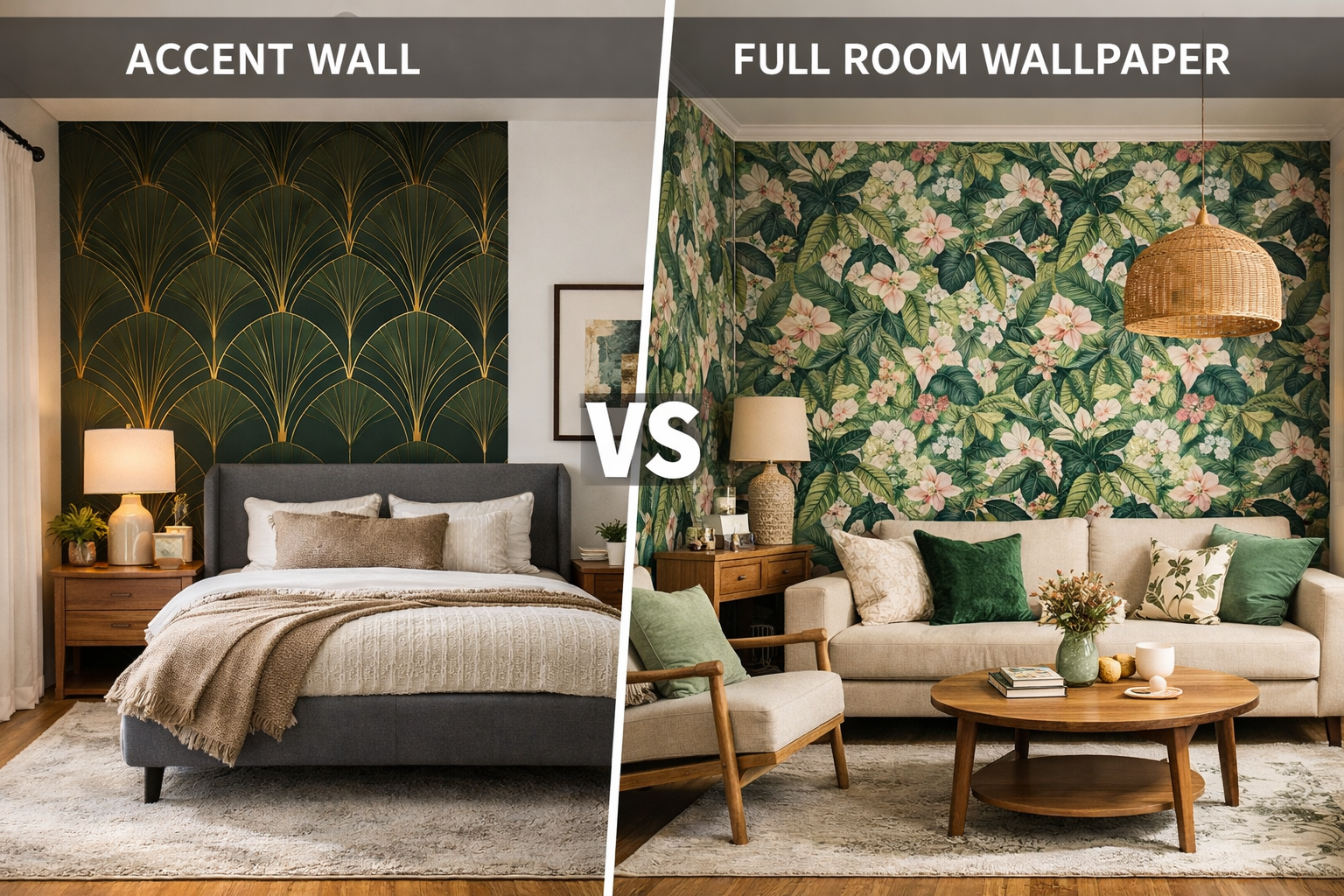
Both wallpaper approaches create the following design experiences and influences of a space:
1. Accent Wallpaper
- Creates a strong focal point that immediately draws attention to one specific area of the room.
- Helps highlight architectural or important features in the room such as fireplaces, archways, sofas, or beds.
- Adds interest to the space without making the entire room feel too busy.
2. Full Room Wallpaper
- Creates an immersive, cohesive visual experience by surrounding the room with one pattern and colour.
- Forms a consistent visual theme that creates a more harmonious interior style.
- Instead of focusing on one wall, full room wallpaper changes how the entire room looks and feels.
Pros and Cons of Accent Walls
The pros and cons of a wallpapered accent wall are as follows:
1. Pros
- Creates Focal Points: Accent walls draw attention to a specific area of the room such as unique architectural features like the fireplace or anchoring the room with furniture set.
- Cost-Effective & Flexible: Accent walls are more affordable as only one wall is covered with wallpaper. Plus, it allows for more flexibility by offering a less permanent decor.
- Easy to Experiment With: With accent walls you can experiment with new wallpaper designs without committing to the entire room. Moreover, it’s much easier to change it as compared to full-room if you want to refresh it later.
2. Cons
- Risk of Imbalance: Since only one wall is covered, the overall impact may sometimes feel less immersive as compared to wallpapering the entire room.
- Can Look Incomplete in Some Rooms: Poor placement or execution can visually throw off the wallpaper design in a room. Especially in large rooms, the design may look incomplete or unfinished if the design is subtle.
- May Disrupt Visual Balance: If the chosen wall for accent wallpaper is not the natural focal point of the room, the wallpaper may make the space uneven or visually distracting.
Pros and Cons of Full Room Wallpaper
The pros and cons of a full room wallpaper makeover are as follows:
1. Pros
- Cohesive & Unified Look: A uniform wallpaper across all four walls gives the room a mood or a theme that feels complete. It reduces visual clutter and provides a harmonious environment.
- Eliminates Imbalance: Full room wallpaper makes a bigger statement and allows patterns or texture to fully define the room and not feel segmented.
- Works Well with Subtle Designs: Subtle patterns, minimal textures, and soft colours often look better when applied across the room rather than on just one wall.
2. Cons
- Higher Cost and Commitment: Wallpapering the entire room requires more wallpaper and labour and thus the costs are high. The increased scope of the work leads to more prep, materials, time, and labour.
- Less Flexibility: When you wallpaper the entire room, there is a less chance of updating the designs. The choice feels permanent and harder to change without deep commitment.
- Bold Patterns Overwhelm the Room: If you’re wallpapering the room with bold patterns and colours, the wallpaper will overwhelm the room and create the opposite of a cohesive, harmonious environment.
Accent Wall vs Full Room Wallpaper: Key Differences
If you’re unsure what differs an accent wall from a full-room wallpaper, let this distinction table help:
| Aspect | Accent Wall | Full-Room Wallpaper |
| Coverage | Single wall | All walls |
| Visual Impact | Creates a focal point | Creates an immersive effect |
| Installation | Faster, less material and labour | Time-consuming and more material and preparation required |
| Best For | Bedrooms, living rooms | Bathrooms, dining spaces, and small spaces |
| Room Size Fit | Ideal for small rooms | Ideal for large rooms |
How Room Size Affects the Choice
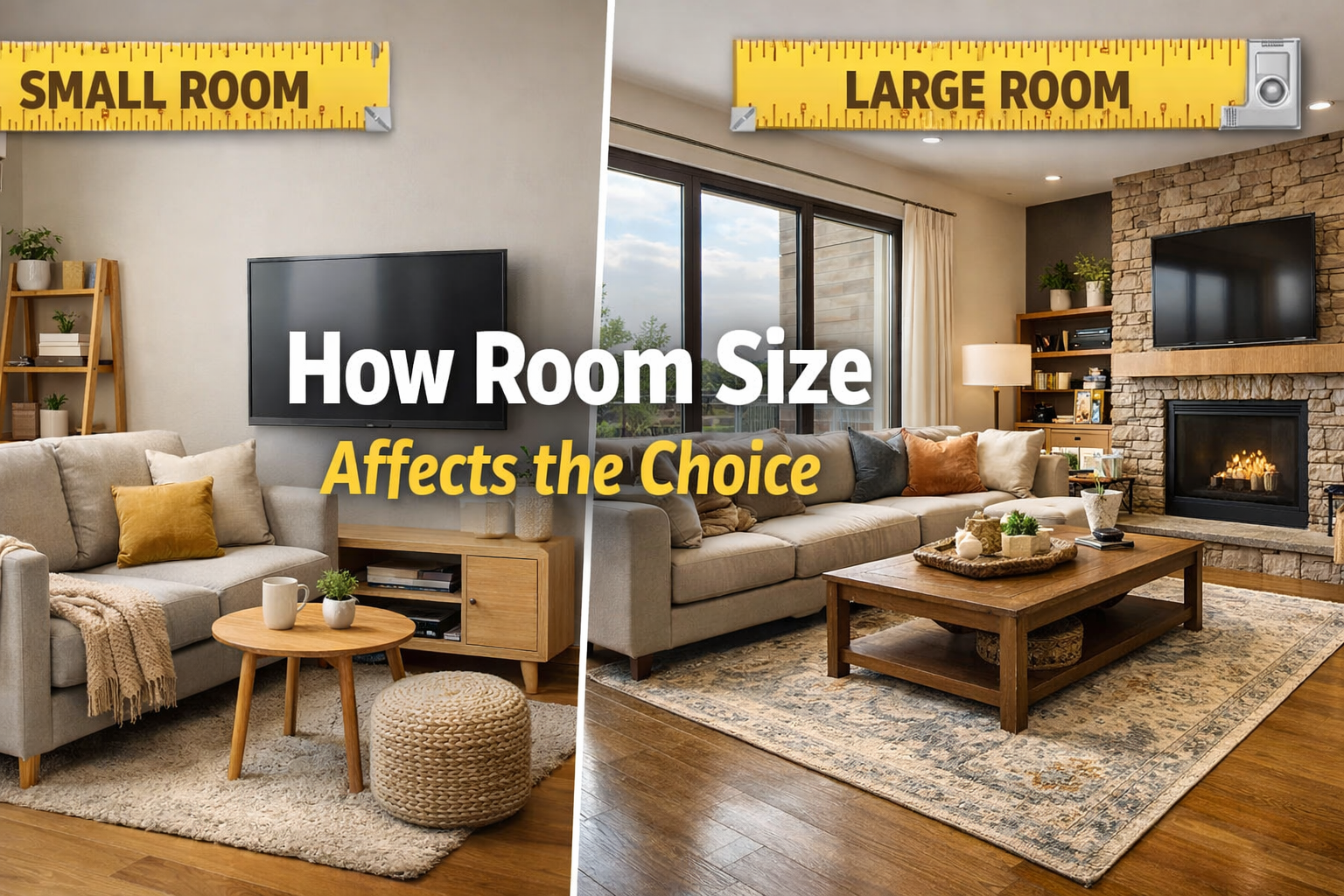
The size of the room plays an important role in deciding whether an accent wall or full room wallpaper will look better. Depending on the size of your room, here’s what wallpapering type you should consider:
1. Large Rooms
In larger living rooms, spacious bedrooms or bathrooms, full room wallpaper can create a more immersive and cohesive look. Since the space can handle bold visual designs, covering multiple walls helps the room feel cosy and connected.
2. Medium-Sized Rooms
Medium-sized rooms such as dining rooms or living rooms offer more flexibility on how to design them. You can either choose an accent wall or full room wallpaper depending on the design, lighting, and layout.
3. Small Rooms
In compact spaces such as bedrooms, studyrooms, kitchens, an accent wall often works well because it adds a statement without making the room feel visually crowded.
When to Use Each: A Quick Guide
Unsure when to use an accent wall or cover the entire room? Let this help:
| Scenario | Accent Wall Recommended | Full Room Wallpaper Recommended |
| Renting | Yes | Less ideal |
| Updating style often | Yes | No |
| Want to highlight furniture or bed | Yes | Possibly, with cohesive decor |
| Seeking a cohesive palette | Maybe | Yes |
Room-by-Room Recommendation: What Works Best Where?
1. Living Room
An accent wall is often the most ideal wallpapering type for living rooms as it instantly creates a focal point. They are ideally styled behind the TV unit, sofa, or fireplace to naturally draw attention and anchor the rest of the decor.
2. Bedroom
Both an accent wall and full-room coverage works well in bedrooms, as it instantly creates a sense of calm. An accent wall behind the bed is ideal if the room is small or if you want to make a statement. Wallpapering the entire room provides a sense of security and completeness.
3. Kitchen and Dining Room
The type of wallpapering in these rooms depends on how busy the space is and how the layout is. If there are many cabinets, shelves, or tables, an accent wall is most suitable. However, in a large kitchen, full coverage might be better suited.
4. Bathroom
Since bathrooms are small yet functional spaces, going full-room coverage creates a ‘wow’ effect, infusing the room with a spa-like ambience. An accent wall behind the vanity table or sink is also suitable.
5. Hallway and Staircase
Since the hallway and staircase are often filled with racks and doors, a full-room wallpaper seems the most fitting. Choosing a subtle, soft pattern tones down the stimulation and makes these transitional spaces cohesive.
When an Accent Wall Works Best
An accent wall is often the best idea when the room:
- Contains many elements that draw its attention such as doors and busy furniture.
- Needs a bold pattern or colour that you want to experiment with.
- Gets minimal daylight or is compact.
When Full Room Wallpaper Works Best
Full-room wallpaper is often effective when the room:
- Feels a bit cold, empty, and unfinished.
- Needs subtle or textured wallpaper to experiment with.
- Is compact and needs a cohesive, unified look.
Common Mistakes to Avoid
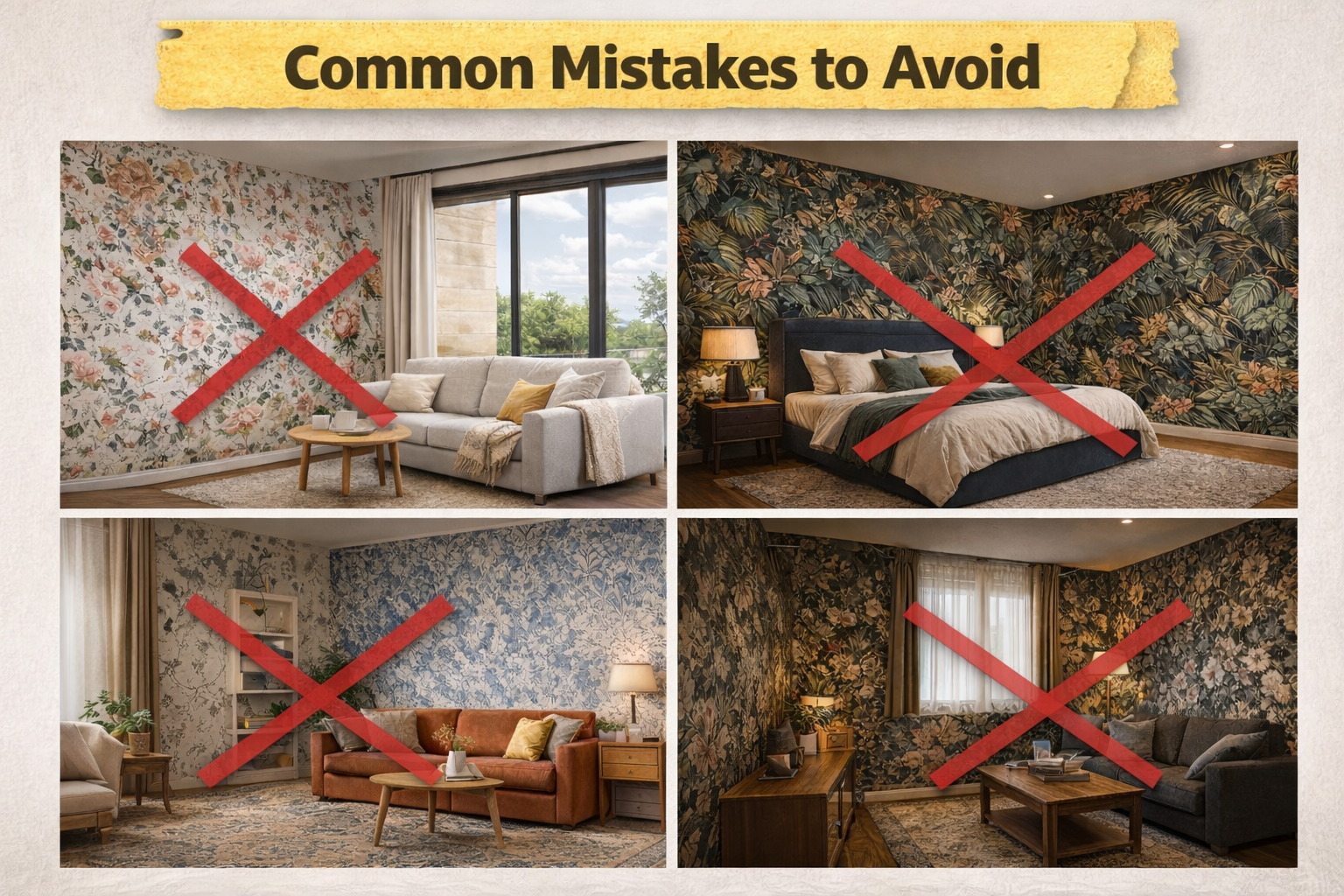
Be mindful of these common mistakes when deciding between the two approaches:
1. Choosing the Wrong Wall for an Accent Wall
The accent wall should ideally be the natural focal point of the room, such as the wall behind the TV unit, sofa, or bed. Selecting a wall blocked by windows or doors can reduce its visual impact.
2. Using Overly Bold Designs in Full Rooms
Very heavy patterns may feel overwhelming when applied to all the walls of a room. Full room wallpaper usually works best with subtle patterns and softer colours.
3. Not Coordinating Wallpaper with Furniture and Decor
The wallpaper you choose should complement the room’s furniture, colours, and overall interior style. If the design clashes with existing decor, the room may feel visually unbalanced.
4. Ignoring Room Size and Lighting
Dark or busy wallpapers can make small rooms feel cramped, especially if the space does not receive enough natural light.
Installation and Maintenance Considerations
1. Accent Wall
- Installation: It is quicker and easier to install because only one wall needs preparation and alignment.
- Ease of Maintenance: Maintaining an accent wall is usually simpler because only one wallpapered surface needs cleaning and care.
- Future Repairs: If a section of wallpaper gets damaged, repairing an accent wall is often easier and less costly.
2. Full Room Wallpaper
- Installation: Full room wallpaper requires more planning, proper wall preparation, and longer installation time due to precise alignment.
- Ease of Maintenance: Full room wallpaper may require more careful and regular cleaning since all walls are covered.
- Future Repairs: With full room wallpaper, matching patterns and replacing larger sections can take more effort and cost.
Cost Comparison: Accent Wall vs Full Room Wallpaper
The material and installation cost of both accent wall and full room wallpaper varies as follows:
1. Accent Wall
- Material: In the Indian wallpaper market, traditional wallpapers such as non-woven typically start around ₹99 to ₹150 per sq. ft., but since only one wall is covered, the overall material cost may remain slightly lower.
- Installation: Professional installation charges usually costs around ₹10 to ₹20 per sq. ft. For an accent wall, the total labour charges will be less.
2. Full Room Wallpaper
- Material: Similarly, the material cost here remains the same as the above but the total cost increases because all walls in the rooms need to be covered, and thus more material.
- Installation: Installation charges, again remain the same as the above, but since multiple walls are involved, the final installation expense becomes higher compared to an accent wall.
Conclusion: Which One Should You Choose?
Both accent walls and full room wallpaper can create stunning interiors, and the better choice depends on the space and the visual impact you want to achieve. Accent walls are great for creating a focal point, while full room wallpaper can create a more cohesive atmosphere.
In the end, whether you choose an accent wall or a full room wallpaper, the most important thing is that the home feels like you. And if you need to get started, you can always start your wallpaper journey with Magicdecor.
FAQs
- Is accent wallpaper still in style?
Yes, accent wallpaper remains a popular interior design choice as it allows homeowners to introduce designs and patterns they’ve been longing to experiment with without overwhelming the room.
- Does wallpaper make a room look bigger or smaller?
Wallpaper does influence how spacious a room feels or doesn’t. Light colours and softer patterns can make a room appear bigger, while dark and bold designs make the space feel cosy and intimate.
- Can you wallpaper only one wall?
Yes, wallpapering one wall is known as an accent or a feature wall. It highlights a specific area of the room while keeping the rest of the walls simple.
- Is full room wallpaper too overwhelming?
Not necessarily if the room size and lighting are considered. Full room wallpaper can look beautiful and cohesive when softer patterns and light shades are used.
- Which rooms are best for accent walls?
Accent walls work beautifully in living rooms, bedrooms, dining and kitchen areas, and small corners where they can create a strong visual focal point.










 Material Preview
 Digital Snapshot
 Design Selection
