









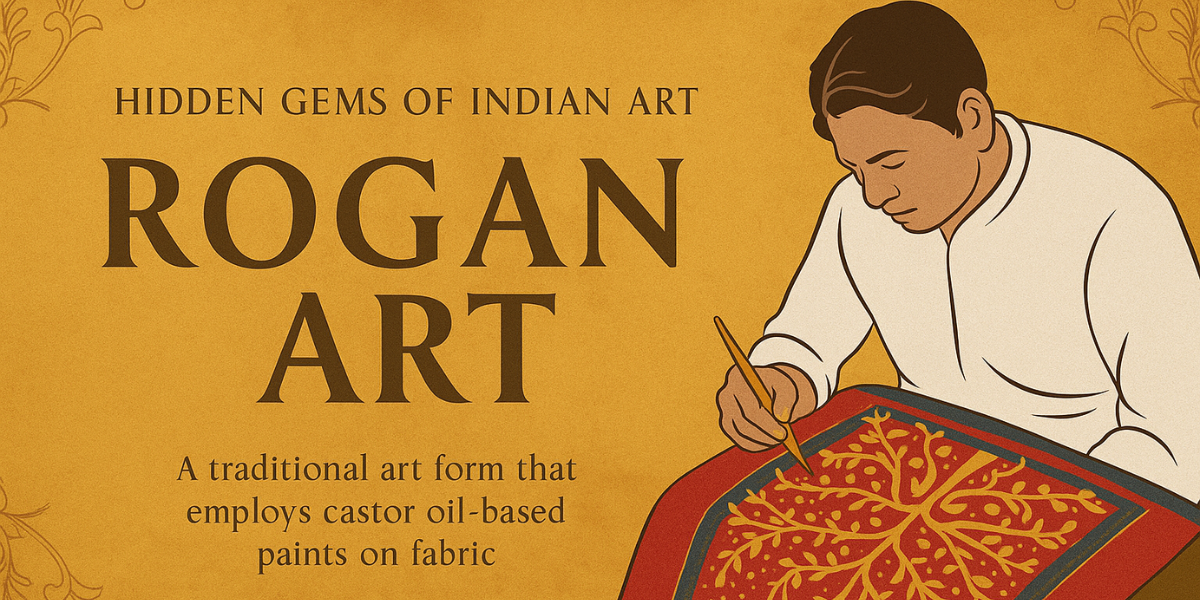
Understanding Vibrant Colours, Intricate Patterns, and the Magic of Impeccable Craftsmanship
India is a land of colourful traditions, fascinating history and rich artistic culture. Indian art is not confined to museums and galleries but is a part of our everyday lives be it the murals on walls or patterns on everyday objects. Indian art is everywhere.
One such art form that breathes through our textile is Gujarat’s Rogan Art – a hand painting technique from the region of Kutch that originated in Persia nearly four centuries ago but still remains largely unknown and obscure.
From Persian Artists to the Hands of Gujarati Artisans: How Rogan Art Has Survived for Centuries
Rogan art form originally came from Persia and travelled to Kutch in Gujarat, India. Skilled craftsmen from the region blended Indian motifs and patterns with the original Persian ones to create Rogan art designs that were used to adorn garments, especially the bridal wear.
Fun Fact! Only One Family in the Entire World Kept the Craft Alive
While today this rare art form is being revived and popularised, the credit for its survival over the centuries goes largely to a single family in Gujarat. Until a few decades ago, the Khatri family of Nirona village was the only one practicing Rogan art and can be rightly called the last keepers of this beautiful art form.
From Oil to Thread-Like Paint: The Step-by-Step Process Behind Creating Rogan Art
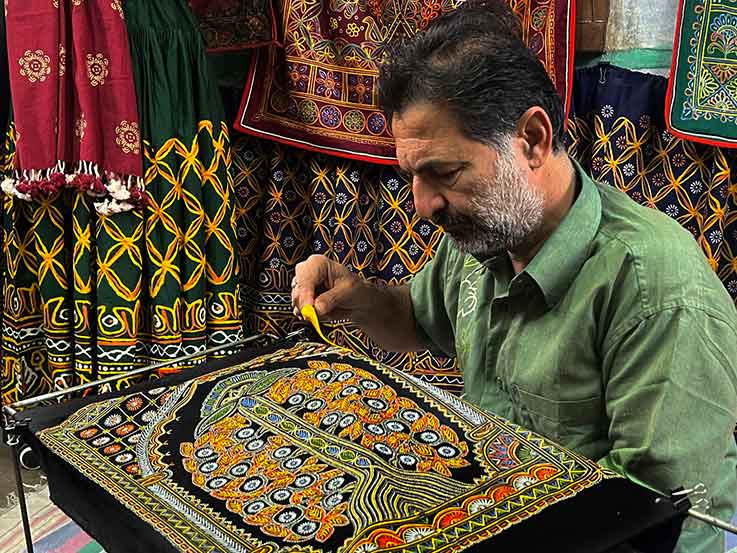
Rogan art pieces are highly valued not merely because of their delicate patterns that pop beautifully against the fabric but because of the painstakingly difficult method of creating each piece.
- Step 1: To begin the process, the artists first boil castor oil for at least two days, after which it transforms into a thick paste.
Fun Fact! The word “rogan” comes from the Persian word for “oil,” which reflects the art form’s core material—castor oil.
- Step 2: Then natural pigments are mixed with this paste. It is then used to create the motifs and patterns on the fabric.
- Step 3: Then the craftsmen skillfully dip a metal rod into the paste and stretch it out into fine threads.
- Step 4: The artists then paint diligently on the fabric with these thread-like lines. Can you believe that this is done without any prior sketching on the fabric?
- Step 5: A unique feature of Rogan art is that the design always reflects a mirrored image on the other half of the fabric. This is done by folding the fabric in half while the paint is wet.
Representing Culture Through Design: Elements that Mark Rogan Art
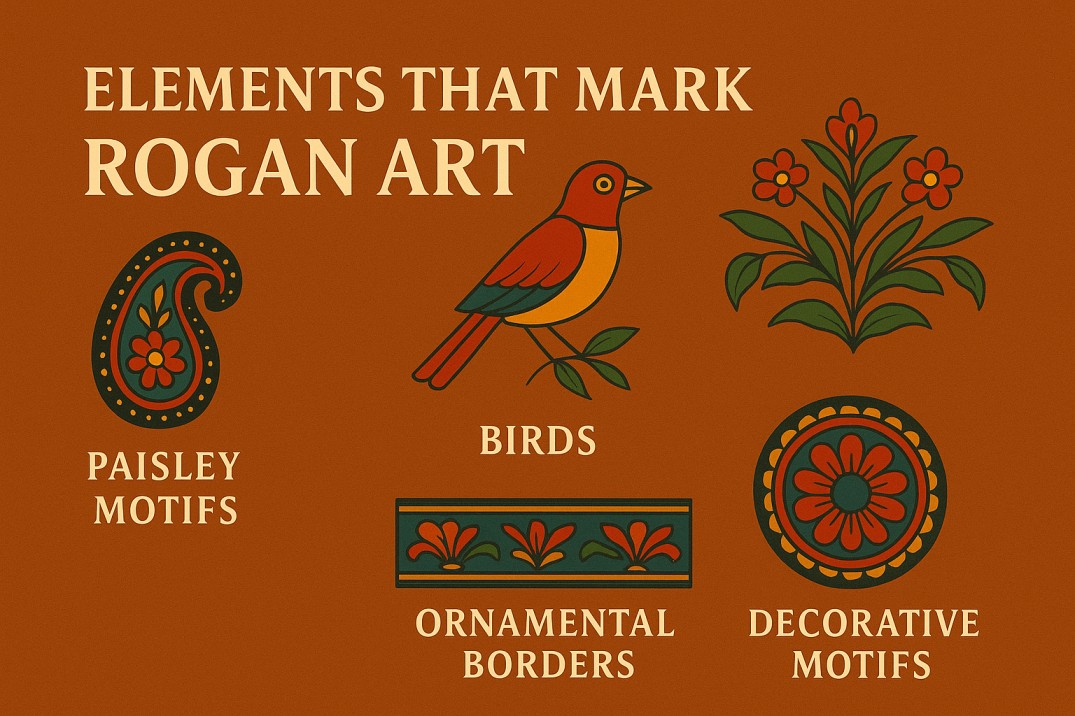
While different artists bring their own creativity and unique ideas, there are certain elements that are common to all and make Rogan art stand out amongst the other art forms.
1. Colours
Since the designs and patterns are painted onto textile, the colours used to create the intricate Rogan art designs are often bright and vibrant. The base is always of a darker colour like black, blue, or maroon.
2. Themes and Motifs
Some of the most commonly found motifs in Rogan art pieces include the Tree of Life, birds like Peacocks and beautiful flowers. Jaalis are also used to represent Indian design and architecture.
3. Patterns
These motifs are arranged in such a way that they create intricate patterns and details that speak of the rich Indian tradition and history.
Modern Revival and How to Celebrate Rogan Art in Your Own Way
A few decades ago, Rogan art was at the cusp of disappearing, but today it is gaining popularity once again. This has become possible due to its inclusion in art exhibitions and galleries and by art collectors realizing its rarity and value.
Fun Fact! In 2014, Prime Minister Narendra Modi gifted a Rogan Art piece to President Obama.
Ideas to Incorporate Rogan Art in Your Interior Decor
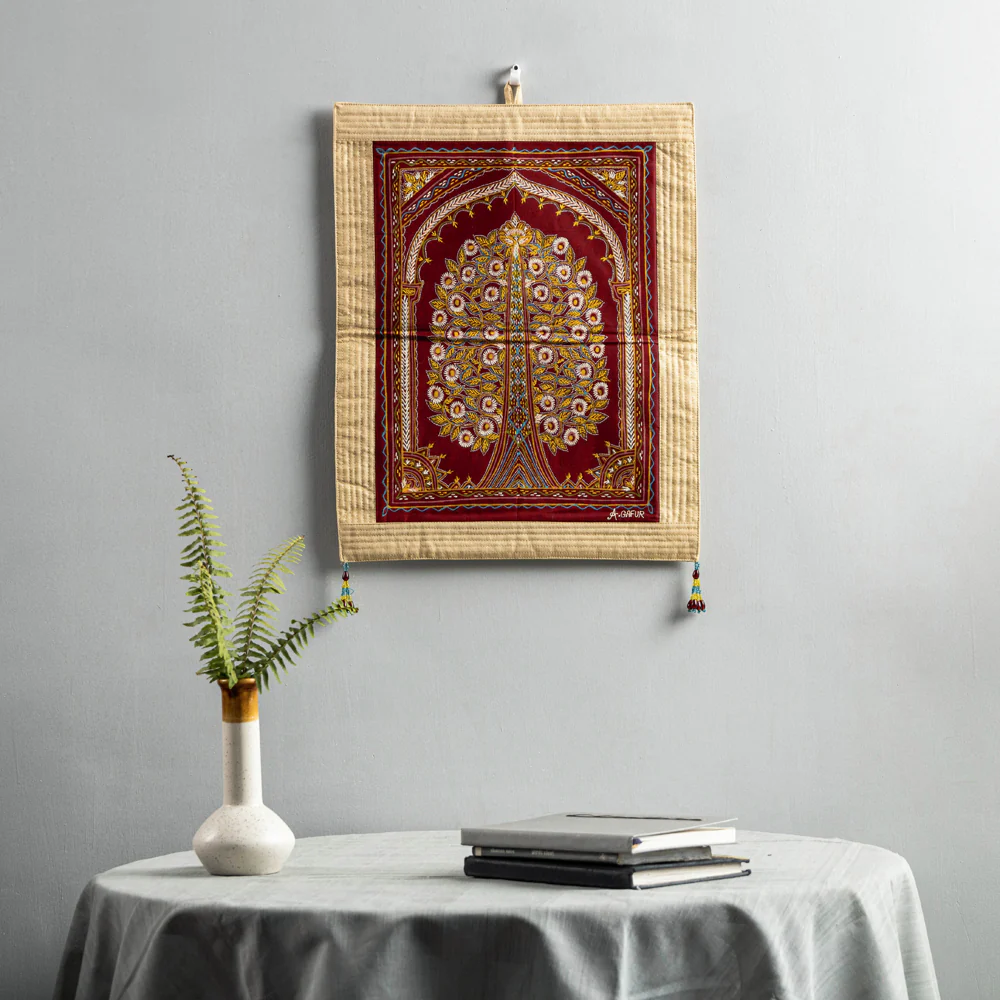
Here are some ideas if you want to decorate your living spaces with the colourful details and rich motifs of Rogan art:
- Your walls no longer have to be basic. Tapestries showcasing Rogan art are a great way of adding a pop of colour and also reflect the rich Indian heritage.
- Since it is a textile art form, you can incorporate Rogan art motifs in your decor by using the fabric for table runners, cushion covers, etc.
- Framed miniature Rogan art pieces are a great option if you prefer decor items that are subtle yet significant.
Art that Represents History and Culture: Keeping the Legacy of Rogan Art Alive
Rogan art is more than just colour painted onto fabric. It is testimony to India’s rich artistic heritage and great craftsmanship. The intricate mirrored patterns and detailed motifs are visually delightful but also culturally significant.
In a day and age where machine-made products flood the market, it is crucial to appreciate the skills of our artisans who keep our tradition alive.
You can do your part by simply adding Rogan art designs to your interior decor.








 Material Preview
 Digital Snapshot
 Design Selection
