









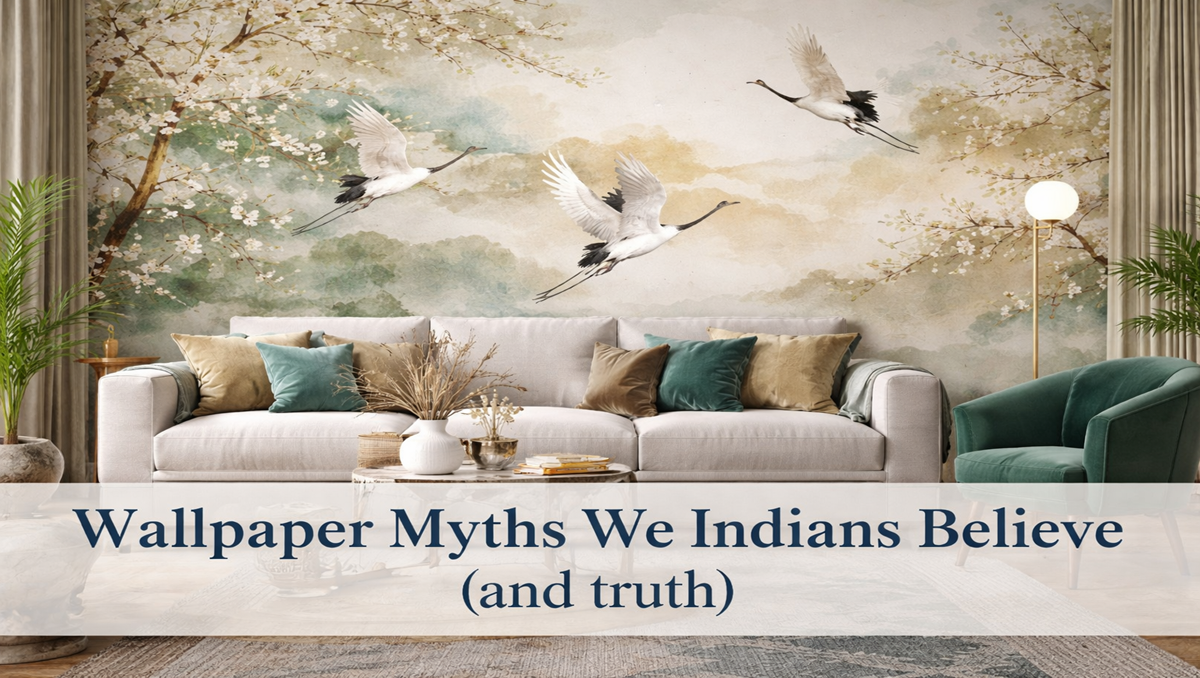
Wallpaper has become increasingly popular in Indian homes, yet many homeowners remain hesitant to choose it. The hesitation often stems from beliefs that have been passed down through word of mouth or shaped by experiences.
Growing up in predominantly painted homes, paint came to feel like the safer, more familiar choice, while wallpaper was seen as risky, expensive, and impractical.
Over time, several other factors contributed to these misconceptions:
- Lack of awareness about modern wallpaper materials and installation methods.
- The assumption that wallpaper isn’t suited for Indian climate or lifestyles.
- Word-of-mouth experiences that highlighted problems without context.
These ingrained myths continue to stop many homeowners from exploring wallpaper. Therefore, in this blog, Magicdecor’s experts will address common wallpaper myths and the truth behind them, helping you make informed decor choices.
Wallpaper Myths Indians Believe and the Truth Behind Them
Drawing from years of experience designing wallpapers for Indian homes, Magicdecor experts have identified these several wallpaper myths that presents homeowners from purchasing wallpapers:
Myth 1: Wallpaper is Hard to Maintain and Difficult to Clean
Many homeowners avoid buying wallpaper because they assume it is difficult to clean and maintain. This myth is rooted in history more than reality as we all grew up with painted walls that required little cleaning to wallpapers that need more cleaning.
Reality: Modern wallpapers are easier to maintain and clean than you think, especially with washable and stain-free options available. As long as you follow the manufacturer’s care instructions, you won’t have to clean the wallpaper daily, save for regular dusting.
Myth 2: Wallpaper is More Expensive Than Paint
Some people believe that wallpaper is comparatively an expensive option to paint. This myth has been immortalised by notions that claim wallpaper is an unaffordable luxury.
Reality: Wallpaper is actually more cost-effective than you think. Although the upfront cost might be higher, high-quality wallpaper lasts up to a decade without the need for replacement or repair unlike touch ups with paint every year.
Myth 3: Wallpaper will Damage Walls Once Removed
Another common reason homeowners avoid installing wallpaper is because they fear it will damage their walls after removal. This is a very common concern, especially when traditional wallpaper needs adhesive paste to stick to the wall.
Reality: While it’s true that traditional wallpaper can cause damage to the wall after removal. However, the main reasoning behind this is the low-quality wallpaper material and adhesive or if the installation process was forcefully done.
Myth 4: Paints Offers More Variety Over Wallpaper
This is no longer true since wallpaper offers just as many designs and colour options as paint does. They believe that with paint you can create an infinite number of colour combinations and designs.
Reality: While paint is largely limited to solid colours and textures, wallpapers open up an entirely different world of designs. From geometric patterns, florals, abstract art to striped, traditional Indian motifs, and natural textures, the possibilities are endless.
Myth 5: Wallpaper is Outdated
Another frequent misconception about wallpaper is that it belongs in the past decades, in traditional or vintage homes. Many still associate florals, stripes, and damask wallpaper prints from the 80s and 90s.
Reality: Wallpaper designs found today align with our modern lifestyle and aesthetics. Today, you can find a plethora of designs that suit traditional, contemporary, and modern Indian homes.
Myth 6: Wallpaper Does not Last in Indian Homes
Many Indians believe wallpaper does not last because of monsoons, extreme heat, humidity, and constant dust. Poor quality wallpapers, improper wall preparation, and bad installation experiences have reinforced this myth.
Reality: With climate or room appropriate wallpaper material, proper wall preparation, and professional installation, wallpapers are highly durable and can last 8-15 years, even in Indian conditions.
Myth 7: Wallpaper Peels Off Easily
Many homeowners believe wallpaper peels off easily because they’ve seen corners or edges lifting and curling. This usually comes from poor wall preparation, low-quality adhesive, or moisture issues rather than the wallpaper itself.
Reality: When walls are properly cleaned, primed, and installed using the right adhesive, wallpaper adheres firmly and stays intact for years without peeling or lifting.
Myth 8: Wallpaper is Bad for Health
There is also a perception that wallpaper is bad for health due to strong odour and VOC emissions. These chemicals released due to off-gas deteriorate the indoor air quality.
Reality: The health concern comes from certain wallpapers containing VOCs, PVS, or arsenic inks. However, with reputed brands, you will find non-toxic and VOC-free wallpapers that do not pose any health risks.
Why Do These Wallpaper Myths Exist in India?

Many wallpaper myths in India stem from past experiences, outdated products, and a general lack of awareness about how modern wallpapers are designed and installed today. The primary reasons for their existence are:
- Limited Access to Quality Wallpaper: Older wallpapers were often low-quality, poorly suited for Indian conditions, and lacked durability, shaping these negative perceptions.
- Improper Installation Practices: Inadequate wall preparation and untrained installers led to peeling, bubbling, and damage, issues that were blamed on wallpaper rather than the process.
- Lack of Product Transparency: Many homeowners weren’t informed about materials, maintenance, or correct material usage, allowing myths to persist and spread through word of mouth.
How to Choose the Right Wallpaper for Indian Homes
Choosing the right wallpaper for your home can be exciting and overwhelming. To help you out, here are some suggestions provided by Magicdecor experts to help you through the selection process:
1. Consider the Room’s Size and Function
The first step in selecting the right wallpaper is understanding the size and function of the room. For instance:
- Hallways, kitchens, entrance walls, and living rooms need durable walls.
- Kitchens and bathrooms need wallpaper that can handle moisture and humidity.
Coming to room size, the wallpaper design choice makes a huge difference. For example:
- Small, compact rooms benefit from lighter shades and minimal patterns to make the room feel expansive.
- Bold patterns and dark colours work wonderfully in large rooms, making them feel intimate and cosy.
2. Think About the Mood You Want to Create
The shades and patterns you choose will have a considerable impact on the mood and ambience of the room. Therefore, before picking a design think about how you want to feel the moment you walk in the room. Is it cosy, energetic, moody, or airy?
3. Match to the Existing Furniture and Decor
Another key step to consider while selecting your wallpaper is how well it complements the existing furniture. The reason to do so is to create a cohesive and balanced look, as the wallpaper complements the furniture and not compete against it.
4. Consider Durability and Maintenance
When selecting your wallpaper, don’t forget to consider where it will be placed, as each room has varying traffic. High-traffic areas need resistance and durability and should also be easy to clean and maintain.
5. Consider Installation and Removal
Finally, keep in mind the amount of cost and time you’ll be spending on the wallpaper. For example, if you’re planning for the long-term, opt for high-quality wallpapers and professional installation. On the other hand, if you want a temporary decor and easy removal, select peel and stick wallpapers.
Wallpaper and Indian Climate: What You Need to Know

India’s climate is diverse and often unpredictable, from harsh summers and heavy monsoons to cold winters and dust, making it all the more essential to choose wallpapers that can withstand all weather conditions.
1. Choosing the Most Suitable Wallpaper Material
India’s diverse climate is ever-changing and therefore, you should choose a wallpaper material that can withstand all weather conditions. Depending on the room, choose vinyl-based, non-woven, and premium textured wallpaper that are suitable in most cities and durable for all seasons.
2. Choose UV-Protected Wallpapers
Indian summers can be unforgiving, especially in homes with ample natural sunlight. Prolonged sun exposure can cause the wallpaper colours to fade and patterns to lose their vibrancy over time. Therefore, choosing UV-protected wallpapers resists sun damage, helping protect the appearance of the wallpaper.
3. Opt for Moisture-Resistant Options
In coastal areas and cities with high humidity, moisture can weaken adhesion and encourage mould growth. Choosing wallpapers with moisture-resistant properties helps prevent peeling and ensures better longevity during monsoon seasons.
Sustainable and Eco-Friendly Wallpaper Choices in India
As Indian homeowners become more conscious of sustainability, decor choices have become intentional. From indoor air quality to material sourcing and waste reduction, eco-friendly wallpapers play an important role in creating healthier homes and a healthier planet.
Magicdecor stands out as a responsible choice for Indian homes because we keep both our customers and the environment in mind. We offer wallpapers with:
- VOC-free and water-based inks that do not release emissions in the indoor air.
- FSC-certified materials that support sustainable forestry practices.
- Ethically manufacturing that does not harm the environment.
- Custom-sizing that fits your exact dimensions, reducing excess material wastage.
- Durable and long-lasting properties that can withstand Indian climate conditions.
Common Wallpaper Mistakes Indian Homeowners Make
Based on expertise and installation practices, our experts recommend you avoid the following wallpaper mistakes:
1. Ignoring Wall Surface Preparation
One of the biggest wallpaper mistakes you could ever make is ignoring surface preparation. This is one of the most important steps that ensures your wall is clean, smooth, and primed for proper adhesion.
2. Trapping Bubbles During Installation
If you rush through the installation process, you end up trapping air bubbles and creating creases. If you don’t smoothen the bubbles during the installation process itself, then the wallpaper will start peeling early.
3. Not Choosing the Right Wallpaper Material
Every room in our Indian homes has different functionality and purpose. Our kitchens and hallways are the ones that take the most brunt and therefore they should have materials like vinyl that can withstand a lot of wear and tear.
4. Avoiding Professional Installation Help
If you’re a DIY expert, then well and great because you can handle the installation by yourself. However, if you lack skills and necessary tools, you should seek professional installation help, especially for large and complex wallpaper designs.
Wallpaper Maintenance and Cleaning in Indian Homes
To expand the longevity of your wallpaper, ensure you take the following maintenance steps:
- Regular Dusting: Dust the wallpaper every two weeks using a soft microfibre as the amount of dust due to urbanisation and traffic is unforgiving.
- Spot Cleaning: For tough stains, use a mild washing solution mixed with warm water and gently dab the area until the stain lightens.
- Environmental Protection: Keep rooms with wallpaper in it well ventilated to prevent moisture buildup and hang curtains near windows to protect it from direct sunlight.
- Handle with Care: Avoid using harsh chemicals and scrubbing the surface harshly. Moreover, use stoppers behind furniture to protect the wallpaper from scratches.
Moving Past Wallpaper Myths for a Better Interior
Wallpaper myths have lingered in Indian homes for years, often accepted simply because they’ve been repeated over time. But decor decisions shouldn’t be guided by outdated assumptions or second-hand experiences.
Today’s wallpapers are thoughtfully designed to suit modern Indian homes, lifestyles and climate conditions, offering way better durability and variety than older options.
By understanding these common myths, you can move past the hesitation and explore wallpaper options that truly enhance your living spaces.
FAQs
- Is wallpaper suitable for Indian weather conditions?
Yes, modern wallpapers today are designed to handle heat, moisture, and other seasonal changes when the right material is chosen and installed correctly.
- Does wallpaper damage walls or cause dampness?
No, wallpaper does not primarily cause dampness. The issue stems from existing moisture or poor wallpaper preparation.
- Is wallpaper a long-term solution for Indian homes?
Yes, with proper installation and care, wallpaper can last several years, making it a durable and cost-effective decor option.
- Is wallpaper harder to maintain than paint?
Not at all. Most wallpapers today are easy to clean and wash and require less frequent upkeep than painted walls.








 Material Preview
 Digital Snapshot
 Design Selection
