









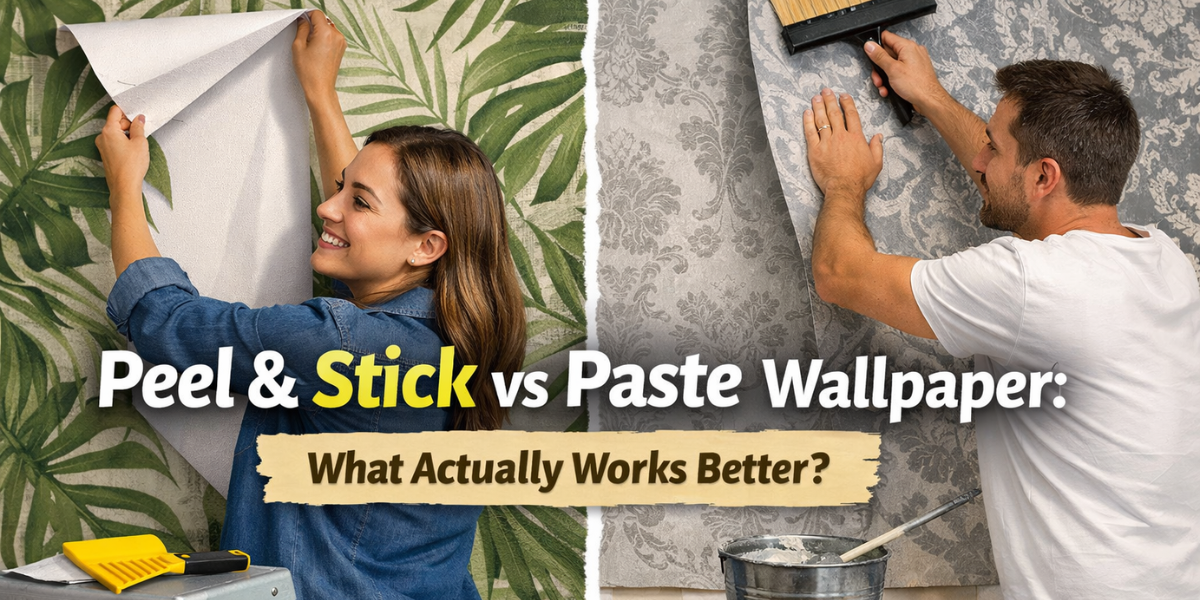
The better choice between peel and stick vs pasted wallpaper comes down to how permanent you want the wall design to be. Accordingly, you can invest in between the two:
- Peel-and-stick is ideal for rented homes, DIY projects, and quick room upgrades.
- Pasted wallpaper offers durability and is best suited for long-term wall decor.
While there are many wallpaper options in the market, understanding the right type of wallpaper material for your home is crucial. And it comes to no one’s surprise the royal between peel and stick vs paste/traditional wallpaper.
Ever since peel and stick wallpaper entered the market, homeowners are left in a predicament over which one works better in Indian homes. To come to a definitive conclusion, let our experts walk you through their characteristics, advantages and disadvantages, and you can finally pick the right choice for your home.
What is Peel-and-Stick Wallpaper? Understanding the Basics

Peel-and-stick wallpaper is a modern, user-friendly wallpaper type that comes with its own adhesive backing. Its other features include:
- Easy application and removal without additional glue.
- Can be repositioned during installation without the worry of creating a mess.
What is Paste Wallpaper? Understanding the Basics
Paste wallpaper is a traditional type of wallpaper that requires an adhesive paste to be applied either on the wall or the back of the wallpaper during installation. Its other features include:
- Forms a strong bond with the wall, making it durable.
- Offers a variety of designs, materials, and textures.
Key Differences Between Peel-and-Stick and Paste Wallpaper
1. Cost Comparison
- Peel-and-Stick Wallpaper: Moderate upfront costs but slightly higher than basic traditional wallpaper. However, adhesive or installation labour costs are minimal.
- Paste Wallpaper: Typically more expensive due to the cost of material, adhesive, and labour. However, durability and longevity will make the investment worthwhile.
2. Durability
- Peel-and-Stick Wallpaper: This wallpaper is moderately durable and works well for short-term decor, but it may lift over time, especially in humid or high-traffic areas.
- Paste Wallpaper: Paste wallpaper is generally more durable and long-lasting, as the adhesive bonds firmly with the wall, helping it withstand wear, humidity, and daily use better.
3. Installation
- Peel-and-Stick Wallpaper: Installation is quick and easy as it comes with a pre-pasted backing that can be peeled and applied to the wall directly. It can be installed by beginners and DIY-enthusiasts.
- Paste Wallpaper: It requires proper wall preparation, application of adhesive, and smoothing out air bubbles for a clean and flawless fit. This wallpaper does require professional installation.
4. Removal Process
- Peel-and-Stick Wallpaper: Just like how it was installed, peel and stick wallpaper can be easily removed without leaving behind adhesive residue or damaging the wall.
- Paste Wallpaper: Traditional wallpapers require specific techniques and tools to carefully remove the wallpaper without damaging the wall.
5. Maintenance
- Peel-and-Stick Wallpaper: Peel and stick wallpaper have a protective layer that allows for easy cleaning with a swipe of a damp cloth.
- Paste Wallpaper: These wallpapers can also be wiped down but need delicate care.
Wallpaper Materials Used in Each Type
The materials used in peel and stick wallpaper and paste wallpaper can differ slightly as they are made of:
- Peel and Stick Wallpaper: These wallpapers are commonly made from vinyl-coated or PVC materials with a self-adhesive backing. Since they are suitable for temporary spaces, they are designed to be lightweight and flexible.
- Paste Wallpaper: Paste wallpapers are usually made from non-woven materials, vinyl, paper-based, or textured finishes. Since they require adhesive paste, they are durable, thicker, and long-lasting.
Pros and Cons of Peel-and-Stick Wallpaper
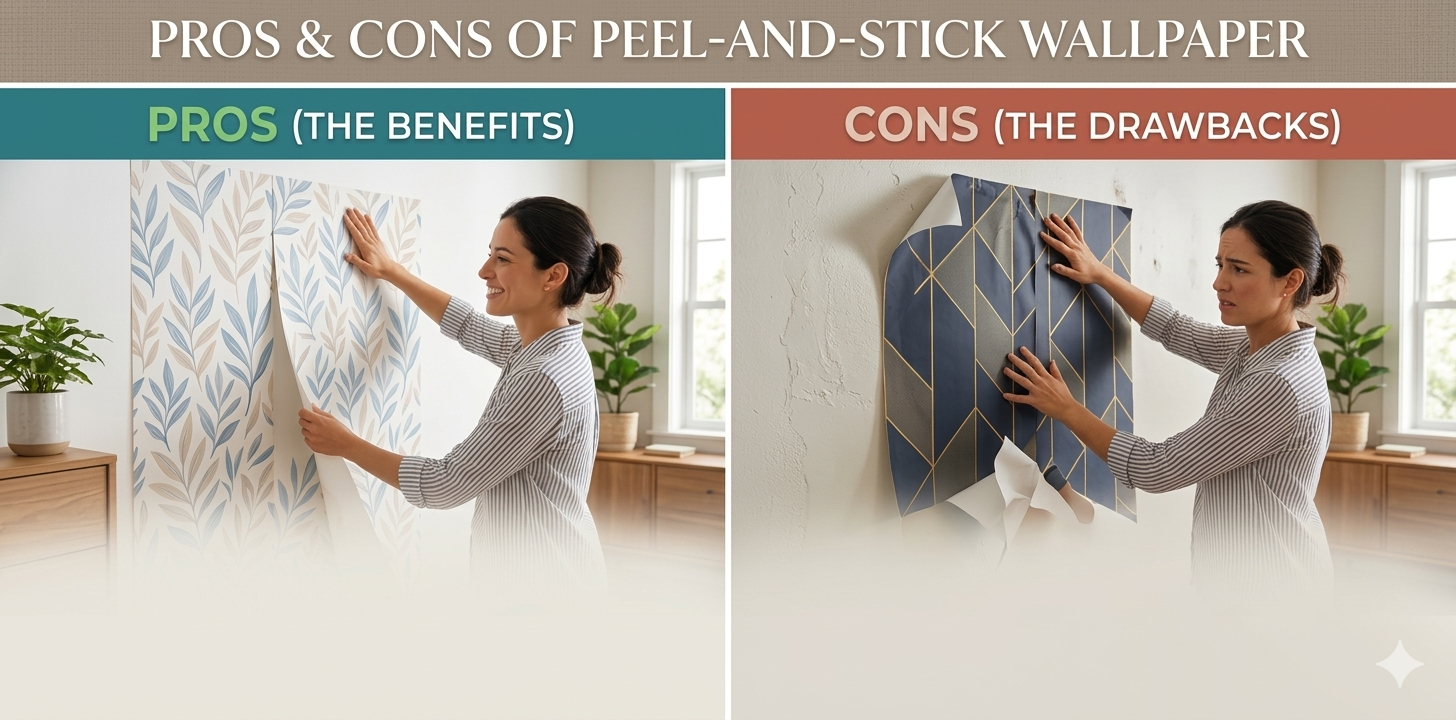
The pros and cons of self-adhesive wallpaper are as follows:
1. Pros
- Easy to Install and Remove: One of the most pleasing features of peel-and-stick wallpaper is its user-friendly application. You can simply peel off the backing and apply it on the wall.
- Minimal Mess: With peel and stick wallpapers you don’t have to get your hands messy with glue, cleanup, and brushes. Not only is it hassle-free, you can reposition it however you like.
- Great for Temporary Projects: They are perfect for temporary decor solutions or projects where you do not want to commit and spend a lot on decor.
2. Cons
- Limited Texture Options: Peel and stick wallpapers are made from PVC or vinyl films that offer limited tactile and visual appeal.
- Less Durable in Humid Environments: They are designed for temporary use and therefore are prone to peeling and bubbling, especially when installed in humid areas.
- Wall Damage Risks: Not all peel and stick wallpapers guarantee 100% wall damage-free. Low-quality wallpapers may leave behind adhesive residue or strip away paint.
Pros and Cons of Paste Wallpaper
The pros and cons of paste wallpaper are as follows:
1. Pros
- Long-Lasting Beauty: With proper wall preparation and maintenance, the wallpaper can last more than a decade without the need for replacement.
- High Durability: One of the striking features of traditional paste wallpaper is its impressive durability, withstanding Indian lifestyle and domestic wear and tear.
- Rich Designs and Materials: Traditional wallpaper boasts a plethora of design and material variety. From non-woven to premium textured, there’s many options to choose from.
2. Cons
- Requires Professional Installation: Installing paste wallpaper requires professional expertise since it requires proper wall preparation and precise seam alignment for perfect fit.
- Difficulty in Removal: Paste wallpaper presents a challenge during the removal process as it often damages the wall if not done correctly. Moreover, it’s time consuming as it requires soaking and use of proper tools.
- Higher Upfront Cost: Traditional wallpapers are a long-term investment and therefore, the material and labour is on the expensive side as compared to self-adhesive wallpapers.
Installation Process: Peel-and-Stick vs Paste Wallpaper
The installation process for both peel and stick vs paste wallpaper greatly differs by:
1. Peel-and-Stick Wallpaper
- Self-Adhesive Backing: The installation process is very easy as it comes with a self-adhesive backing that can be peeled and directly pasted on the wall.
- DIY-Friendly: Since the wallpaper comes with a pre-pasted adhesive, it makes it suitable for beginners and DIY-enthusiasts looking for easy and fun decor projects.
- Requires No Additional Tools: The peel and stick wallpaper can be installed and removed without the requirements of any tools or removal methods, making it tension-free for renters.
2. Paste Wallpaper
- Requires Adhesives: Traditional paste wallpaper requires wallpaper adhesive or paste to form a bond with the wallpaper and wall.
- Professional Assistance Needed: Since the wallpaper needs precise alignment and smooth finish, professional installation is necessary to ensure longevity.
Wall Preparation Requirements
Proper wall preparation is one of the most important steps before installing wallpaper. Here are the wall preparation requirements that ensures a smooth, flawless finish:
1. Clean the Wall Surface
The desired wall surface must be free of dust, grease, and chipped paint to ensure the wallpaper adhesive adheres to the wall firmly and does not trap air bubbles.
2. Ensure the Wall is Smooth and Even
Fill any cracks, holes, or uneven surfaces with sandpaper and putty if needed. While wallpaper does hide such imperfections, a smooth surface helps achieve a neat appearance.
3. Apply a Primer if Necessary
Priming the wall can improve adhesion and make future wallpaper removal easier. It also helps create a uniform surface for the wallpaper to stick evenly and not cause bubbling.
4. Ensure the Wall is Dry
Wallpaper should never be installed on damp or wet wall surfaces. Check the wall for moisture or seepage and allow the wall to fully dry before applying adhesive or installing the wallpaper.
Lifespan Comparison
Whether you want a temporary decor solution or a permanent one, it’s important to understand the lifespan between a peel and stick and a paste wallpaper:
1. Peel-and-Stick Wallpaper
High-quality peel-and-stick can last anywhere from 3-7 years when installed on a smooth surface and kept away from high-humidity and moisture. Since it’s designed for more temporary decor, it is suitable for rentals.
2. Paste Wallpaper
Traditional paste wallpaper usually lasts 10-15 years when installed properly on well-repared walls. Because it forms a stronger adhesive bond, it tends to be more durable and suited for long-term design.
Room-by-Room Recommendation: Which Wallpaper is Best Suited Where?
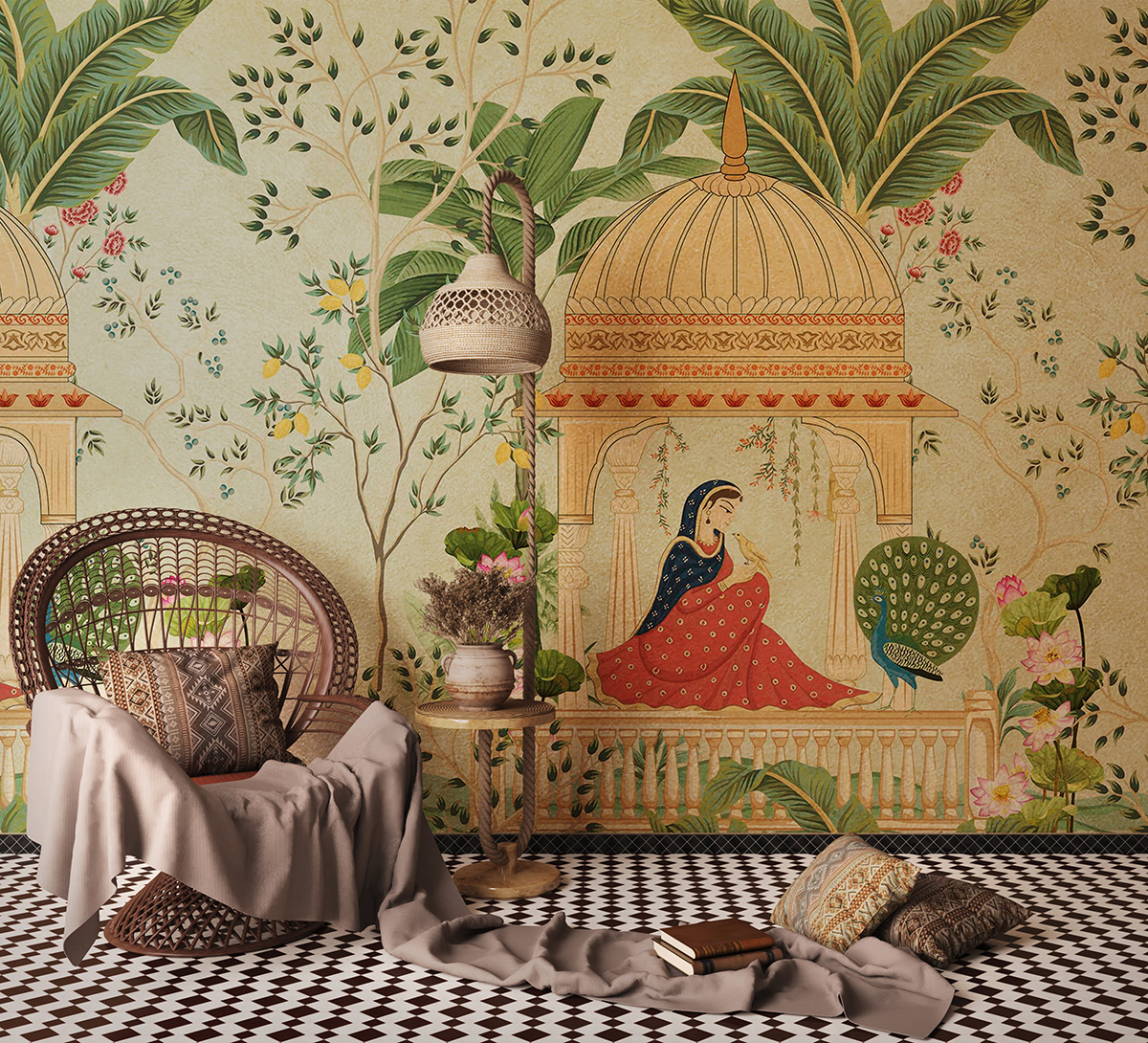
Find out which wallpaper among the two is better suited in distinct rooms of the house:
1. Living Room
Since the living room is often the central space for gatherings, non-woven or premium textured wallpapers work particularly well here because they are durable and luxurious.
2. Bedroom
Non-woven wallpapers or peel-and-stick options are great choices for the bedroom as they are easy to maintain and suitable for low-moisture and low-traffic environments.
3. Hallway
Hallways and entryways experience frequent traffic which means walls can easily get scuffed. Durable materials like vinyl or non-woven wallpapers are ideal here because they can withstand daily wear.
4. Kitchen
Kitchens require wallpapers that can handle splashes, heat, and grease. Vinyl-coated wallpapers are the most suitable options since they are moisture-resistant and washable.
5. Bathroom
Similar to kitchens, bathrooms are high-humidity spaces that are exposed to steam and splashes. Vinyl wallpapers work best in these areas because they can tolerate humidity and are less likely to peel when installed in well-ventilated bathrooms.
Peel-and-Stick vs Paste Wallpaper: Which is Right for Your Home?
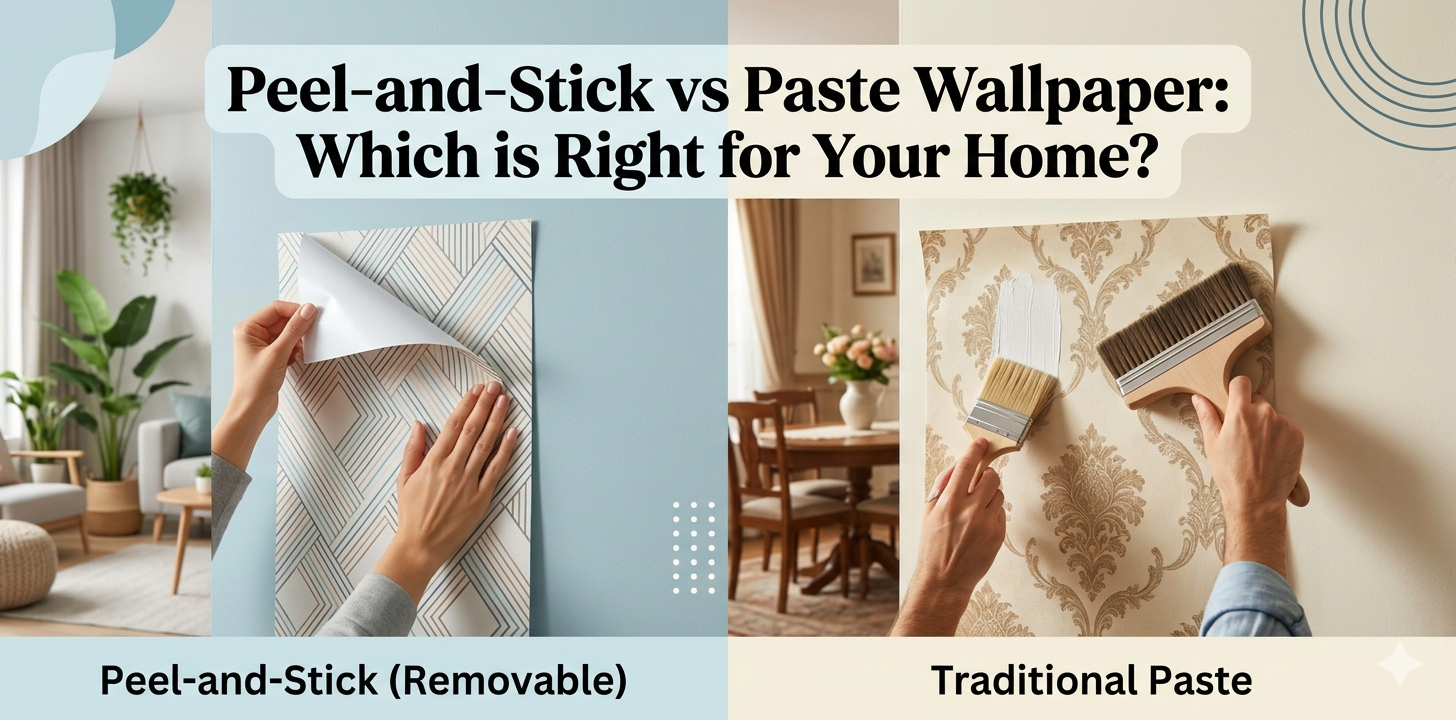
The choice between the two boils down to your living circumstances and personal preference. Whether you are upgrading your permanent home or styling a rental, there’s a wallpaper that’s just right for you.
Best Scenarios for Peel-and-Stick Wallpaper
Peel and stick wallpaper works best in situations where you do not want to commit or you need flexibility. It is ideal for rental homes, hostel rooms, or temporary spaces where permanent changes aren’t allowed.
Best Scenarios for Paste Wallpaper
Paste wallpaper is best suited for long-term interior goals where longevity and durability are important. It works well in living rooms, dining rooms, and hallways where walls experience more daily wear.
Common Mistakes to Avoid
Here are some common mistakes you should avoid to stretch the lifespan of the wallpaper:
1. Using the Wrong Wallpaper for the Environment
Not every wallpaper material works well in every room. For instance, peel and stick wallpaper may not be ideal in bathrooms as it does not have good moisture-resistant properties nor the durability to last long.
2. Not Preparing the Wall Surface
Proper wall preparation is essential for successful wallpaper installation and longevity. If walls are dusty, cracked, or slightly damp, the wallpaper may not adhere properly.
3. Ignoring Humidity and Ventilation
Whether you choose a peel and stick or a paste wallpaper, installing them in areas with high humidity or poor ventilation without choosing moisture-resistant materials can lead to weakened adhesive over time.
4. Rushing the Installation Process
Installing wallpaper too quickly without careful planning or smoothing out air bubbles can affect the final finish. Rushing the process will only result in unclean finish and gradual deterioration.
Final Comparison: Which Wallpaper Should You Choose?
There is no better wallpaper choice than the other for your home. Both peel and stick and pasted wallpaper offer different wall decor commitment, depending on how the space is being used and how long it is intended to stay.
Peel and stick wallpaper is better suited in homes that need low-commitment, temporary wall decor like rental homes, hostel rooms, or accent walls. Pasted wallpaper, on the other hand, is ideal in homes looking for permanent and long-lasting finish, specially in rooms where durability is needed.
Ultimately, the choice between the two depends on your space, lifestyle, commitment, and expectations. And if you have selected a choice in your mind, start your wallpaper experience with Magicdecor’s collection of pasted and peel and stick wallpapers.
FAQs
- Is peel and stick wallpaper better than paste wallpaper?
Peel and stick wallpaper is easier to install and remove, making it ideal for rental or temporary spaces. However, pasted wallpaper is more durable and long-lasting.
- Does peel and stick wallpaper damage walls?
In most cases, peel and stick wallpaper does not damage walls as it is designed to be residue and damage-free. Low-quality options on the other hand, may chip paint or leave behind residue.
- Which wallpaper lasts longer?
Pasted wallpaper lasts longer than peel and stick wallpaper as the adhesive bonds strongly to the wall, lasting 10-15 years as compared to peel and stick options that usually last for 3-7 years.
- Can peel and stick wallpaper be used in bathrooms?
Peel and stick wallpapers can be used in bathrooms, sparingly. Since it’s made for temporary spaces, humidity may affect its adhesion.
- Is paste wallpaper harder to install?
Pasted wallpaper requires more preparation and skill because adhesive paste must be applied during installation. The process does require some time, effort, and expertise.







 Material Preview
 Digital Snapshot
 Design Selection
