









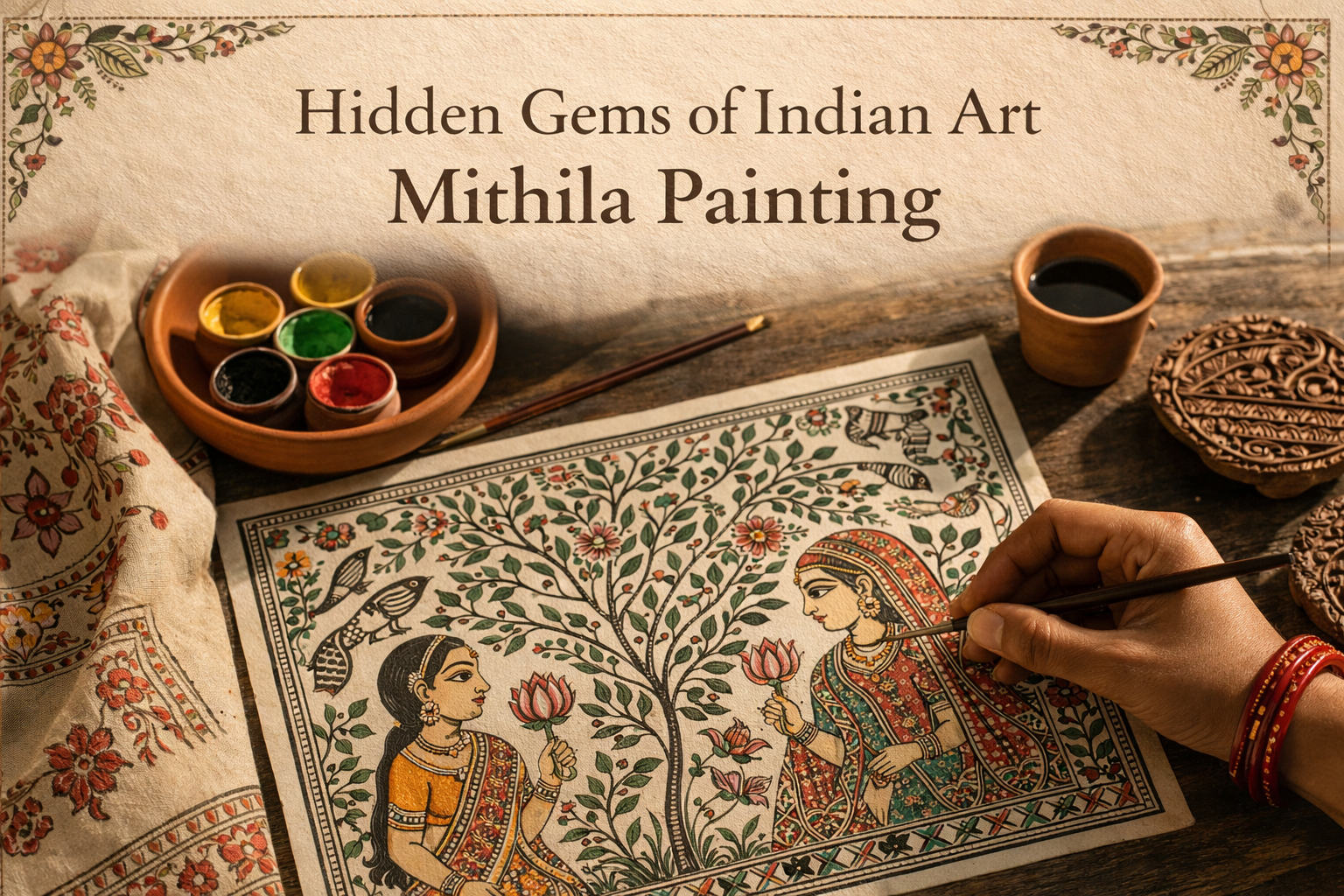
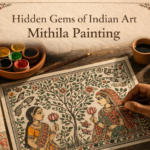
Mithila painting, also known as Madhubani painting, is a traditional Indian art form celebrated for its vibrant colours, intricate motifs, and storytelling appeal.
Originating from the Mithila region in Bihar, it was once a deeply personal and community-driven practice, passed down through generations. While it holds immense artistic value, the rise of modern art trends has, over time, caused this ancient art form to slowly lose its identity and presence in Indian homes.
Therefore, let us explore further and find more about the characteristics, techniques, artists, and so much of Mithila painting so we can help revive it.
Understanding Mithila Painting
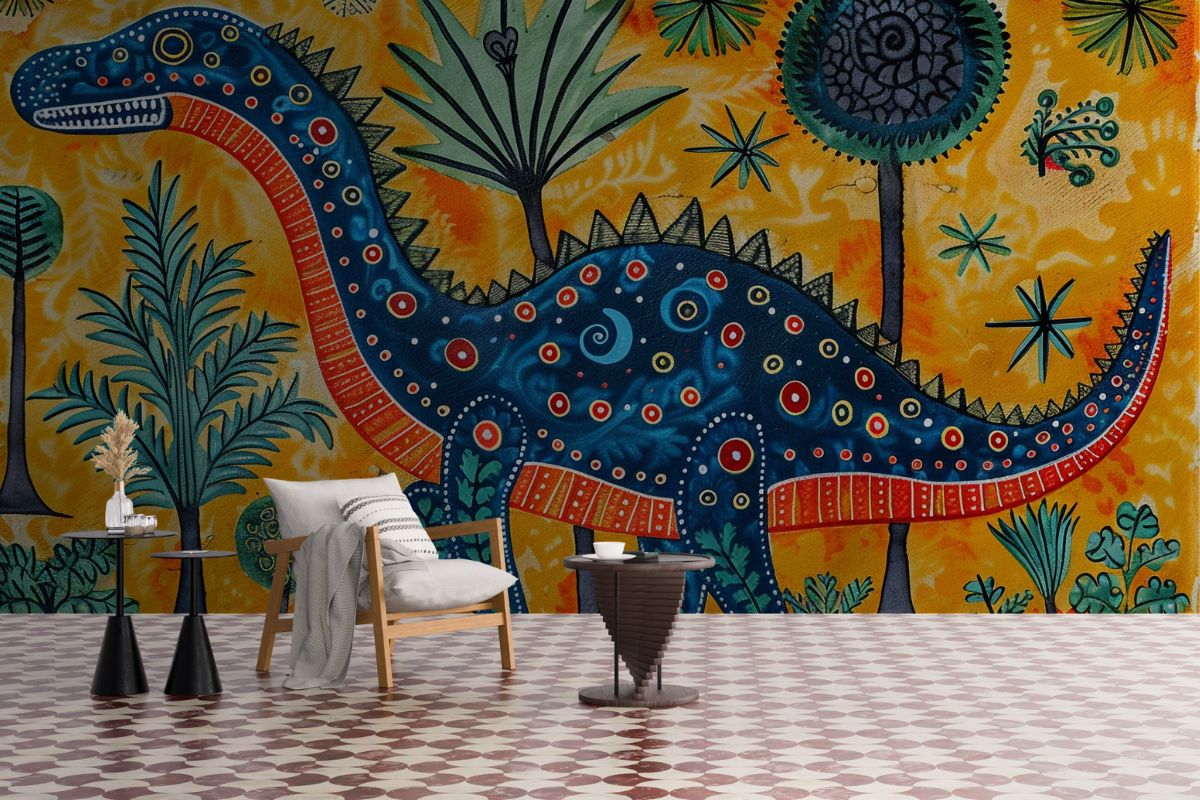
Mithila painting, also known as Madhubani art, is an ancient art form characterised by geometric shapes, detailed outlines, and vivid colours. It was traditionally created by women–Brahmin and Kayastha– on mud walls during important festivals and rituals.
It is renowned for using pigments from local plants, cow dung that serve as paper, and bamboo sticks turned into brushes, not to mention the simplicity of this painting.
A Dive into the Historical Origins of Mithila Painting
Mithila art is said to originate in the ancient city of Mithila, Bihar, the birthplace of Sita, daughter of King Janak in the 7th or 8th century BC. The king commissioned local artists for Mithila paintings in order to commemorate Sita’s marriage to Lord Rama.
Eventually, Mithila painting flourished as a household art, mainly due to social customs of the pure castes. Now, what was once made on freshly plastered walls and floors of mud huts, is passed down onto cloth, handmade paper, and canvas.
Why is Mithila Painting Still Relevant Today?
The revival of Mithila art has a curious history. A huge drought in the 1960s, helped open a floodgate of art. The government encouraged women to paint their works on canvas as an alternative source of employment.
By the 1970s, what was once only practiced in the private sector, Mithila now became a profession, especially for local women seeking opportunities. These artists were selling their craft in marketplaces and to big dealers, commercially growing and expanding.
In 2026, Mithila painting is still relevant and holds multifaceted significance. It preserves its cultural identity, empowers women, and keeps the art relevant through modern interpretation and contexts.
Important Characteristics Found in Mithila Painting
Mithila painting has the following defining characteristics:
- Design Style: It is characterised by thin outlines and filled with bright, vivid colours.
- Figures: All the figures are represented abstract and linear, just as they are.
- Division of Space: Paintings are often depicted vertically and horizontally to showcase different times and places.
- Geometric Patterns: Uses geometric shapes extensively to enhance the visual appeal.
- Social and Royal Themes: Themes majorly depicted were royal court scenes and social gatherings.
- Outline Technique: Fine double lines for the figure outline with gaps filled with tiny straight lines or other patterns.
- Filled Spaces: All outlines are filled with colours and no motif is left empty.
Themes and Colours Found in Mithila Painting
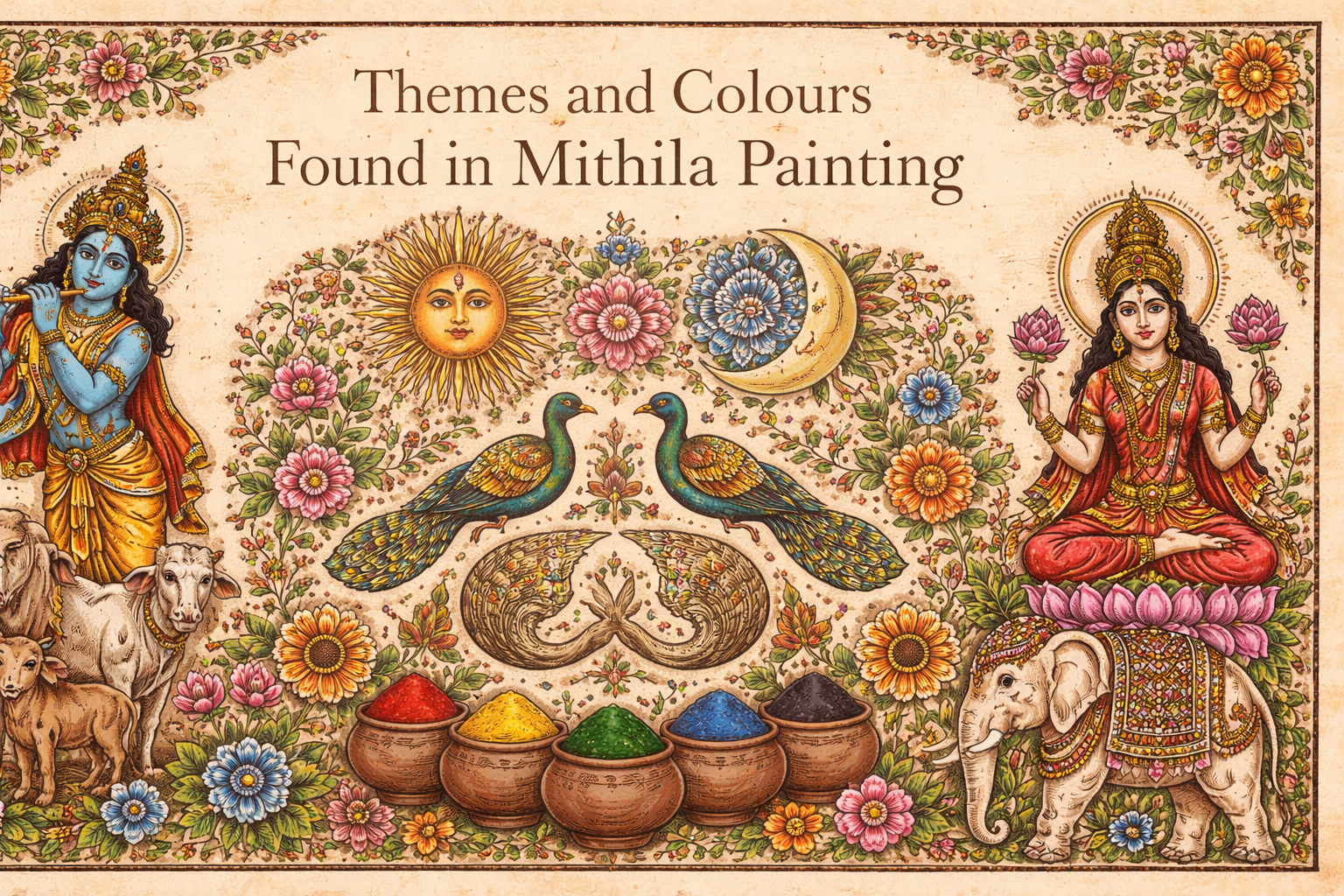
The themes and colours found in Mithila painting are as follows:
A. Themes
- Religion: One of the core themes present in Mithila paintings are mythological figures and sacred texts, featuring Gods and Goddesses like Krishna, Shiva, Laxmi, and Saraswati.
- Social: Royal court scenes, marketplace and harvests to people working and children playing, Mithila paintings captured everyday rural life scenes, reflecting their social life.
- Nature: Natural elements were also central in Mithila paintings, showcasing abundance, fertility, and beauty. It consisted of the sun, the moon, birds, animals, fish, and flowers.
B. Colours
Mithila artists create their own colours from natural pigments like flowers and vegetables.
- The colours are governed by five elements of life—earth, water, sky, fire, and air.
- Only two to five colours–yellow, red, green, blue, and black– are applied flat on the paper.
- The colours used for various figures carry symbolism, such as the figure of Krishna is black.
Common Symbols in Mithila Painting and Their Meanings
Some significant symbols in Mithila paintings are:
- Parijat: Symbol of reproduction and fertility
- Two Peacocks: Signifies eternity
- Elephant Aripana: Symbol of successful pregnancy.
- Lotus Aripana: Represents sexual energy
- Circle Aripana: God of creation
- Parrot Aripana: Symbol of kama
- Snake: Power of regeneration
- Mandalas: Denoting circle of life or wholeness
Various Mithila Painting Styles
The various Mithila painting styles include:
1. Bharni
This style is defined by vivid colours and intricate and is practiced by Brahmanas. They outline mythological figures in bold black colours and fill them with bright colours.
2. Kachni
Kachni is characterised by fine lines and the use of only one or two colours. It’s a style of Kayastha, where intricate patterns and painting lines are more dominant than the colours.
3. Tantrik
The Tantrik style of Mithilar art depicts traditional and religious themes such as deities, yantras, and tantric symbols. These paintings are usually hung in houses due to their spiritual and symbolic nature.
4. Godna
Godna is an intricate style of Mithila painting derived from traditional tattoo practices and is often depicted in black and white colours with the occasional red.
5. Kohbar
These paintings are typically made from Hindu wedding festivities to celebrate love, marriage, and prosperity. These are hung on the walls of the bride and groom’s home.
The Making of Mithila Painting: Techniques and Process
Mithila painting included a variety of tools and techniques such as:
1. Preparing the Surface/ Canvas
Traditionally, Mithila paintings were prepared on walls and floors(aripana) that were coated with mud or cow dung for a smooth base. Now, cloth and handmade paper replace traditional surfaces.
2. Creating Pigments/ Paints
As mentioned earlier, the pigments used in Mithila paintings consisted of about 5-7 pigments that were derived from natural sources like minerals, plants and vegetables.
3. Tools
Artists would use simple tools like twigs, matchsticks, fingernails, and cotton-wrapped sticks as brushes. These traditional tools gave Mithila paintings a raw and authentic look.
4. Sketching the Outline
Artists then outline their figures and motifs in intricate, bold black lines, which is a distinctive feature of Mithila painting. They then create double-lined outlines, so there aren’t any empty spaces on the canvas.
5. Filling in Colours
Next, vivid and symbolic colours are filled in these outlines in a detailed and repetitive manner. Meticulous attention to detail is required to create a uniformly coloured section.
Famous Artists of Mithila Painting
Here are the reputable artists of Mithila paintings:
- Jagdish Chandra Jha: Known as the father of Mithila painting as he helped popularise this art form.
- Sita Devi: One of the first women artists to bring mithila paintings into the mainstream culture.
- Brahmanand Devi: Famous for her contributions to the progress of Mithila paintings.
- Ganga Devi: Renowned for her intricate and vibrant depictions of Kohbar style– mythology and folklore themes.
- Kamta Prasad: Known for his detailed and traditional style that focused on spiritual and natural themes.
Traditional vs Modern Mithila Designs
The key differences between traditional and modern Mithila designs are as follows:
| Aspect | Traditional Mithila Designs | Modern Mithila Designs |
| Materials | Painted on mud or cow dunged-walls and floors | Canvas, handmade paper, cloth |
| Colour Palette | Colours were extracted from natural sources (turmeric, henna, soot) | Wide range of colour palette using synthetic colours |
| Themes and Subjects | Dominated by mythological texts and rural life | Covers social themes, contemporary issues, and personal expression |
| Technique and Style | Characterised by 5 styles–Bharni, Kachni, Tantrik, Godna, Kohbar | Allows for more artistic freedom and experimental expression |
How to Use Mithila Painting in Modern Home Decor
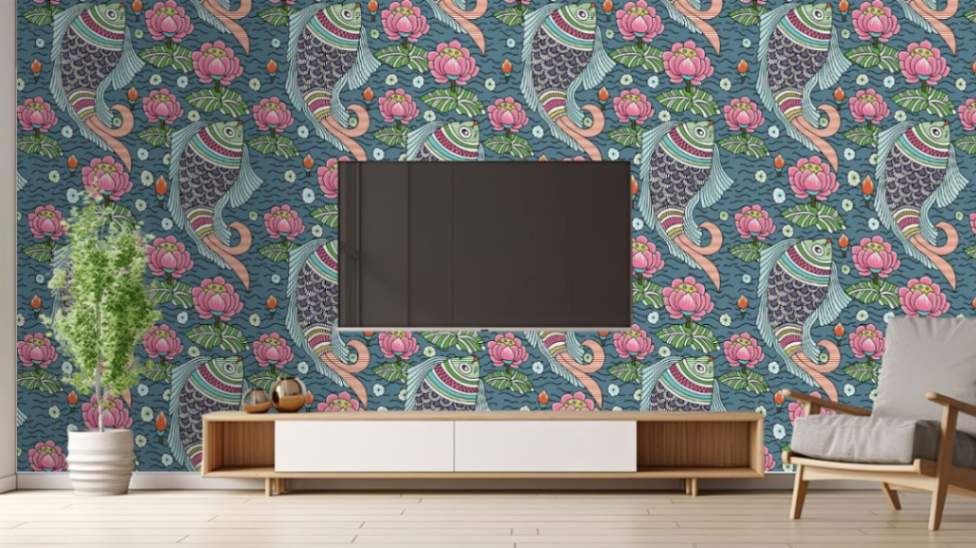
You can incorporate Mithila art in your home decor through the following ways:
1. Large Framed Canvas
An oversized Mithila artwork can work as a stunning statement piece in your living room or hallway. It instantly adds a cultural and unique touch to your interiors.
2. Mithila-Inspired Wallpaper
Use Mithila motifs and designs as wallpaper for an accent wall in your living space. This works well in bedrooms and living rooms, where you want the space to look well-curated.
3. Textiles and Furnishings
Incorporate Mithila designs through cushions, curtains, or bedspreads. This is a subtle way to introduce this hidden art form to your space.
4. Gallery Wall
Mix Mithila paintings with modern frames or style a collection of art forms as a gallery wall.
Where to Use Mithila Art in Your Home
Mithila art can be placed anywhere in your house. But these are some suggestions for ideal places:
- Living Room: Perfect for creating a focal point above the sofa or as part of a statement wall.
- Bedroom: A Mithila-inspired wallpaper works beautifully behind the headboard.
- Entryway: Hanging canvas art or frames in the entryway or hallway sets the tone of your home.
- Dining Area: Adds warmth and personality, especially for dinner parties and gatherings.
- Workspace: Hanging a painting or installing wallpaper as an accent wall brings creativity and inspiration.
Bringing Mithila Art to Your Walls with Magicdecor
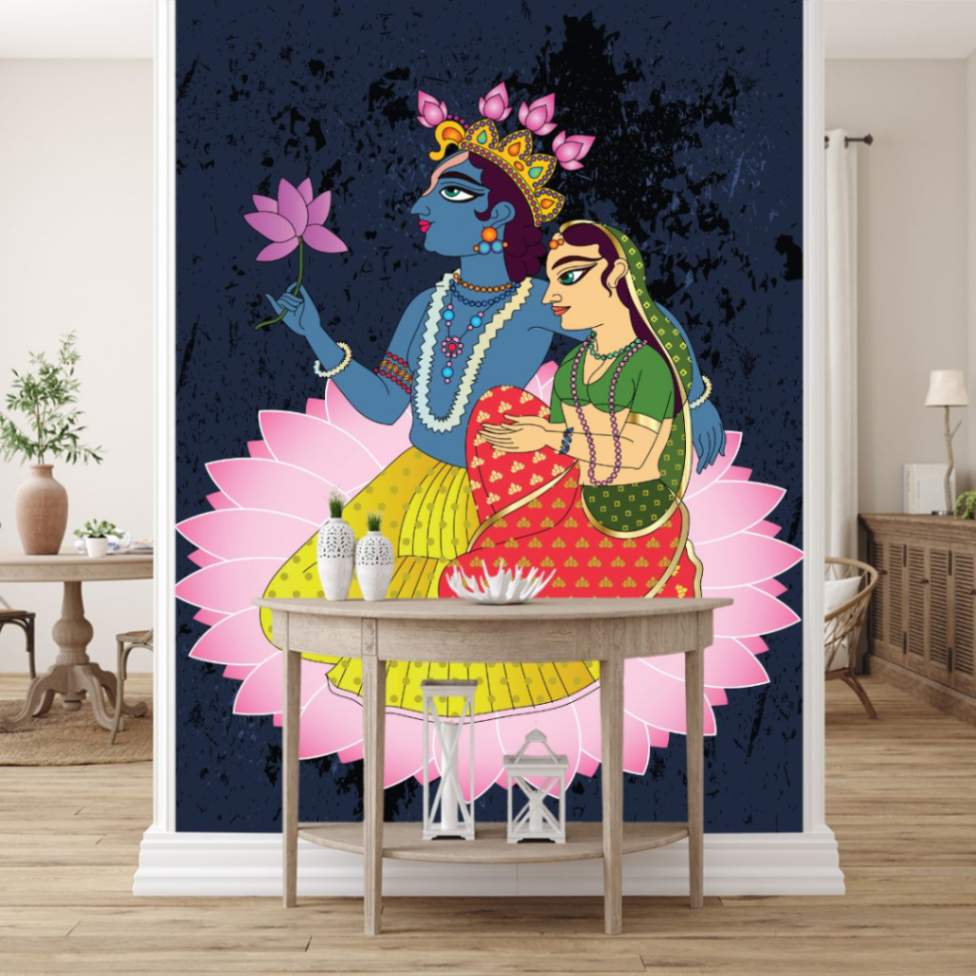
If you appreciate the talent and hardwork behind creating Mithila painting but want a modern way to incorporate it, Magicdecor’s wallpapers offer the solution. You’ll have:
- A plethora of Mithila-inspired wallpaper designs to choose from that suits your space and mood.
- You can customise your designs as per your preferred colour palette, interior style, and wall size.
- A perfect blend of cultural art and contemporary living.
Keeping the Legacy of Mithila Paintings Alive
It is important to understand that hidden art forms like Mithila paintings carry centuries of transition, history, and culture. Therefore, we must make efforts to carry its styles and forms forward and popularise it.
In the day and age where machine-made art and performative art forms are trendy, let us do our bit by appreciating the artists behind this art and purchasing them anyway we can.
FAQs
- Are Mithila painting and Madhubani painting different?
No, Mithila and Madhubani paintings are the same. ‘Mithila’ and ‘Madhubani’ refer to the districts in Bihar where the art was heavily practiced.
- How long does it take to finish a Mithila painting?
A typical A3 size canvas takes about 6-7 days to complete with attention to detail and precision.
- Is Mithila art suitable for modern homes?
Yes, it is suitable for modern homes and blends perfectly well with modern decor, adding cultural richness.
- Can I customise the motifs on my Mithila wallpaper?
Yes, you can customise your Mithila-inspired wallpaper in your desired colours, layout, scale, and wall size.







 Material Preview
 Digital Snapshot
 Design Selection
