





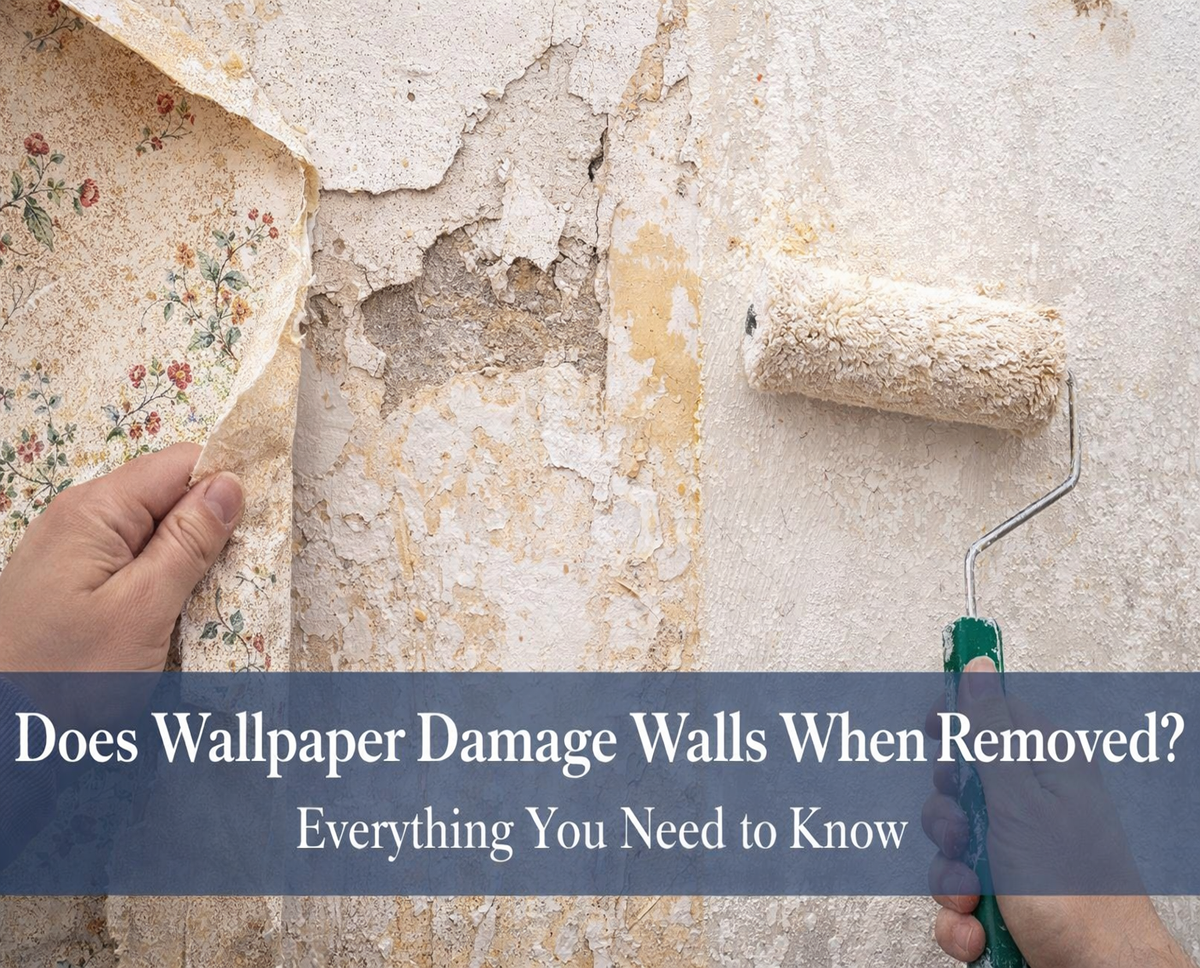
The idea of wallpapering your home often comes with a second thought: “what happens to the wall when it’s time to take it off?” The concern shows up whether you’re decorating a rental or your own home because repairs, repainting, and security deposits are never part of the plan.
The good news is that wallpaper itself isn’t automatically harmful to walls, unless of course you choose low-quality options. Damage is usually the result of poor surface preparation, use of unsuitable strong adhesives, or rushed removal process rather than the wallpaper choice alone.
To know more about how and why wall damage occurs and how to safely remove wallpapers, continue reading this blog.
Can Wallpapers Really Damage Walls When Removed?
Yes, wallpaper can damage walls when removed only if the process and preparation are not done right. Damage usually happens when wallpaper is installed on unprimed or weak walls, bonded with strong adhesive, or removed too quickly without softening the paste.
When walls are properly prepared, installed correctly, and removed patiently using the right tools, most damage is minor or avoidable. In other words, wallpaper doesn’t ruin walls by default, the method does.
What Actually Causes Wall Damage During Wallpaper Removal?
Experts at Magicdecor highlight that wallpaper-related wall damage largely occurs due to the following factors:
1. Poor Installation
Wall damage often starts at the installation stage. If wallpaper is applied directly onto unprimed walls, uneven drywall, or flaking paint, the adhesive bonds too aggressively to the surface, which when removed, pulls off paint.
2. Improper Removal Technique
Improper method of wallpaper removal is one of the main reasons that causes wall damage. Ripping the wallpaper aggressively, not using moisture or steam to weaken the adhesive, or using correct removal tools, all strip away the wall surface.
3. Type of Wallpaper Material and Adhesive
The type of wallpaper material and adhesive used significantly impacts wallpaper removal. Traditional, low-quality options are more likely to cause surface damage when installed with strong adhesive.
4. Underlying Wall Conditions
Existing wall issues significantly affect removal outcomes. Cracks, moisture damage, weak plaster, or previously damaged drywall are prone to tearing during wallpaper removal.
Does Wall Type Affect Wallpaper Removal?
Wall type plays a big role in how easily wallpaper can be removed and how much damage risk there is. Here are those various wall types:
- Drywall: This is the easiest surface for wallpaper removal. When properly primed and prepared, wallpaper usually releases with minimal effort.
- Textured Walls: Textured walls like popcorn or orange peel make it harder to remove wallpaper evenly.
- Plaster Walls: Wallpaper removal can cause chipping or cracking and requires minimal scraping and more soaking to gently remove it.
- Moisture Damaged Walls: These walls are very high risk as the existing water damage forms mould and further deteriorates the wall condition.
Common Wallpaper Mistakes That Lead to Wall Damage
1. Skipping Wall Preparation
Failing to repair cracks, clean dust and debris, or apply primer is one of the most common mistakes that affect wallpaper removal. Unprepared wall surfaces trap tiny air pockets which create weak adhesion points and get ripped during removal.
2. Using Wrong Type of Adhesive
Using the wrong type or excessive adhesive can cause the wallpaper to form a very strong bond with the wall that ultimately results in wall or drywall damage during the removal process.
3. Poor Installation Techniques
Misalignment, stretching material, or excessive repositioning stresses the wall and causes gaps or weakened paint layers. Using too much or uneven pressure during installation can also weaken the wall surface.
4. Rough Removal Method
Forceful removal without using water, steamers, or adhesive removers strip off paint and drywall. If done aggressively, it can leave deep scratches and gouges.
How to Prepare Your Walls Before Installing Wallpaper (Prevention Guide)
Based on our experience at Magicdecor, here are the ideal ways to prepare walls before installing wallpaper to avoid as much wall damage as possible:
1. Clean the Surface Wall Thoroughly
The first step is to remove any dust, grease, or residue present on the surface before installing wallpaper. Use a cleaning solution to remove invisible grime that can interfere with adhesion.
2. Repair Imperfections
Fill any cracks, nail holes, and chipped edges with filler and sand the surface smooth. Repair any plumbing or leakage issues beforehand to avoid severe problems later on.
3. Apply Primer or Sealer
Apply a layer of primer or sealer to create a smooth wall surface. This helps improve adhesion and allows the wallpaper to release more easily later and reduce the chance of paint damage.
4. Ensure the Walls are Completely Dry
Allow sufficient time for the wall to completely dry to avoid trapping moisture behind wallpaper that will weaken adhesives and wall surfaces. Moreover, soft uncured paint layers are more likely to peel off during wallpaper removal.
Step-by-Step: How to Remove Wallpaper Without Causing Damage
Rushing the process or skipping steps is usually what leads to torn drywall or peeled wall paint. Here’s a step-by-step process of how to carefully remove wallpaper:
Step 1: Test a Small Area First
Start by lifting a corner or seam in a hidden spot. This helps you understand how firmly the wallpaper is bonded and whether it will peel easily or needs additional loosening.
Step 2: Loosen the Adhesive Gently
Use warm water or use a steamer to soften the wallpaper adhesive. You can lightly score the wallpaper so moisture can penetrate and soften the glue well.
Step 3: Peel Slowly and Evenly
After the wallpaper adhesive has soaked in for several minutes, gently pull the wallpaper downward or sideways at a 45-degree angle. Apply even pressure to ensure the wallpaper doesn’t rip forcefully or damage the wall.
Step 4: Use the Right Tools
If scraping is necessary, use a plastic putty knife or a scraper. Avoid using metal tools as they increase the risk of gouges and surface tears that will require repairs later.
Step 5: Clean Adhesive Residue Carefully
After the wallpaper is off, wipe away residue adhesive with warm water and a sponge. Leaving residue can affect repainting or re-wallpapering and may require you to sand it furthermore.
Is Peel-and-Stick Wallpaper Safer for Walls?
Yes, peel-and-stick wallpaper is arguably the safest for walls as compared to traditional options. It has a self-adhesive backing that is less likely to pull off paint or drywall during removal. Due to this reason, renters love coming back to it. However, that doesn’t mean low-quality options won’t damage your walls.
Conclusion: Will Wallpaper Really Ruin Your Walls?
Wallpaper doesn’t ruin walls on its own and in most cases, serious damage can be avoided. What matters is the condition of the wall before installation, whether it was installed correctly, and how patiently the wallpaper is removed later.
Modern wallpaper options like those from Magicdecor are designed in such a way that they do not damage your walls. If you’re seeking for a worry-free wallpaper that saves you the time and energy of removing and repairing, you can always go for Magicdecor’s peel-and-stick wallpapers.
FAQs
- Can wallpaper remove paint?
Wallpaper cannot remove paint if it’s in good condition and primed well before installation. Damage is more likely to happen if the wallpaper was installed on flaky, unprimed painted walls.
- Does wallpaper damage rental walls?
Yes, it can if walls are unprimed or poorly installed. Peel and stick wallpapers is safer as it prevents any wall damage.
- Is primer necessary before wallpaper?
Yes, primer is absolutely necessary before installation as it creates a smooth and sealed surface for proper adhesion and makes future wallpaper removal quick and easy.
- Can damaged walls be repaired after wallpaper removal?
Yes, most issues like minor scuffing or surface tears can easily be repaired with filler and repainting.






 Material Preview
 Digital Snapshot
 Design Selection
