








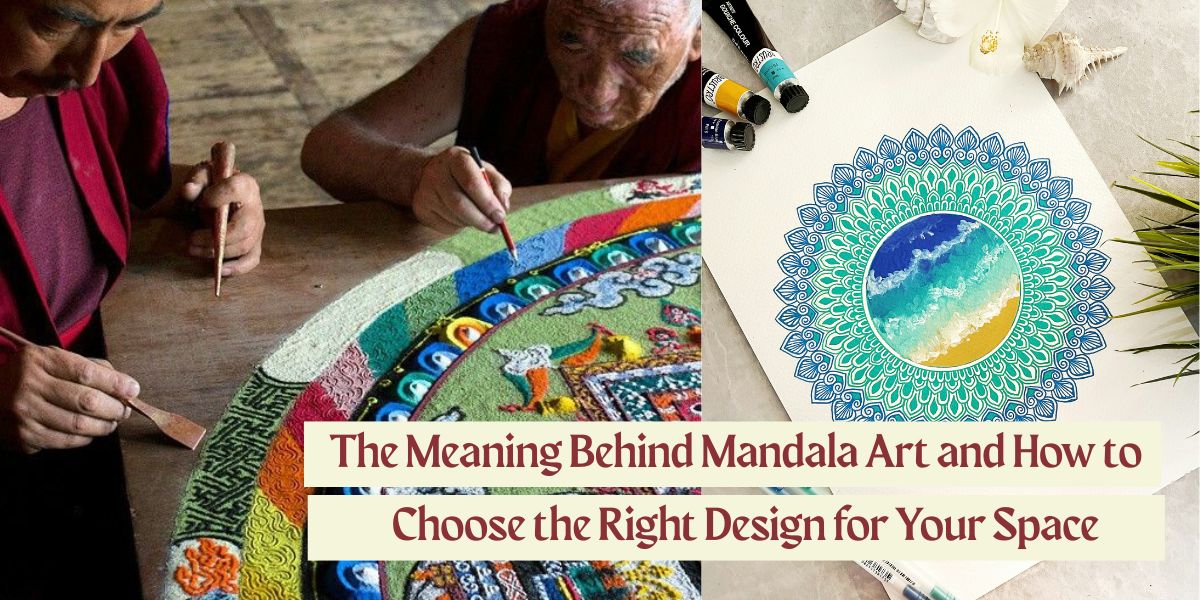
For many of us, the word mandala instantly brings up the image of a colouring book, with tiny sections to fill, repeating loops, and a trance of getting lost in creativity. But those empty lines are merely a surface to scratch–the real mandala has a centuries-old visual map, representing cosmos, life, and everything in between.
By definition, a mandala art is a circular, symmetrical design that represents the universe, unity, and the flow between the inner world and the outer world.
And this deeper purpose is exactly what makes mandala art the right fit for your interiors. These patterns don’t just ‘look nice on the wall’, they also change how the room feels.
Therefore, to explore the deeper meaning behind mandala art and find the design that truly fits your space, read along to find out what waits beyond these colouring spaces.
What’s the Significance of Mandala Art?
Mandalas are symbolic geometric shapes that represent the ‘circle of life’, infinity, wholeness, and unity. The primary belief is that by entering the mandala and making way towards its centre, the person’s universe is taken from suffering to joy through cosmic process.
Moreover, mandalas are symmetrical in nature because their purpose is to create a balance in the human mind. This helps the person take off their mind from negative things, disconnect from chaos and enter a pure, enlightened mind.

In simple words, mandalas are believed to represent the various elements of the universe and are used for meditative, spiritual, and therapeutic purposes.
A Dive into the History of Mandala Art
The first traces of mandala art–known as Buddhist art back then–was found in ancient India and Tibet, where the Sanskrit word mandala, meant ‘circle’ of life.
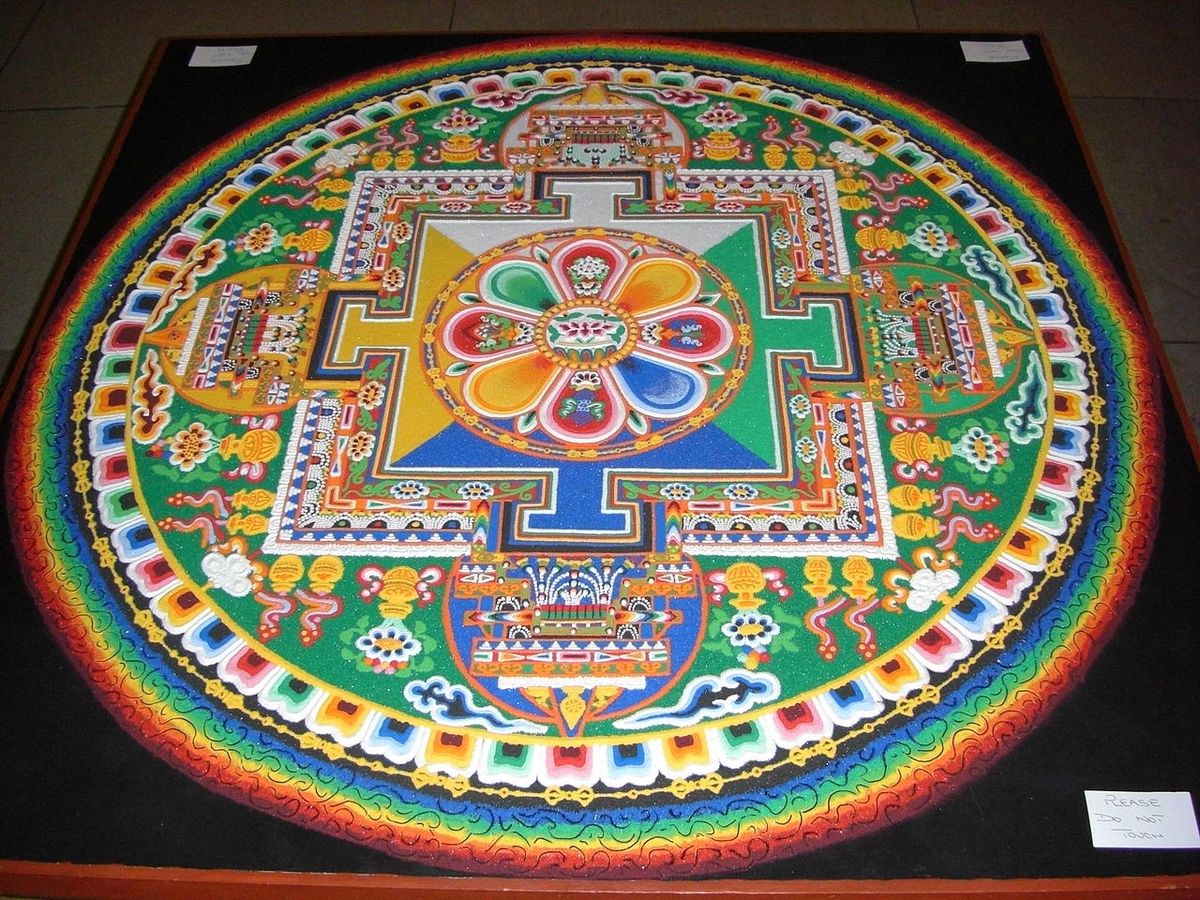
Originally made using coloured sand and rice, as seen in the intricate Kalachakra Mandala, these designs were far more than decorative patterns.
As Gautama Buddha’s philosophy spread across regions, Buddhist monks carried these sacred designs through the Silk Road, introducing the art to many cultures.
Throughout history, mandalas were a priced possession for meditation, helping individuals connect with their inner self and become one with the universe.
How do Mandala Art Enrich the Human Mind and Life?
Mandalas are one of the most popular tools used to deal with mental health issues and self-expression. Here are some of its benefits:
1. Excellent Stress Reliever
In today’s fast-paced world, with many of us juggling multiple responsibilities, stress, and financial concerns, mandala art significantly helps uncoil stress, making you feel at ease.
2. Improves Focus & Eye-Hand Coordination
When you focus on creating a mandala, it demands a lot of concentration and hand-eye coordination that improves your ability to focus on other aspects of your life.
3. Encourages Creativity
Mandala art is a great way to tap into your creativity and open your mind to imagination. When you colour regularly, you discover many new ideas and solutions, making you an all-rounder creative person.
4. Supports Emotional & Spiritual Healing
If you’re feeling despondent, frustrated, or lost, mandala art is a great way to process your emotions and work through difficult feelings. The simple act of creating a mandala art can feel like letting out your bottled emotions.
Different Types of Mandala Art and their Significance
There are various types of mandala art found in various cultures and used for a multitude of reasons. Below are some popular mandala art and the significance:
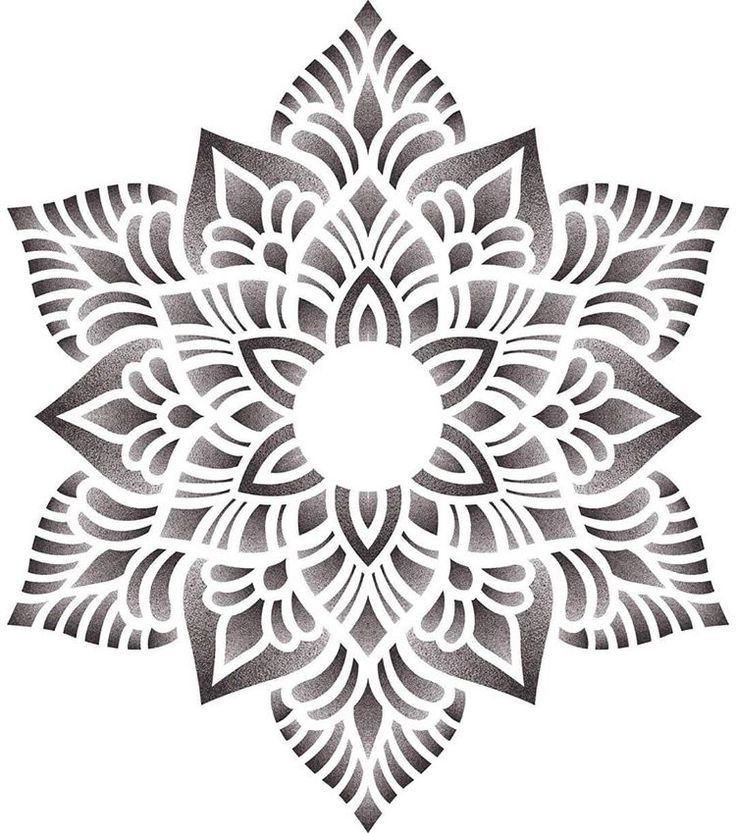
1. Geometric Mandala
These mandala art incorporates geometric shapes and patterns such as triangles, circles, or squares with symmetrical form and precise mathematical patterns.
Meaning: Symbolises the infinited, interconnected nature of life and the cosmos.
Use: Primarily used for meditation and concentration as it helps bring focus to the mind.
2. Yantra Mandala
The yantra mandala is a sacred geometric diagram used in Hinduism as it magnifies sacred prayers and thoughts.
Meaning: They are the symbolic representation of the cosmos and divinity.
Use: Used in rituals, meditation, and a source to connect with divine energy.

3. Tibetan Sand Mandala
For centuries, Tibetan Buddhists created this mandala using colourful sand. These mandalas were a sacred practice for the Buddhists, taking up to weeks for completion.
Meaning: Sand mandalas represented the impermanence of life by destroying the art and emphasising that material things are temporary.
Use: Due to its transient nature of existence, the mandala is used for meditation, spiritual rituals, and blessings.
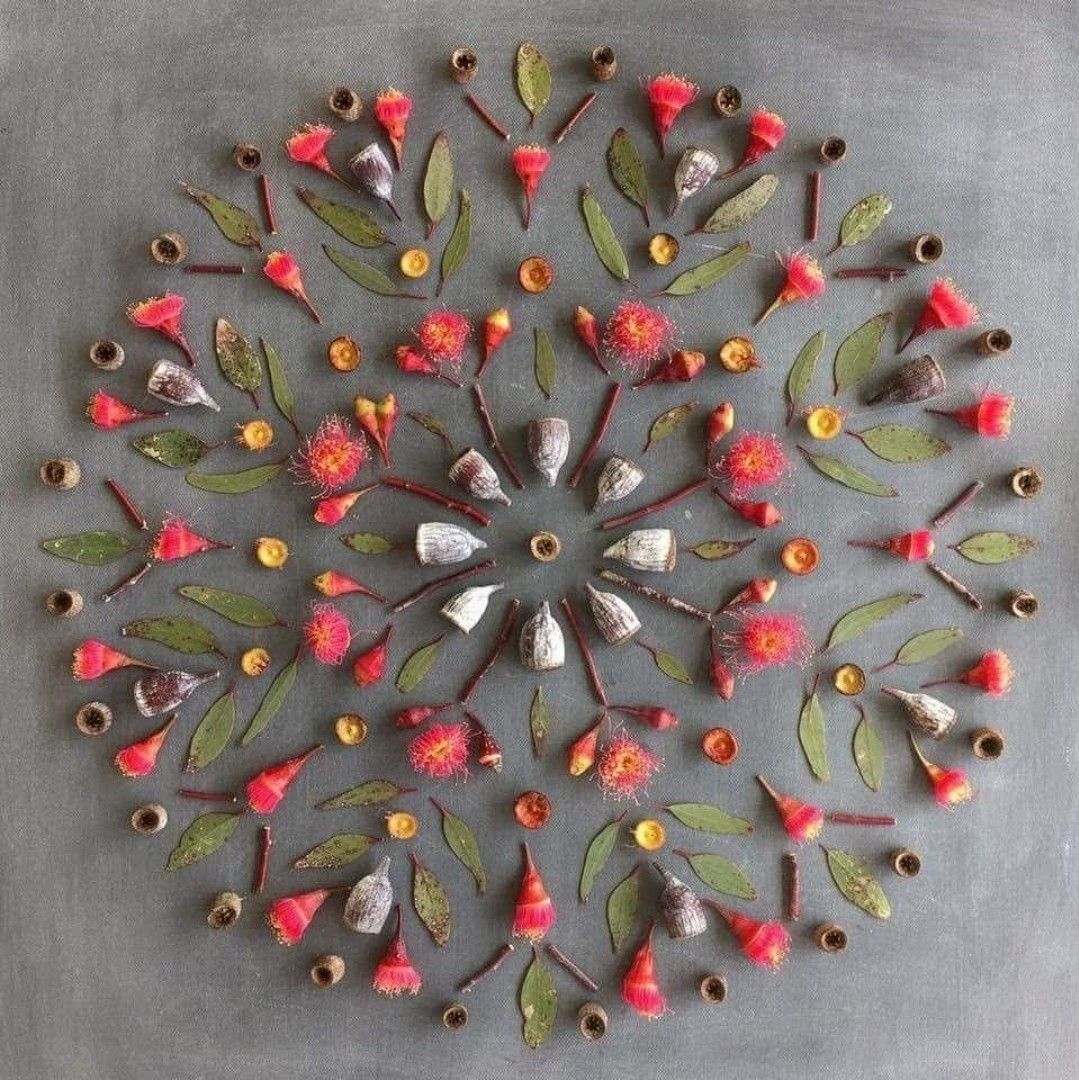
4. Nature Mandala
These mandalas are inspired by natural elements such as flowers, leaves, stones, and other organic forms.
Meaning: Each natural element in the mandala, suppose say, lotus, have their own symbolism.
Use: Since nature is associated with growth and healing, this mandala calms the mind and reduces stress.
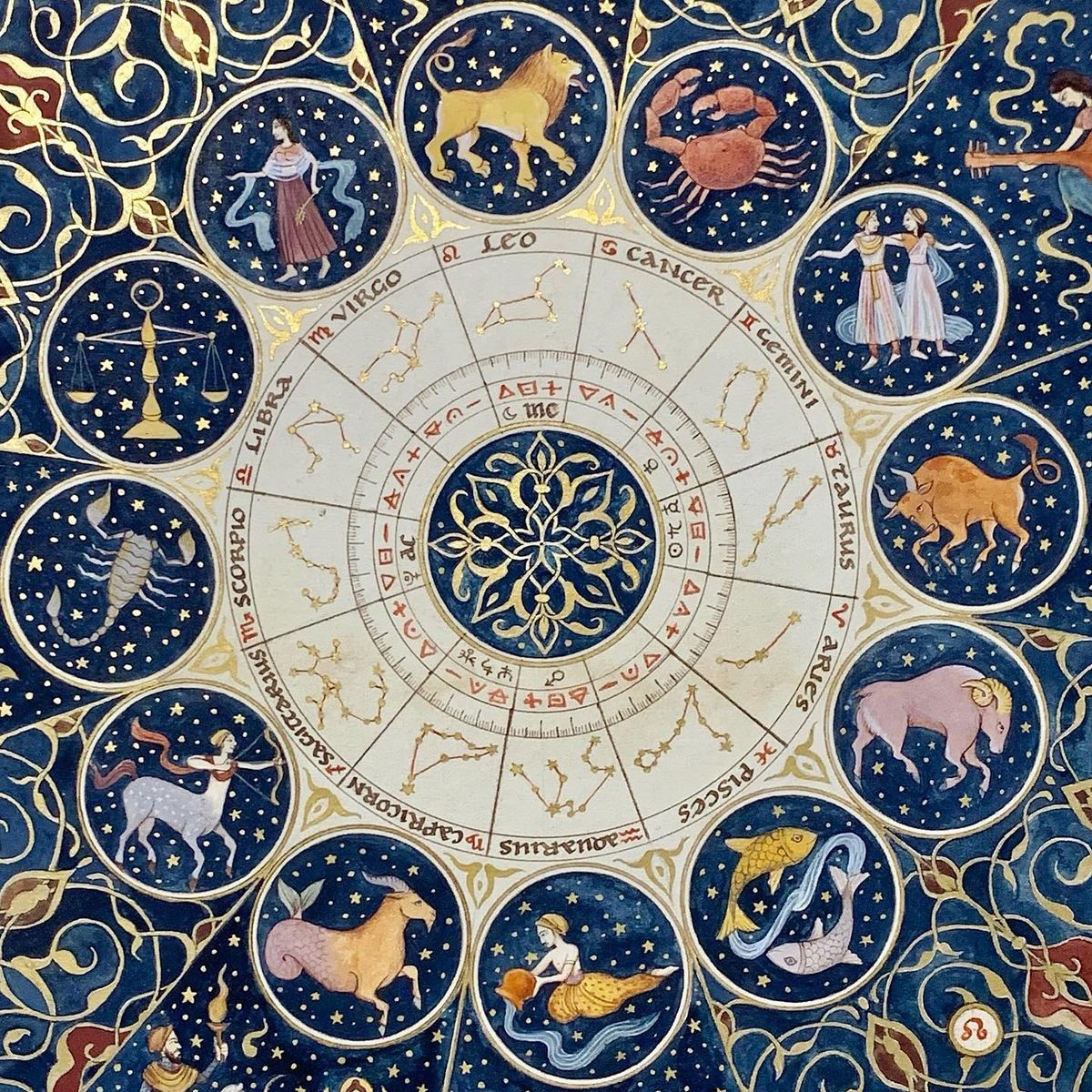
5. Astrological Mandala
These mandalas incorporate zodiac signs, constellations, and planets, serving as a map for personal growth, self-awareness, and meditation.
Meaning: These mandalas symbolise personality traits and archetypal energies.
Use: Used to explore astrological themes, alignment with the cosmic world, and spiritual growth.
Mandala Art Colours and Their Meanings
All colours present in a mandala art holds symbolic meaning with each of them representing spiritual concepts, energies, and emotions. While the specific meaning can vary from depending on religion and culture, here are the common interpretations:
| Colour | Meaning |
| Red | Passion, fire, strength, and energy. |
| Orange | Vitality, joy, and heat. |
| Yellow | Happiness, enlightenment, and wealth. |
| Blue | Peace, thinking, truth, and communication. |
| Violet | Spiritual insight and intuition. |
| Green | Nature, healing, and growth. |
| White | Purity, peace, and spiritual awakening. |
| Black | Mystery, deep thought, and secrets. |
| Brown | Earth, stability, and support. |
| Gold | Wisdom, abundance, and divinity. |
Furthermore, the intensity of the colours also has deeper symbolic meaning such as:
- Dark Colours: Symbolises need for introspection and emotional aspects.
- Cool Colours: May indicate calmness or emotional peace.
- Vibrant Colours: Reveals an active or passionate state.
Motifs and Symbols on Mandala Art and Their Meaning
Beyond colours, you’ll find intricate symbols within the circular patterns of a mandala. Some symbols and their meanings include:
| Symbols | Meaning |
| Sun | Represents the universe–life and energy. |
| Lotus Flower | Depicts balance, awakening, and enlightenment. |
| Eight-Spoked Wheel | Actual representation of the universe, where the spokes represent Eightfold Path of Buddhism. |
| Triangle | When the tips face upward, it represents energy, and when facing downward, it represents pursuit of knowledge. |
| Bell | Symbolises openness and emptying the mind to allow wisdom to enter. |
| Horizontal Line | Separation of earth and sky. |
| Vertical Line | Represents the connection between worlds. |
Mandala Art in Different Cultures
Despite having its roots in Indian, mandala art has been and still is popular and used amongst many cultures across the world. Here are the cultures that hold mandala art to the highest importance:
1. Indian Mandalas
India is the birthplace of mandalas, born from Hindu traditions. It features religious symbols and sacred geometry often used for meditation and spiritual practices.
2. Tibetan Mandalas
Apart from India, Tibet is also associated with mandalas since it is the heart of Buddhism. Mandalas are their traditional visual instrument for meditation, crucial for achieving enlightenment.
3. Celtic Mandalas
Evolved from ancient Celtic traditions that focused on interwoven knots, spirals, and nature. These patterns centre around the symbolism of continuity, interconnectedness, and eternity.
4. Native American Mandalas
Native Americans use mandala symbols in dreamcatchers, medicine wheels, and sand paintings. These sacred designs are used in ceremonial practices for spiritual connection, protection and balance.
5. Japanese Mandalas
Japanese mandalas, known as ‘Taizokai’ and ‘Kongokai’ are used by Shingon Buddhists. These mandalas are a graphic visual of the spiritual universe and their deities, reflecting Zen principles.
6. Christian Mandalas
Christian mandalas are most popularly seen in architectures of rotundas, churches, especially in glass stained rosette windows. These designs often feature radial symmetry, symbolic motif, and concentric circles.
How to Choose a Mandala Based on Your Personality
In some religions and cultures, mandalas are used as spiritual guides, especially if the person needs to connect with their inner self. This is how you can choose a mandala based on your personality to connect with their true self:
1. Establish the Intention
Before you find a mandala based on your personality, first establish what intention you want to achieve.
- Are you seeking emotional healing, inspiration, relaxation, or spiritual growth?
2. Go with Your Intuition
Next, take a glance at various different mandala shapes and colours and see which one resonates with you the most. If a particular colour, shape, or pattern catches your eye, it’s worth exploring it further.
- Gaze at some mandala design options for 5 mins.
- Did you gravitate towards circles, squares, triangles, or spirals?
- Did the colour orange, blue, green, or white pull your attention?
3. Consider Your Current Phase
Your current phase of life or situation should resonate with the mandala designs.
- Spirals might be suitable for those who are in a period of transformation.
- Geometric patterns provide stability for those who are in a rough patch.
4. Observe the Design Over Time
After living with or practicing your chosen mandala, observe how it impacts your mood and energy. This can help you refine your design to select one that helps you achieve your desires.
How to Choose the Right Mandala Design for Your Space
Since it’s already established how mandalas bring a sense of peace and harmony to any space, you can choose the right mandala design to transform your interiors. Here are some tips to help you choose the right mandala art:
1. Identify the Purpose of the Mandala
As we know, mandalas come in various designs and with various meanings and symbolism. From astrological and yantra to nature and geometric designs, each has their own significance and purpose. Therefore, understand their meaning and align them as per your personal style and energy you want.
2. Choose Mandala Art Based on Room Function
Before choosing the mandala design, determine where it will be placed as the size, colour, and pattern influences the room decor. For example:
- Living Room: Larger, more vibrant coloured mandala art serves as a conversation starter.
- Bedroom: Softer, subtle mandala prints turn the bedroom relaxing yet stunning.
3. Choose Your Medium
Today, mandalas can be crafted and replicated on various mediums and materials including wood, canvas, wallpapers, and fabric. Here are some material you can choose from depending on your aesthetic preference:
- Prints & Wallpapers: Mandala paintings, canvas prints, and wallpapers with floral mandala designs are suitable for contemporary interiors.
- Textiles: Mandala-inspired cushions, rugs, and tapestries add a boho vibe to the space.
- Wooden Carvings: Carved wooden mandala with vibrant colours give your space a rustic and earthy feel.
Who Should Choose Mandala Art?
Mandala art is a fantastic practice for anyone, regardless of their age or artistic skill. You can choose mandala art simply because:
- It Helps with Stress & Anxiety: As mentioned earlier, mandala art helps reduce any day’s stress or worries and replaces it with calm and peace.
- It Improves Focus & Concentration: The repetitive motion and focus required to complete a mandala art helps your brain to concentrate.
- Interested in Spirituality: If you’re looking to connect with the universe or your inner self, mandala art serves as a spiritual tool.
- Looking for an Accessible Hobby: If you want to get into a hobby that demands minimal effort and more quiet and concentration, this might be it for you.
How to Choose a Mandala Wallpaper for Your Walls
If you’re going for a wallpaper in your home, choose Magicdecor’s stunning collection of mandala wallpapers and consider these steps before choosing:
1. Define the Intention of the Room
Decide whether you want the space to feel calm, energising, creative, or spiritual. This intention will help you choose the right mandala—soft, bold, or colourful.
2. Match the Design to the Room’s Colour Palette
Ensure the mandala design you picked compliments and matches the already existing colour palette in the room to avoid clashing colours.
3. Consider the Size of the Pattern
Choose larger mandala designs to make a stunning focal point and go for subtle, smaller patterns in compact rooms without overwhelming the space.
4. Choose the Finish and Material Wisely
Lastly, opt for wallpaper finishes that match your interiors–matte, gloss, or textured and wallpaper material–peel and stick, non-woven, or premium textures depending on high-traffic zones.

A Spiritual Symbol That Adds Meaning to Your Space
A mandala holds very deep meaning in the way its lines meet, circle after circle, as if mapping the quiet rhythm of the inner world, the universe, and everything in between.
When you let this symbolism guide you through meditation, art therapy, or interior decor, you find your ‘Self’ and your connection with the universe. So, by choosing a mandala design that resonates with you and the space, you are adding a quiet purpose to your space and life.
So, next time you feel peace and calm while drawing or colouring a mandala, it is because you are making space to meet the Self.
FAQs
What is the meaning and purpose of mandala art?
Mandalas are symbolic geometric representations of the universe, spiritual journey, and wholeness. Its purpose is to allow an individual to achieve inner peace, mindfulness, and spiritual and emotional growth.
Why are mandalas beneficial for your space?
Since you are employing the principles of geometry, shape and colour psychology, they promote balance and harmony, and encourage mindfulness.
How do I choose a mandala design that fits my space?
Start by identifying the mood or symbolism you want to have, then look for the function of the room, and finally, choose the medium or material you desire.
Where can mandala art be placed for the best effect?
Mandalas work beautifully in living rooms, meditation corners, bedrooms, entryways, and study rooms or offices.







 Material Preview
 Digital Snapshot
 Design Selection
