








There is no better medium for expressing culture and history better than art. Having said that, it also offers a window of glimpses to traditions and cultures that might have otherwise remained hidden.
Among a myriad of indigenous art forms of India, be it the Tanjore painting of Tamil Nadu or the Phulkari art of Punjab, Saura painting stands out the most. To truly appreciate this art form, we must trace its origins, learn its techniques, and the symbolism behind it, which will all be covered in this blog.
Understanding Saura Painting
Saura paintings also known as ‘Ikons’ or ‘Lanjia Saura Painting’ are geometric lines and stick- like shapes drawn to represent various aspects of their life, namely, disease prevention, fertility, and ritualistic practices.
Often mistaken for Warli art of Maharashtra, Saura painting lacks gender differentiation and is associated more with spiritual themes. Besides Warli, Saura art also shares similarity with Muria painting of Chhattisgarh.
The History Behind This Ancient Captivating Tribal Art
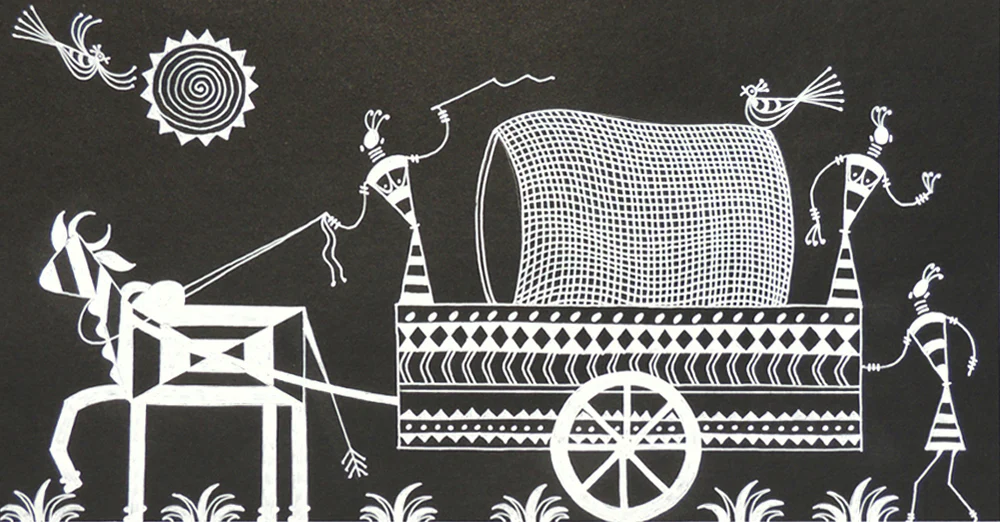
Saura art is an ancient tribal art form practiced by the Saura tribe in Odisha. They’ve been practicing this art for centuries and therefore have religious and spiritual significance.
The Saura tribe dedicate this art to their deity in order to avoid Their malevolence or anger. Traditionally, a priest hand paints it on the walls as they would get the dream of what is to be drawn.
Ritualistically, if there was suffering in the house, a Kudan (shaman) was invited to find the cause of the suffering. Upon which, the Kudan would rub unboiled rice together in a winnowing pan, followed by some chanting and identify the spirit. This spirit was then hand drawn with ikons to honour it, compelling it to take away the sufferings.
And this is how the art came about and was prevalent amongst all the Sauras to prevent external dangers.
A Glimpse Into The Symbolism of Saura Art Motifs
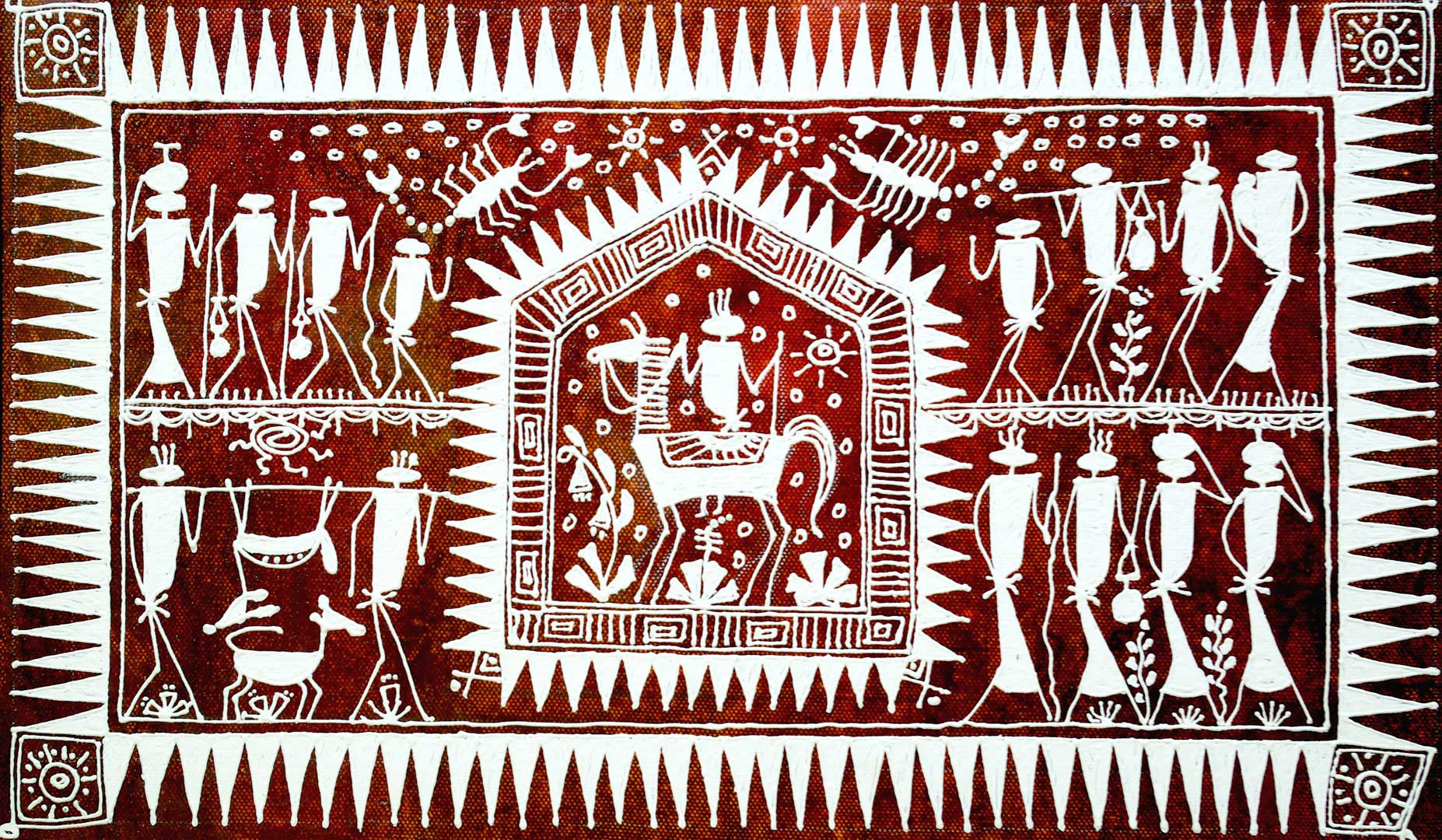
The figures in the painting are called ‘Ikons’ or ‘Ekons’ and they are brimming with symbolism.
- Human Figures
These are the central figures having elongated and simplistic shapes meant to represent the everyday life of the tribal community. They are often drawn continuously, each touching the other to represent harmony.
- Animals & Birds
Animals and birds make a frequent appearance to showcase the tribal community’s connection with nature and also every bird in the painting symbolises something specific.
- Geometric Patterns
In this Indian art, there are geometric patterns that might seem random however is anything but. The three points of the triangles represent sky, water, and earth or past, present and future. The circle stands for continuity and cycles of life while the square and rectangles are stability and the ground.
- Deities and Spirits
Spirits and deities, particularly Iditol, the focal motif in all Saura paintings. While the deity drawn might not be obvious due to the stick-like form, they are however always represented larger than others to show importance.
The Making of Saura Painting: Process & Techniques
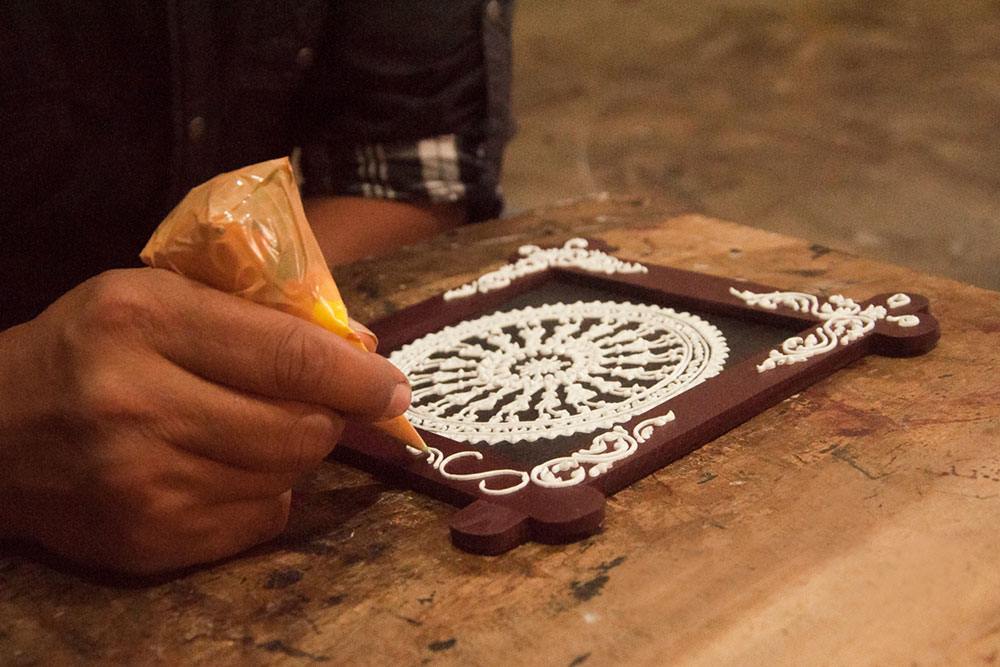
The intricate and simple process behind Saura tribal art:-
1. Preparing the Medium
Originally, drawn in the walls of their houses to honour deities and ward off any dangers.
- Traditionally painted on walls of the village homes and later adapted to canvases and cloths.
- Backgrounds were usually black, red, or white in colour.
- Brushes were made from tender bamboo shoots or a palm twig, shaped to form a pointed edge.
- The pigments used to paint the ‘Ikons’ were created using grinded white stone or rice paste.
- Traditionally, painted against a red clay or mud-coated wall.
2. Style
The style was predominantly earthy to reflect connection with their environment.
- Saura paintings typically followed a simple colour scheme wherein the dominant colours were black, white, earthy reds, and yellows.
- The absence of vibrant colours gave this Indian art an authentic character.
3. Process
Motifs were usually repeated to symbolise their interconnectedness with community and nature.
- ‘Ikons’ or motifs were painted to narrate tribal lore, myths, and to honour deities.
- Artists drew a wide range of ‘Ikons’, including humans, horses, trees, sun, and the moon.
- These motifs were arranged within a square or rectangle border.
- Each motif held a religious significance.
Tips To Embrace Saura Art Today
Saura painting is alarmingly fading away from our eyes, especially with its contender, Warli art, blurring its uniqueness. To keep it alive, here’s what you can do:-
- Bring keepsakes, fabrics, decorating items inspired by Saura motifs.
- Install Magicdecor’s wallpapers and canvases featuring Saura designs.
- Buy art pieces from Saura artists to support and keep their passion and creativity burning.
When Spirituality and Art Meet
The Saura tribe’s language didn’t have a written script, therefore their art ensured the history remained. This art is not just beautiful to look at but offers a window into the tribe’s way of living and culture. Just like all the other indigenous art forms, Saura painting adds richness to the ever-colourful culture of India.







 Material Preview
 Digital Snapshot
 Design Selection
