









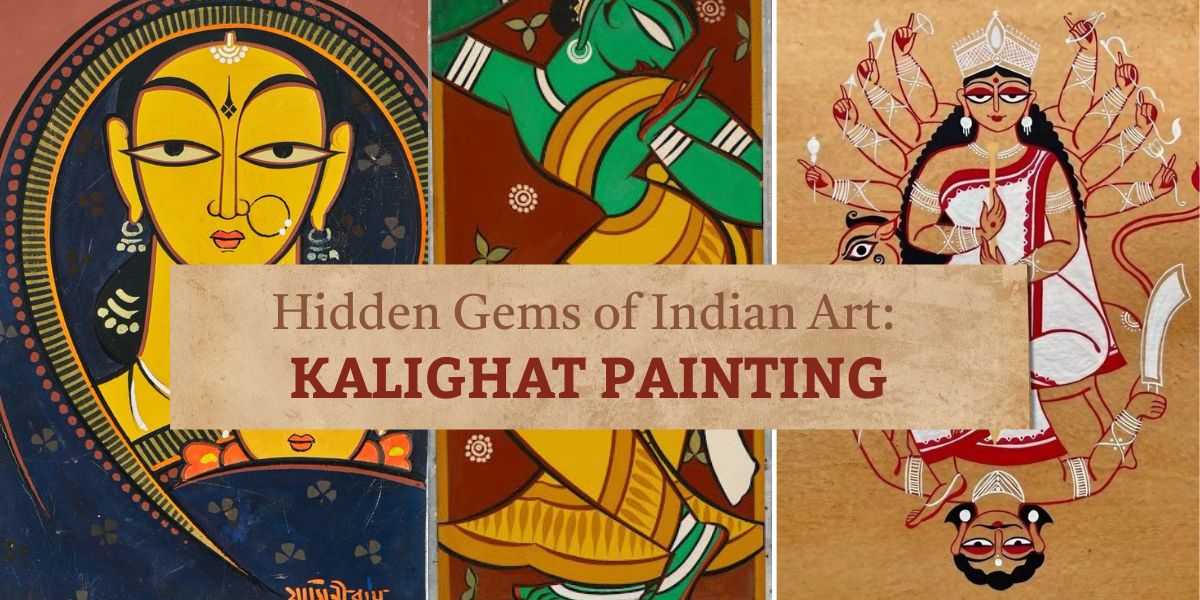
There are many Indian art forms that proudly sit at the forefront of our cultural identity, but there are also a few art forms, if not many, that quietly remain in the background, hidden and forgotten.
Kalighat painting is one such hidden gem, characterised by bright, colourful colours and bold, sweeping lines. This traditional folk art originated in Kolkata, near the Kalighat temple, and is known for its striking depictions of religious deities as well as scenes reflecting the social and cultural changes of Bengal.
Continue reading this blog to learn more about kalighat painting, how it originated in the landscape of British rule, and we can preserve this hidden art form.
Understanding What Kalighat Painting is
Kalighat painting is a traditional Indian art form, originating from the bustling area near Kalighat Temple in Kolkata. This art form was originally practiced by a group of specialised scroll painters known as the patuas. The paintings depicted mythological stories, figures of religious deities, and social commentary.
A Dive into the History of Kalighat Painting
Kalighat painting originated in the 19th century when the city of Kolkata was slowly turning into a busy and thriving harbour city. With this, migrants began arriving in the city, looking for new opportunities. Among these were various artisans, including patuas, a community of artists from West Bengal.
The Kalighat temple, constructed as a manifestation of Goddess Kali, saw a rise in pilgrims and tourists. Looking at this opportunity, the artists began selling scrolls of Hindu Gods and Goddesses, which came to be known as Kalighat art.
With the change in the social environment, the artists evolved from painting deities to portraying critiques and satires on social inequality, urbanisation, colonial rule, and more such themes.
Despite holding such bold narratives and visual commentary, the art attracted many international travellers, making Kalighat paintings the perfect souvenirs to take back home.
Visual Characteristics That Define Kalighat Style
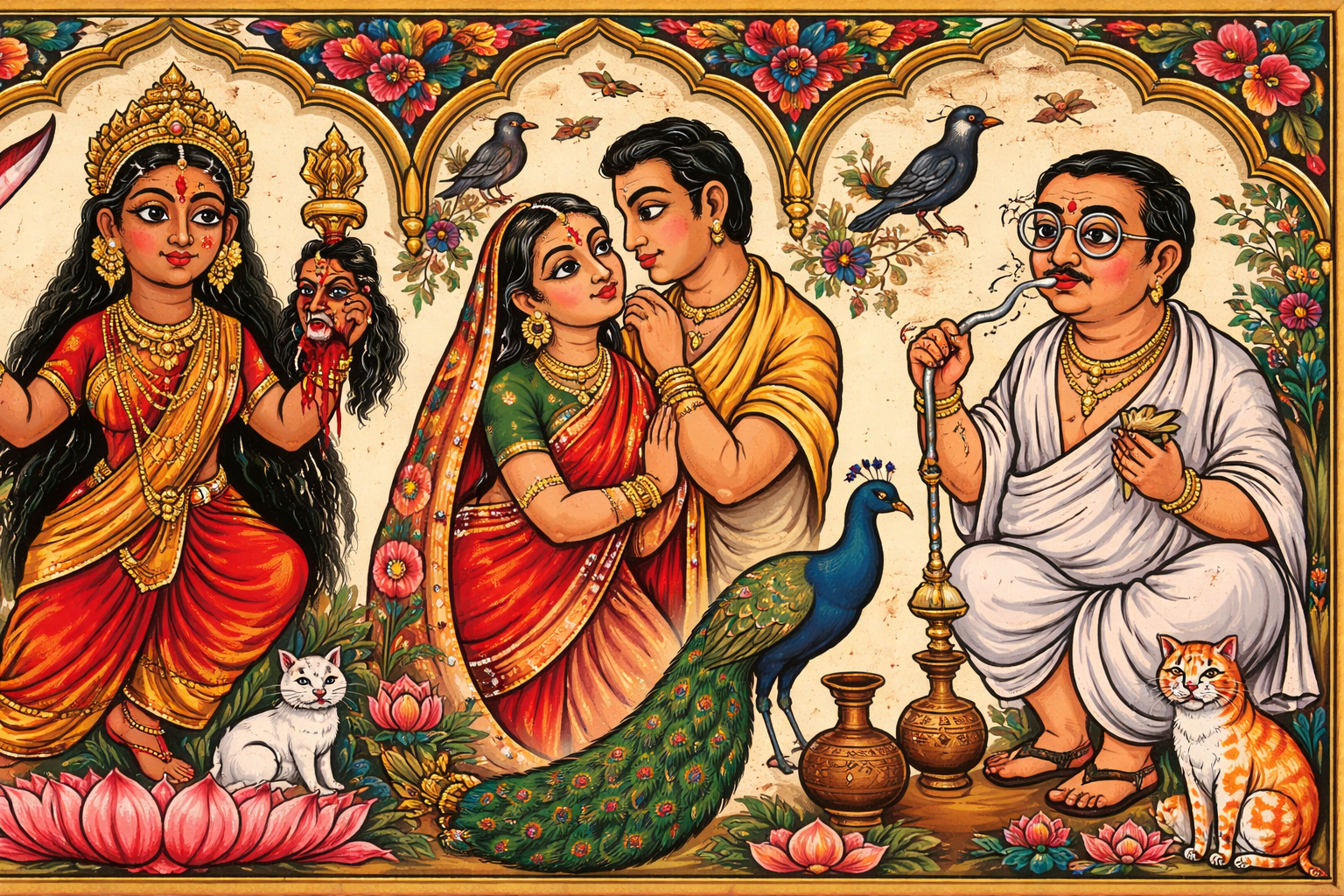
A Kalighat art can easily be spotted is these visual characteristics are present in them:
1. Bold, Sweeping Outlines
The outlines present in a Kalighat painting are bold, sweeping, and fluid. The figures or subjects present in the art are characterised by strong, dark contours.
2. Bright Colours
The Kalighat artists use bright, primary colours with the help of natural pigments that give the subjects and motifs a vibrant look.
3. Minimal Background Details
The figures or subjects present in a Kalighat painting are kept at the center of attention by keeping the background minimal with a few details.
4. Presence of Hindu Deities
The painting frequently depicts Hindu Gods and Goddesses, such as Kali, Laxmi, Shiva, or Durga.
Motifs and Subjects Found in Kalighat Painting
Kalighat paintings incorporates two main types of themes which are:
1. Religious Themes
Kalighat painting was originally created as an inexpensive souvenir item for the people who were visiting the Kalighat temple. These original paintings depicted many religious subjects such as:
- Hindu God and Goddesses: Common deities include Durga, Kali, Saraswati, Laxmi, Parvati, Shiva, Ganesha, and more.
- Mythological Narratives: Many mythological stories, such as the Mahabharata and the Ramayana, were also depicted in the paintings.
2. Non-Religious Themes
As the city commercialised and urbanised, the Kalighats artists decided to expand the themes and subjects, so as to cater to the changing society. These non-religious themes included:
- Contemporary Themes: The artists portrayed the social happenings and events, right from simple rural life to satirising Kolkata’s urbanisation and scandals.
- Animals and Nature: Animals and birds were also a common feature in Kalighat paintings as they stood for allusions of popular proverbs.
A Glimpse into the Techniques and Materials Used in Kalighat Painting
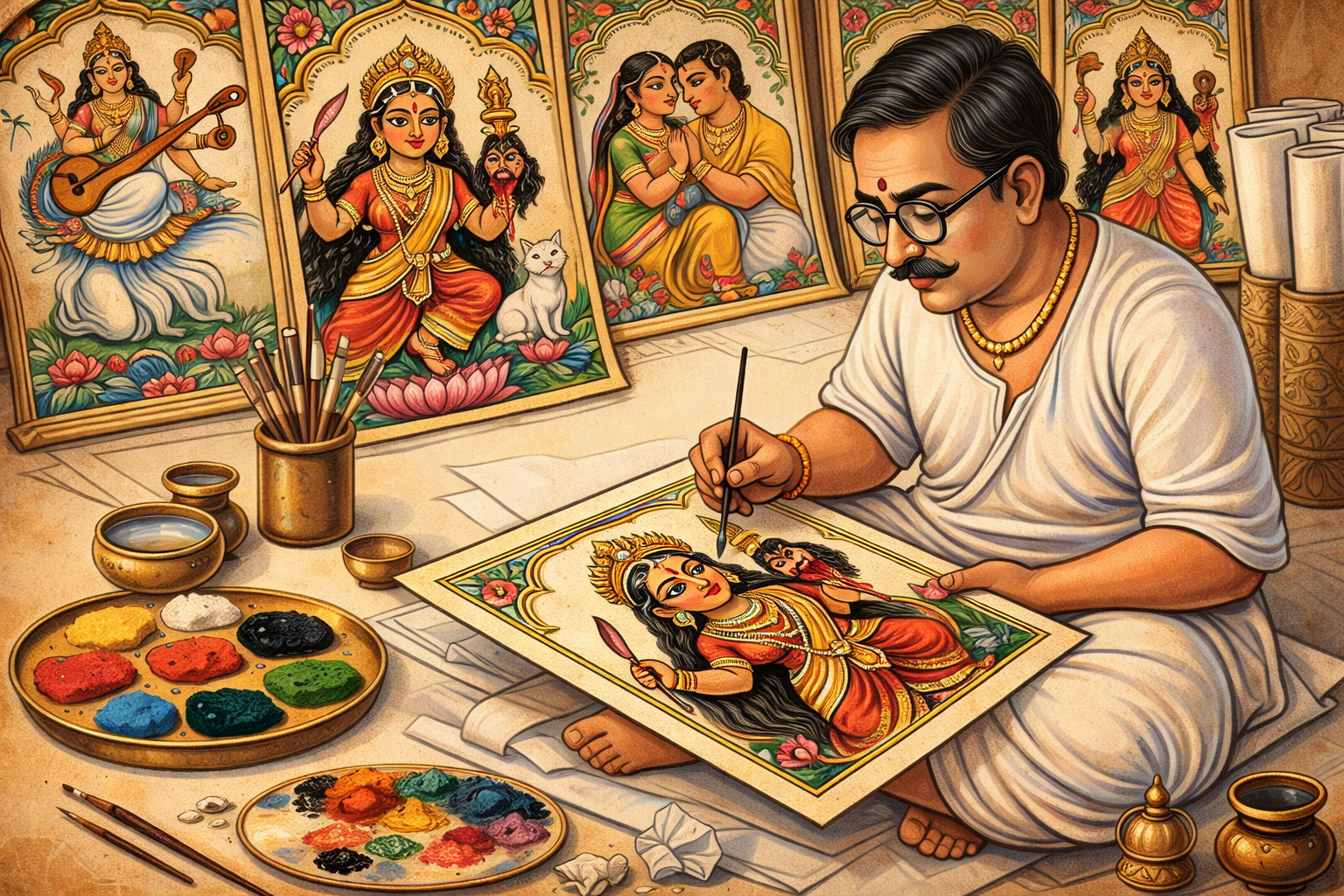
Take a closer look at the materials and techniques that go into making Kalighat art:
1. Ancient Materials
Kalighat paintings made use of natural materials, right from the paper to the pigments. These ancient materials included:
- Base: The base was either a mill-paper or a cloth that was sometimes treated with lime wash or paste for a smoother surface.
- Antique Effect: Artists would also mix tea leaves or the brown mixture from tree bark for an aged-antique effect.
- Pigments: Almost all the colours were organically derived either from vegetables or flowers. The binding glue was further extracted from the Bael trees’ natural gum.
- Brushes: The brushes with which the art was created were made from either the squirrel’s fur or the goat’s hair.
2. Technique and Painting Process
This is the step-by-step process artists follow to create a meaningful and mesmerising Kalighat painting:
- Outline Sketch: The artists begin the process by outlining a rough sketch of the figures and subjects they intend to depict.
- Colour Filling: The rough outlines have to be then filled with bright colours such as blue, red, yellow, or green, as these are the characteristic shades.
- Detailing: The artists will then begin inserting little details on the painting such as ornaments, facial expressions, cloth patterns, and additional shading.
- Minimal Background: The artists usually keep the background simple or insert minimal details so as to direct all the focus on the subjects portrayed.
Famous Kalighat Artists Worth Remembering
There are a plethora of Kalighat artists who made significant impact to the Kalighat paintings, each with their own style and perception. Here are some of the artists:
- Jamini Roy: He is one of the most well-known Kalighat artists who merged the traditional style of the painting with modern elements.
- Bhawanipur Sitaldas: Sitaldas is a significant and very-well known Kalighat artist who is considered to be one of the pioneers of this art.
- Gobardhan Bhattacharya: He also made significant contributions to the Kalighat art and is known for his depictions of Hindu Gods and Goddesses.
- Harinarayan Chattopadhyay: He was very-well known for his satirical and humorous pokes at the social and political issues of Kolkata during his time.
How is Kalighat Different from Other Indian Folk Arts?
Kalighat paintings differ from other Indian folk arts due to its bold satirical commentary on the British colonial rule and rapid urbanisation of Kolkata. It is unique because it served both as a religious souvenir for the tourists and pilgrims as well as a ‘newspaper’ for the contemporary events.
Why Did Kalighat Painting Decline? The Real Reason
The Kalighat paintings were blooming in the 19th century but saw a gradual decline with the onset of the 20th century. And the most bewildering and heartening reason behind this was the production of cheap and easy copies. These duplicate copies killed the artistic value and appeal of hand-painted art.
Moreover, the Kalighat artists could not compete with the prices of the machine-made paintings, and were forced to stop creating altogether. This unfair imitation, eventually, led to the decline of Kalighat paintings.
Kalighat Painting in Contemporary Times
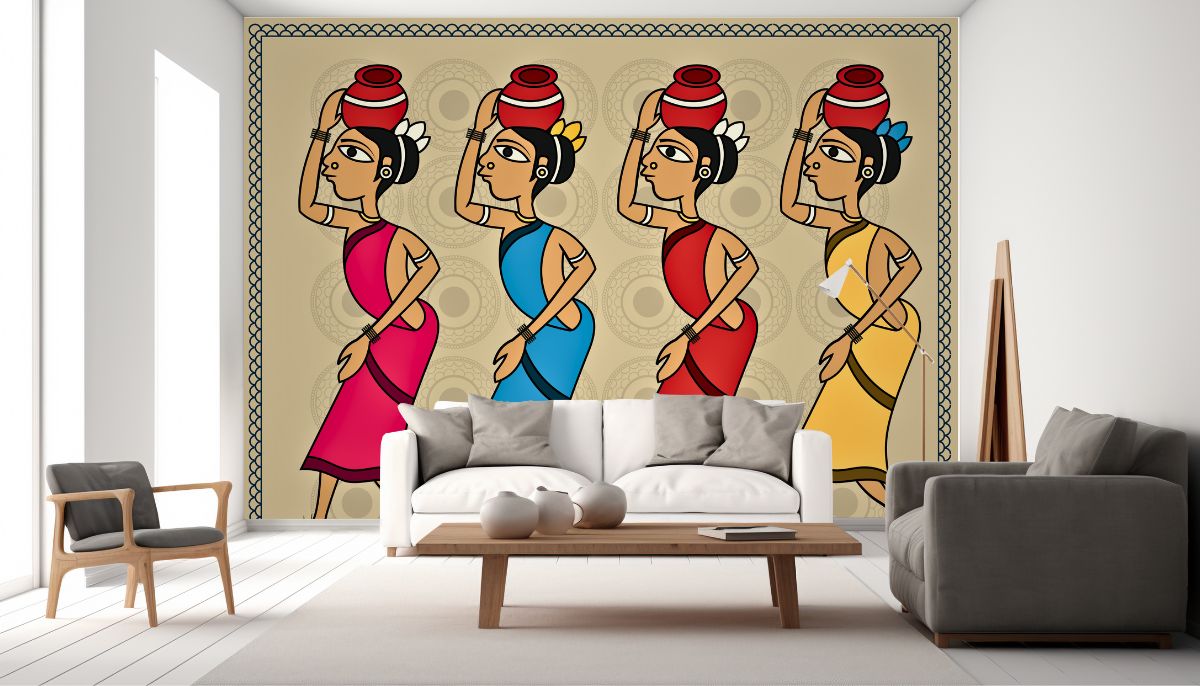
Take a look at Kalighat painting in modern times:
1. Revival
Thanks to modern Kalighat artists like Jamini Roy, Kalighat painting began to, once again, gain momentum. Modern artists learned to grapple with contemporary themes such as politics and environmentalism through the same characteristic style.
2. Combination with Modern Art Forms
Kalighat paintings now feature in every graphic design, murals, and digital art that carry forward this art for contemporary audiences. Even museums and art expositions have revived this hidden art form.
How Can You Embrace Kalighat Painting Today
With time, this beautiful Indian art is gradually losing its appeal and name. However, it’s never too late to revive it or recognise it however way we can. You can spread word and make it known through one of these ways:
1. Canvas Prints
You can buy canvas prints from Kalighat artists like Uttam Chitrakar to show appreciation and keep these artists going.
2. Wallpapers
Bring home Kalighat-inspired wallpapers or murals from Magicdecor, and infuse your home with culture and appreciation for Indian art.
3. Textiles
You can commemorate the works of Kalighat paintings by incorporating them into your textiles. You can either purchase pillows, tapestries, or scarves inspired by this art.
Why Preserving Kalighat Art Matters?
As we have seen through this blog, Kalighat painting is a vibrant reflection of Bengal’s faith, culture, and social change. Each flowy brushstroke carries narratives of devotion, everyday life, and the shifting political and social change.
Preserving this art means preserving these stories, the creativity of the artists, and the unique past of Indian artistic heritage. We are at a point in life, where traditional, hand-painted art is fading away, so supporting and celebrating Kalighat painting ensures it stays, and inspires generations to come.
FAQs
- What are the salient features that differentiate Kalighat art from other Indian art forms?
Features such as the use of bold outlines, religious themes, social commentary, and the lack or minimal presence of background details.
- What themes are commonly seen in Kalighat paintings?
The art often depicts Hindu deities like Kali, Durga, Laxmi, and Krishna, along with scenes of everyday life with animals in it, satire, and the changing social status of Bengal.
- Can Kalighat paintings be used as wallpapers or wall murals?
Yes, Kalighat paintings can be translated into wallpapers and wall murals, making them an artistically-relevant visual into your modern homes.
- Which spaces look best with Kalighat-inspired decor?
Kalighat-inspired decor suits a plethora of spaces such as living rooms, bedrooms, dining rooms, or work spaces where you’d like creativity, art, and culture to stand out.








 Material Preview
 Digital Snapshot
 Design Selection
