









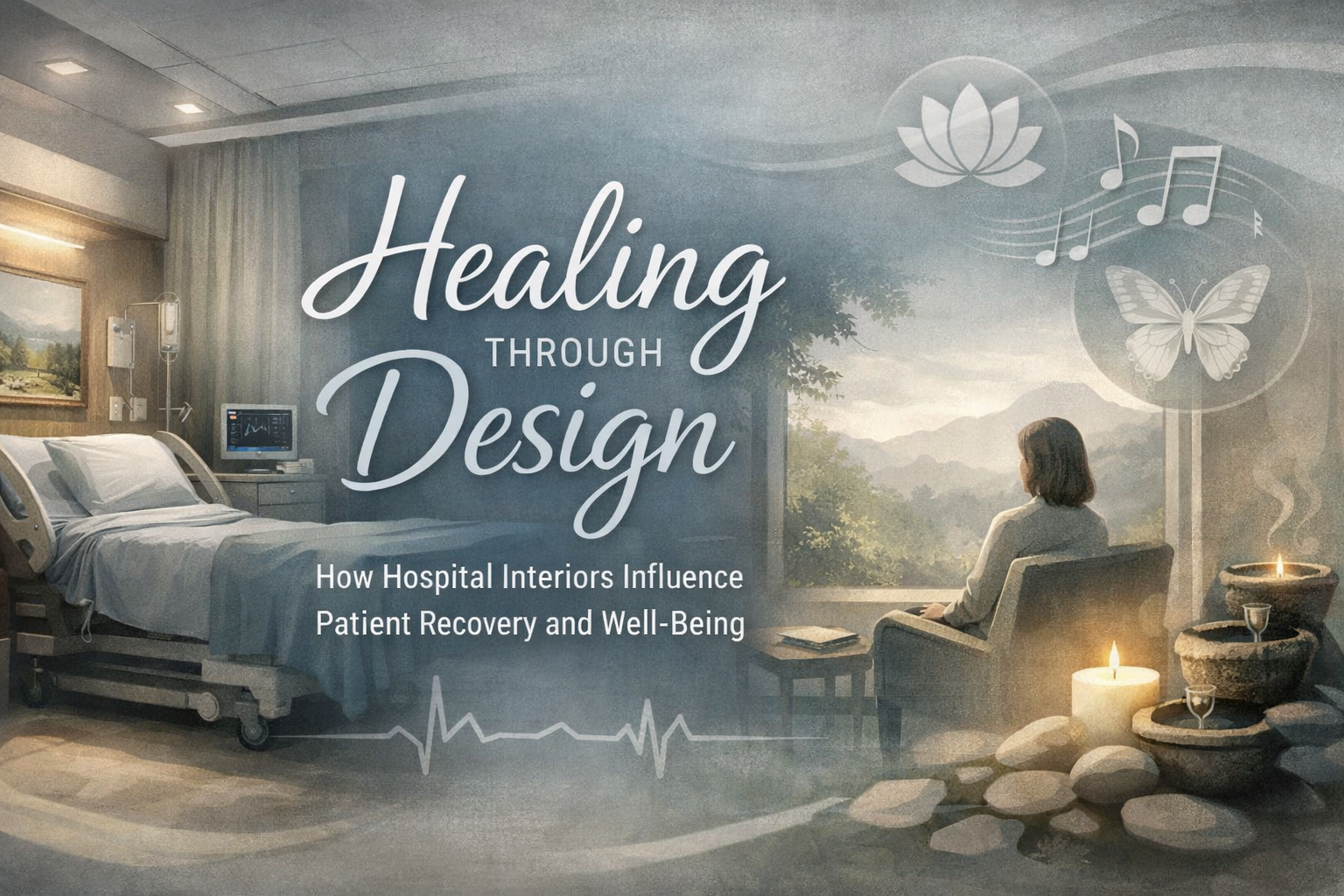
Recovery in hospitals hardly ever happens over medications alone. It happens slowly, indoors, in rooms where patients spend most of their time lying awake, watching the walls, the ceiling, and the hours pass.
Hospital interiors play a direct role in patient recovery and well-being, shaping stress levels, emotions, and comfort in ways that often go unnoticed. When patients spend most of their recovery time surrounded by dull, impersonal spaces, healing can feel heavier. However, if the interiors are thoughtfully designed, the environment itself helps patients on their journey of recovery.
The Science Behind How Environment Helps Healing

While patient healing is majorly attributed to medications, part of the healing outcome is because of the environment. Let’s look at the how hospital interiors support and impact the healing of a patient:
1. Evidence of Studies
Both scientific research and government-backed studies confirm that a well-designed healing environment leads to quicker patient recovery. Studies show how various patients when exposed to various environments such as long exposure to trees and fresh air, impacts the patient’s recovery rate.
2. Stress Reduction Mechanism
There is no denying the fact that hospitalisation induces stress which in turn delays healing. A calming, disturbance-free hospital environment with soft lighting and soothing colours helps create a sense of safety and comfort, where the patient can focus on recovering rather than stressing.
3. Placebo Effect
A patient’s belief in the healing environment significantly impacts their pace of recovery. When patients see their hospital room is safe, comforting, and thoughtful designed, they tend to feel more hopeful and positive, which enhances their healing. This psychological response is the placebo effect.
Source: https://pmc.ncbi.nlm.nih.gov/articles/PMC5238052/pdf/hosplond72048-0014a.pdf
Core Design Elements and Their Impact
Here are some of the salient design elements that ought to be in a hospital room for patient’s recovery and well being:
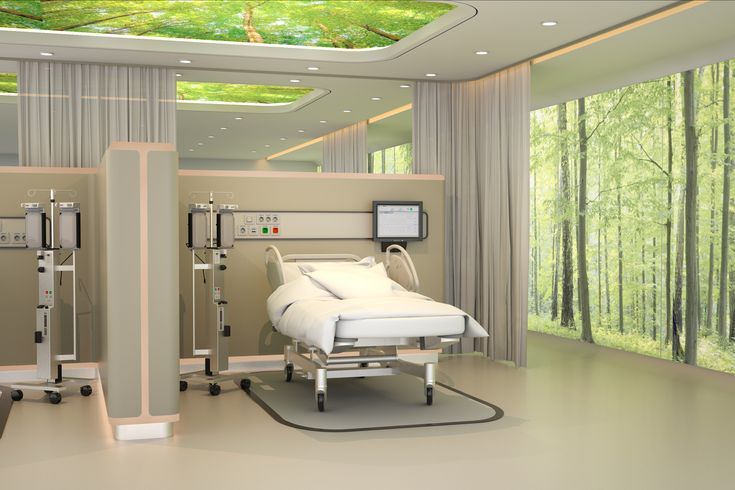
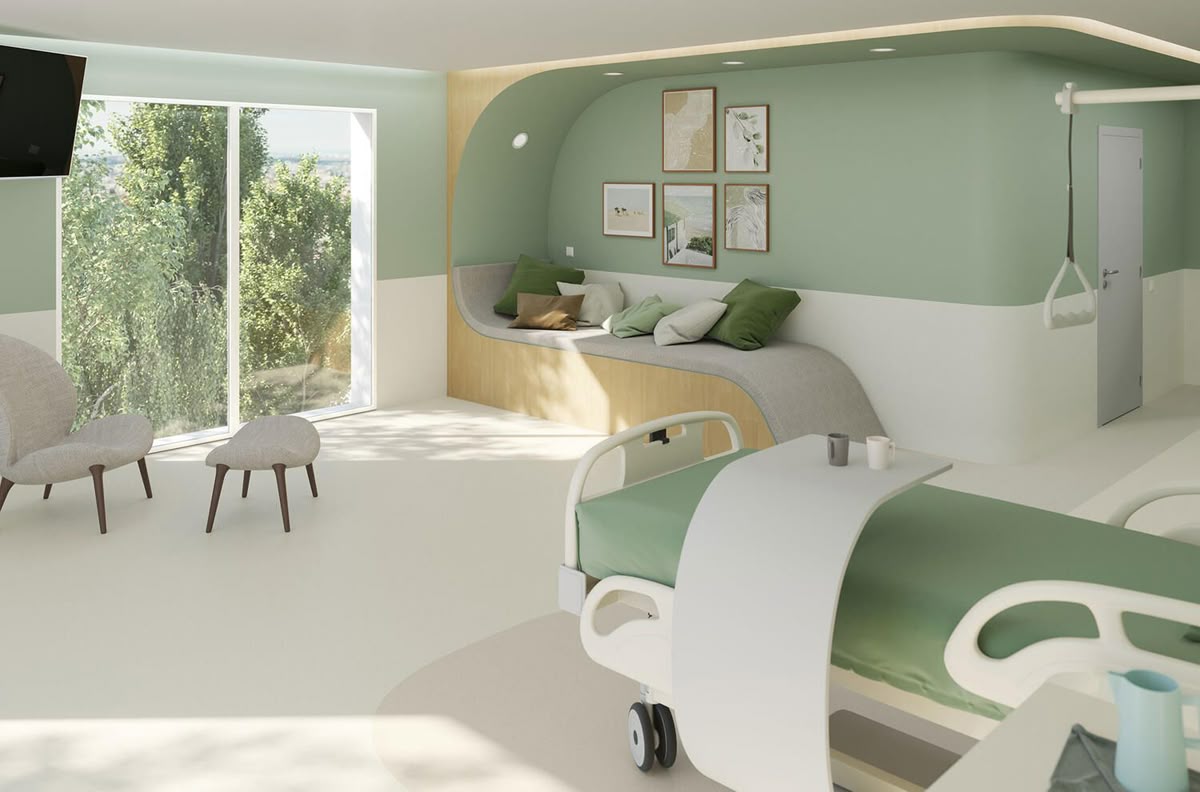
- Natural Light and Views: Sunlight is one of the core design elements in hospital interiors that help lower stress and decrease pains. Moreover, views of greenery or nature helps in shorter stays at the hospital as there are many health benefits.
- Colour Psychology: Apart from lighting, colours also have a profound impact on the patient. Various wards and recovery rooms benefit from various colour palettes. For example, post-surgery rooms will often have muted colours for patient restfulness.
- Noise Reduction: Noise is one of the most overlooked stressors. Constant sounds from the corridors, machine beeping, alarms, and sirens can get in the way of patient recovery. Therefore, the design elements in the room should have an effective noise control that improves patient’s sleep and recovery.
- Comfort, Warmth and Texture: Patients feel out of place in a hospital and a cold, sterile environment intimidates them more. By placing clean, warm textures, soft fabrics create a more human-like environment, where comfort, rest, and recovery prevail.
How to Create Hospital Interiors That Aid in Patient Recovery
Here is a Magicdecor’s guide on how to create a hospital environment that help patients recover soon and be comfortable for the period of their hospitalisation:
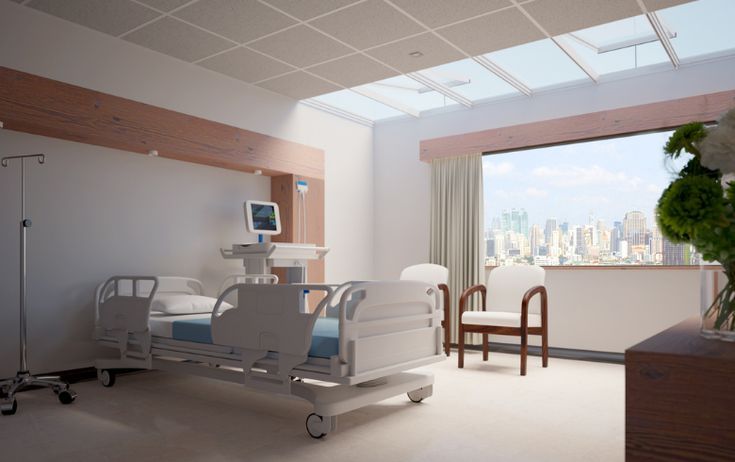
1. Maximising Natural Light
Exposure to natural light is one of the crucial factors for a patient’s recovery. Sunlight increases serotonin, it helps set the body’s internal clock, triggers vitamin D production for strong bones, among many other benefits. Hospitals should have:
- Rooms with large windows to ensure patients receive adequate sunlight daily.
- Looking out of the windows also helps patients combat depression and cope with illness.
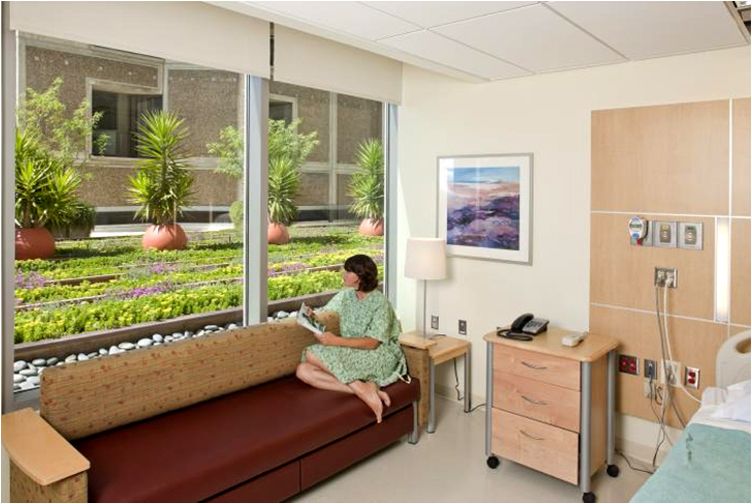
2. Incorporating Nature and Green Spaces
The healing powers of nature have already been established and it comes to no one’s surprise that it promotes faster healing. Patients feel more calmer and relaxed when exposed to nature as it reduces anxiety, lowers blood pressure, and the perception of pain. Hospitals can feature:
- Outdoor gardens or rooms overlooking scenic gardens.
- Courtyards for patients and works to revitalise mentally and spiritually.
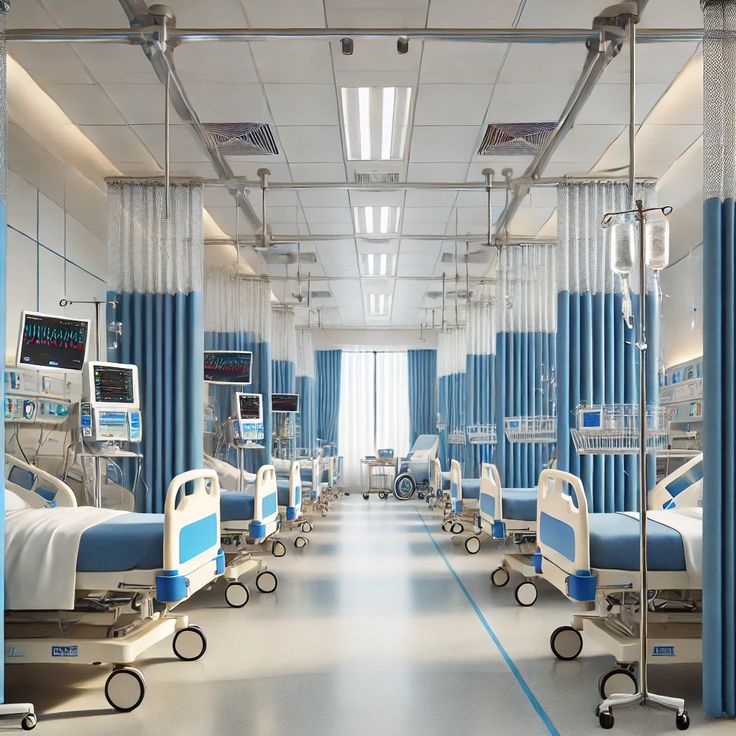
3. Reduce Noise Pollution
Hospitals are one of the most chaotic places where the constant sounds of machinery, footsteps and sirens disturb the patients’ sleep and increase their stress level more. A peaceful environment can be achieved by:
- Using acoustic panels and soundproofing materials in the architecture.
- Placing patients in quiet areas and private rooms for their mental well-being.
4. Furniture, Colour, and Aesthetic Design
A patient’s sense of treatment and mood can be greatly impacted by the visual design of the hospital. Well-considered design aspects such as furniture, colour, or lighting can reduce tension and promote healing. This can be achieved through:
- Comfortable and ergonomic furniture that aids in healing.
- Calming wall paint or wallpapers in cool shades such as blue, green, or soft neutrals.
- Installing art pieces or wall murals converts a clinical space into a comforting home.
5. Patient-Centered Layout
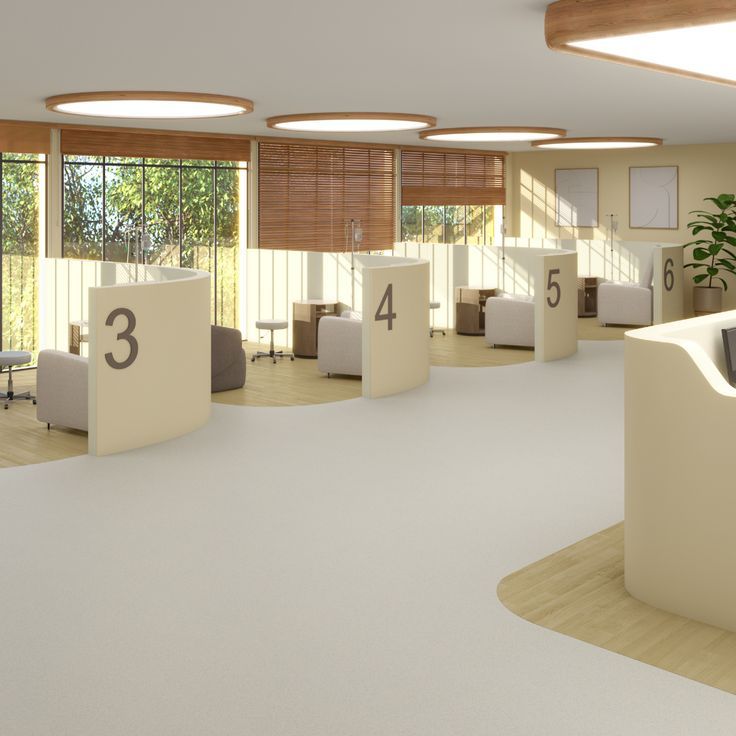
A patient’s physical and emotional needs can be enhanced through intuitive hospital architecture design. The layout should be created with patients and workers ease that helps easy navigation. The layout should have:
- Rooms that are designed for comfort, ease of movement, and privacy.
- Easy orientation of wards, corridors, labs, and departments.
- From registration to treatment, the layout should be accessible and safe for the patients.
- Certain fabrics or textures also help in reducing stress due to its tactility.
How to Design a Space That Feels Comforting for Patients
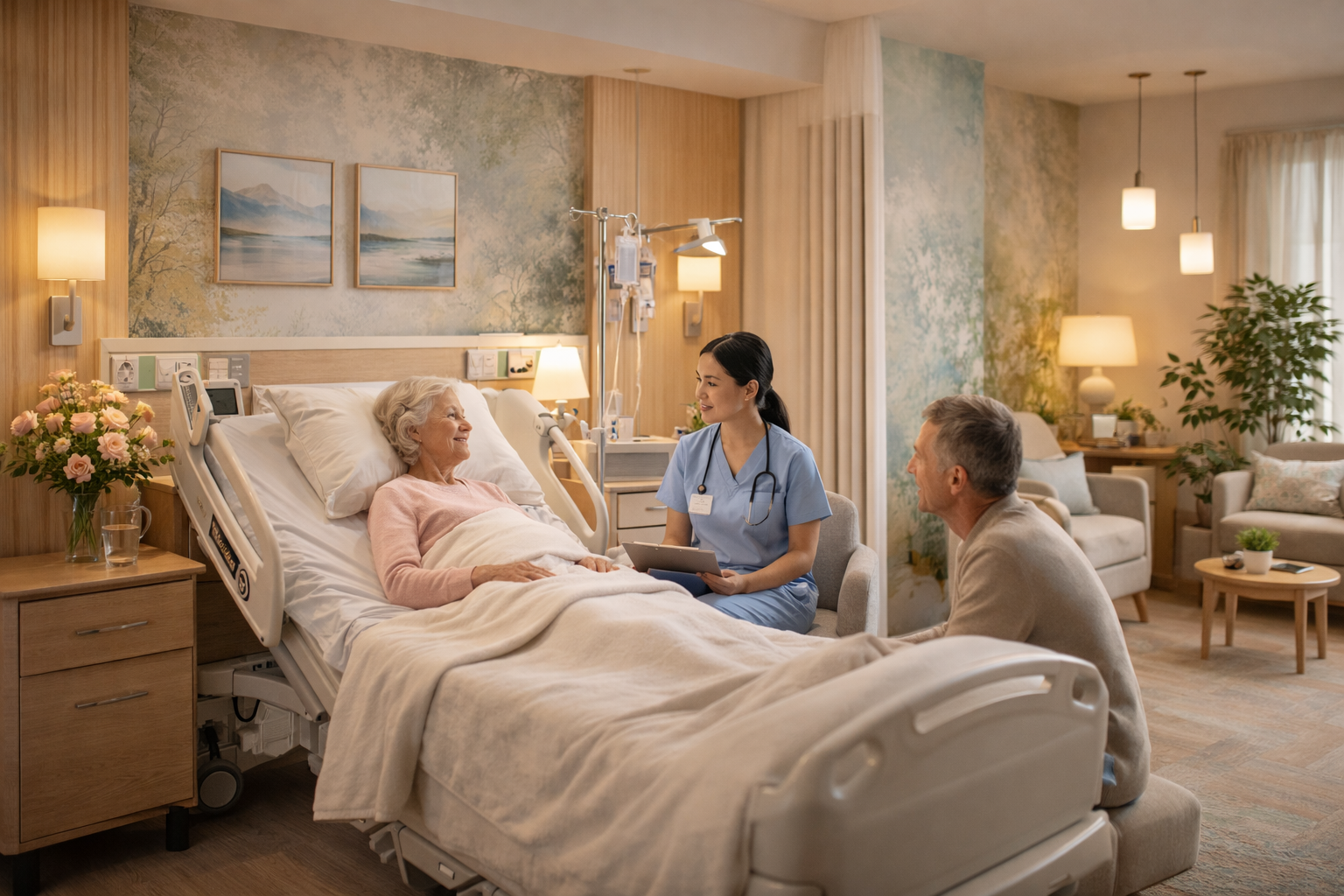
Hospital rooms need not be dull or sterile. You can create an environment that sparks hope and positivity, which propels patients to heal sooner. Therefore, you can make their interiors feel like home with these elements:
1. Walls with Art
Install murals with inspiring and motivating images, or canvas art and paintings that aid in patient recovery or simply offering a glimmer of hope. Motivational quotes hung on the wall help distract the patient from their pain and foster emotional resilience.
2. Using Calming Colours
Almost all patients rest for the majority of the day, making it crucial to have lighting and colours that calm them down and reduce any possible agitation. Employ the use of warm colours such as yellow or cool tones such as greens, neutrals, or blues for a peaceful, restful environment.
3. Install Stunning Wallpapers to Elevate the Ambience
Hospital rooms don’t have to be grey or blue, it can be fun, beautiful and creative with Magicdecor’s wallpapers that lighten up the room as well as the patient. Choosing wallpapers with simple, inspiring motifs can play a profound role in hyping the patients to get well soon.
4. Promote Memory with Familiar Elements
No one likes being in a hospital, no matter how short or long the stay is. Therefore, to make the patient’s stay worthwhile and full of recovery, plant familiar elements such as family photos, artwork, or well wishes around the room to give them comfort and little reminders of home.
5. Encourage Movement and Independence
No patient wants to feel restricted and coddled constantly, as it feels suffocating for them. Install assistive hooks or handles on the wall or allow the patient to use crutches or the wheelchair to move and take in fresh air and also allow the muscles to move, unless the patient is serious.
6. Zones for Connection
Creating a cosy family alcove or a space carved out for visitors helps the patient feel comforted and close to the family. Moreover, communal spaces that allow patients to socialise with other patients or engage in friendly activities helps them heal wonderfully.
Pediatric Healing Spaces: Designing Environment for Young Minds
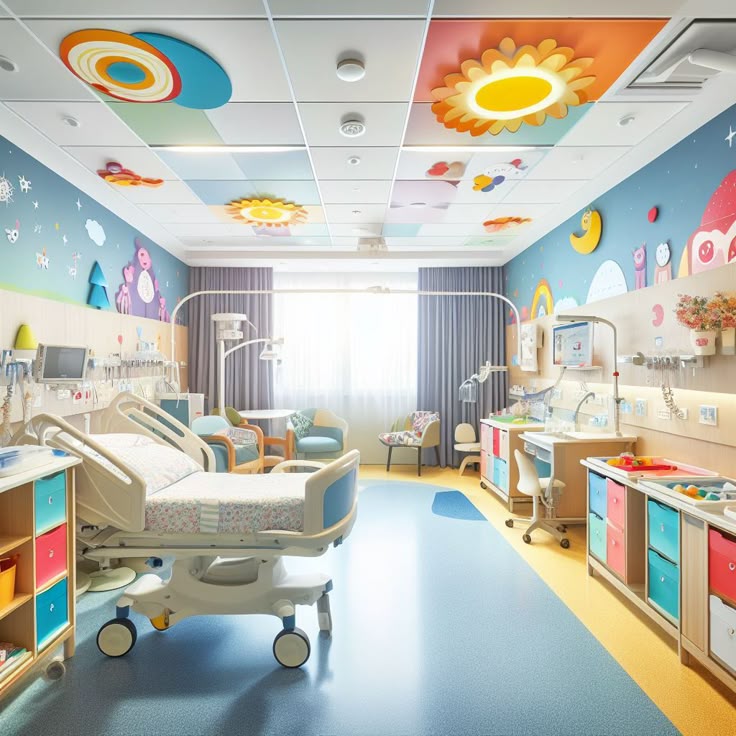
The interiors of a pediatric room greatly matters as children are often scared and nervous while visiting a doctor or a hospital. Ensuring their well-being is the topmost priority and here’s how to do so starting with their environment:
- Incorporate playful colours with animated motifs and characters on the wall.
- You can style wallpapers or murals with fun and creative cartoon characters or alphabets that help divert their mind from pain.
- Use child-safe wallpapers from Magicdecor to ensure safety.
- Lay around a few toys and games to occupy the minds of children.
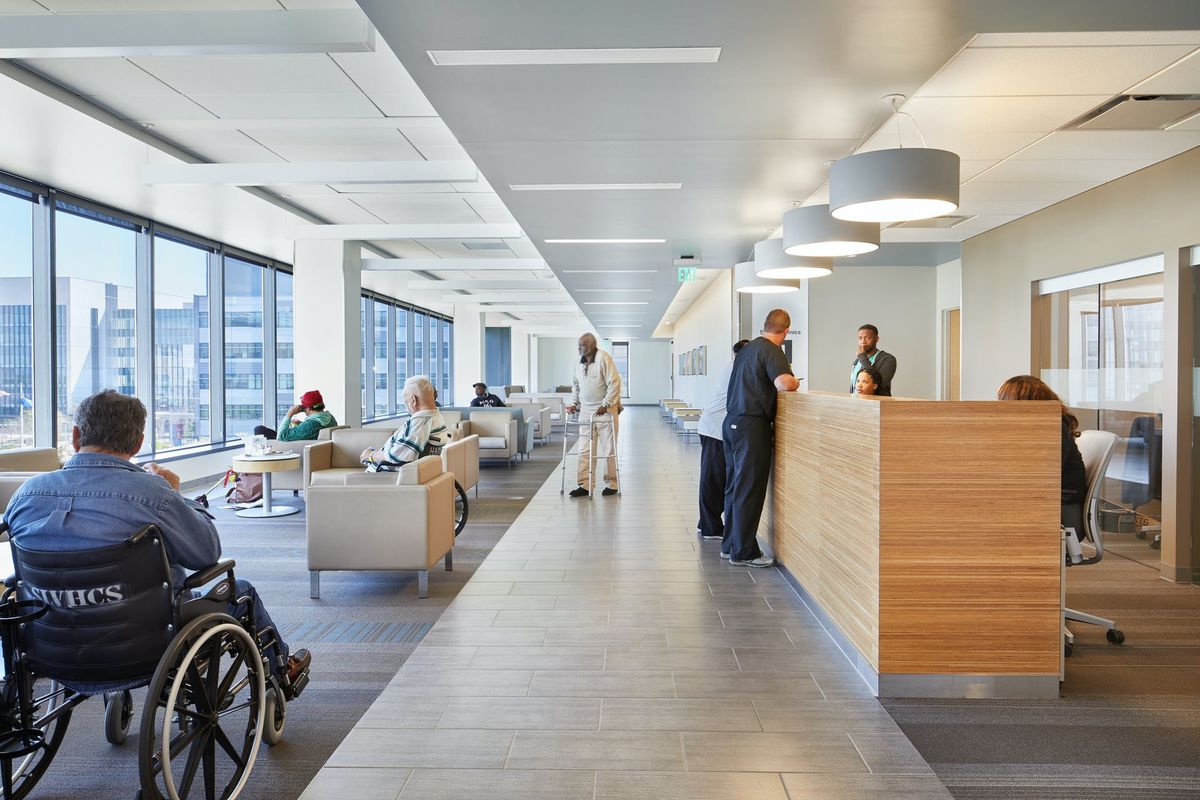
Geriatric-Friendly Design: Comfort for Elderly Patients
Age-friendly hospital rooms, both in terms of practicality and design, are crucial to ensure the safety, dignity, and independence of senior patients. Hospitals are the last place seniors want to be, so it’s better to create an interior that’s worthwhile during their stay through:
- Slip-resistant flooring and assistive handrails on the wall for assured safety.
- Softer and adequate lighting is essential for their decline in vision.
- For a more familiar and comforting environment, place warm and soft textures and keepsakes to reduce anxiety and cognitive decline.
- Create a designated family area that allows caregivers to stay close to the patient.
Designing for Mental Health and Emotional Recovery
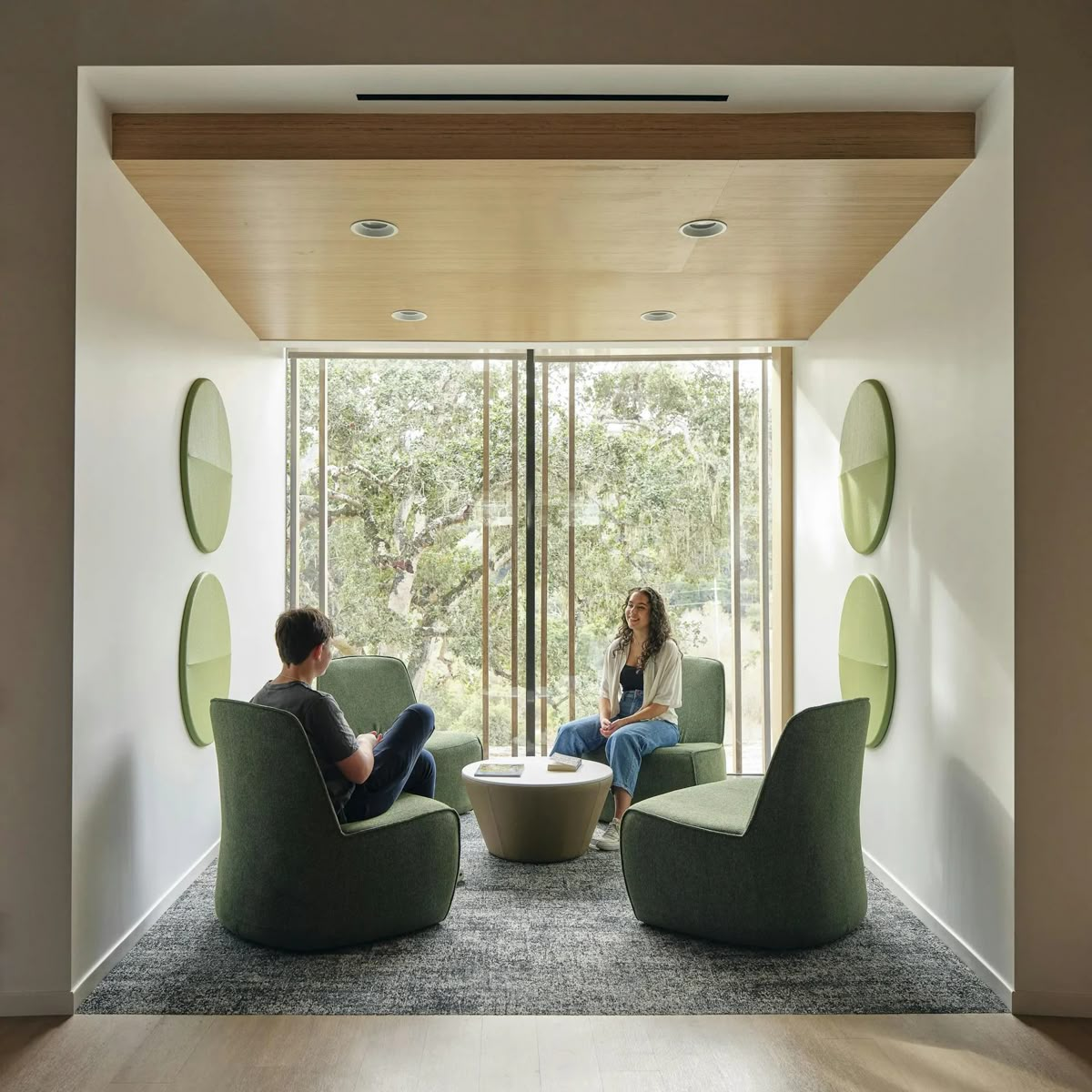
For patients dealing with mental health challenges, the hospital room should become their immediate world and not just a place for treatment. Unlike physical ailments, mental health conditions are deeply influenced by the surroundings. A supportive and comfortable room can be achieved by:
- Using a calming colour palette and soft visuals that help reduce sensory overload.
- Employing the use of sound-absorbing materials that support their emotional regulation.
- A clean and uncluttered room that doesn’t trigger confusion or aggression.
Designing Waiting Areas That Reduce Anxiety
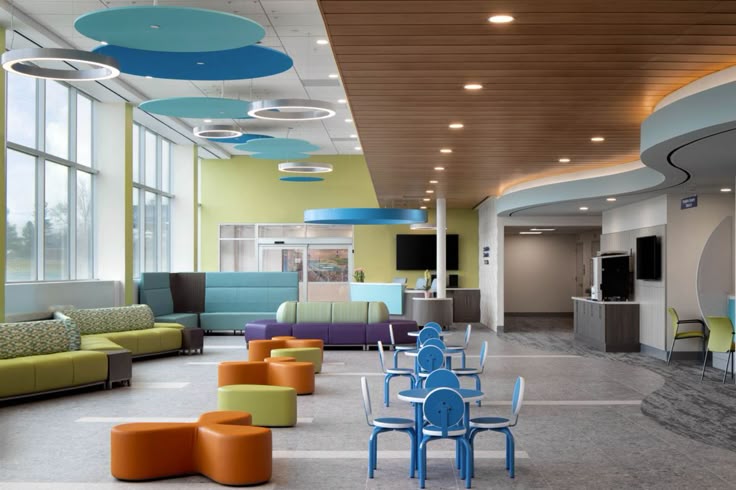
A thoughtfully designed waiting area provides emotional support for all those who enter– caregivers, patients, and families alike. Since it’s a hospital setting, waiting often comes with uncertainty, fear, and mental fatigue. By incorporating the following design elements, you can turn these spaces into areas that offer reassurance:
- Comfortable seating for elderly, patients, family, and even those with mobility issues.
- Television with calming content or views of greenery to help occupy the mind of those in the waiting area.
- Stunning wallpapers that create an inviting atmosphere, helping waiting areas feel less intimidating.
Why Choose Magicdecor’s Wallpapers for the Patient’s Room Interiors?
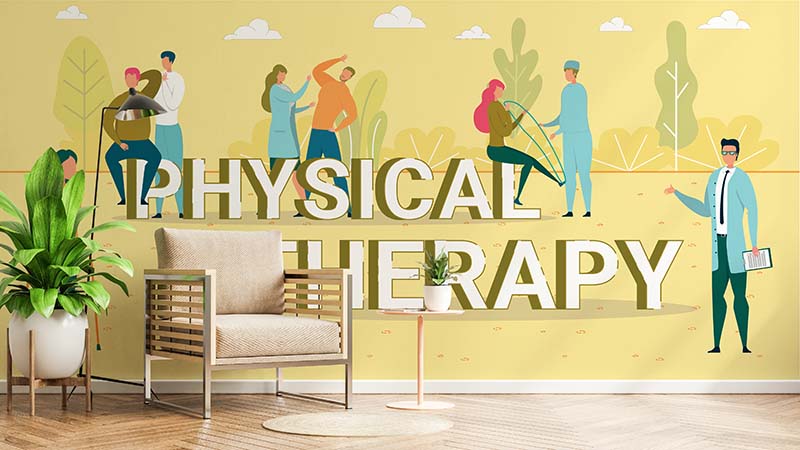
Magicdecor’s wallpapers are one of the best choices for hospital interiors due to the following reasons:
1. Stunning Collection of Wallpapers
Magicdecor holds one of the most stunning collections of wallpapers for hospitals and clinics.
2. VOC-Free and Safe
Our wallpapers are manufactured using non-toxic, VOC-free, and sustainable inks and materials that do not emit any odour or toxicity in the air, making it absolutely safe for patients and caregivers, hospital employees.
3. 3-Year Colour Warranty
Backed by a 3-year colour warranty, Magicdecor saves you the worry of visuals fading away too soon and instead offers long-lasting vibrancy. Now, the hospital interiors can continue to brighten and uplift patients every day.
4. Easy Maintenance and Washability
Our vinyl wallpapers are coated with a sealant that repels any water, making it easier to wash and maintain in a busy environment such as the hospital. No matter if it’s spilled on or stained, you can clean it with a damp cloth.
Designing Hospital Interiors That Help Patients Heal
Hospital interiors play a big hand in shaping how fast a patient recovers. When patients spend most of their time inside these rooms, the space around them becomes part of the healing process when needed the most.
Therefore, thoughtful interior design does not replace medical care, but it supports it by reducing stress, encouraging rest, and helping patients feel less like they are waiting to leave and more like they are allowed to recover soundly.
FAQs
- Why do colours and lighting matter in hospital rooms?
Colours and lighting shape how a room feels. For instance, painting paediatric rooms in yellow or orange might encourage children, however, soothing colours in post-surgery rooms offer the must-needed rest without any harsh lighting increasing discomfort.
- Can interior design really impact mental well-being in hospitals?
Yes. Thoughtful design helps reduce feelings of fear, isolation, and sensory overload, especially for patients who spend long periods indoors during recovery.
- What design elements are most important for patient comfort and recovery?
Natural light, comfortable furniture, noise control, calming visuals, and organised and accessible layouts all play a key role in making hospital rooms feel less clinical.
- Which wallpaper designs are best suited for hospital interiors?
Wallpapers with nature-inspired motifs, soft gradients, motivational quotes, or subtle textures work best.











 Material Preview
 Digital Snapshot
 Design Selection
