










Wallpapering your home is fun and exciting until a flood of budget questions start pouring in— How much will it cost in total? Are there hidden charges? Will the budget spiral once installation and wall prep are added?
This is where most wallpaper makeovers in Indian homes either go over budget or get paused halfway through. But worry not— Magicdecor will help you budget your wallpaper makeover realistically, avoid common pitfalls, and make choices that work for your home, your needs, and your wallet.
From understanding wallpaper pricing and calculating total coverage to spotting hidden costs and budgeting wisely, this guide will walk you through all the steps you need to take before wallpapering your home.
Typical Wallpaper Budget for a Full Room in India
The wallpaper market in India is quite diverse, depending on several factors that impact the cost and budget. Below is an approximate cost breakdown for wallpapering a standard room in India:
| Cost Component | Estimated Price Range |
| Wallpaper Material | ₹50-₹400 per sq. ft. |
| Wallpaper Area (100 sq. ft.) | ₹5,000- ₹40,000 |
| Installation Charges | Starting from ₹10 per sq. ft. (city-wise) |
| Surface Preparation | ₹300- ₹2000 (depending on area and wall condition) |
| Adhesives | ₹1000- ₹2000 (depending on brand and quantity) |
| Estimated Total Budget | ₹7000- ₹50,000 |
Step-by-Step Guide on How to Budget for a Full-Room Wallpaper Makeover

From wall measurements to maintenance, here are the steps on how to budget for a full-room wallpaper makeover:
Step 1: Measure Your Walls Correctly to Avoid Overspending
Getting wall measurements correctly is the foundation of a well-planned wallpaper budget. Even small errors can lead to extra costs or unnecessary wastage.
- Measure the height and width of each wall individually, as dimensions often vary even within the same room.
- Exclude areas like doors and windows only if the brand specifically advises it.
- Many brands like Magicdecor offer custom-sized wallpapers, created as per your walls’ exact dimensions to eliminate material wastage or shortage.
- With custom-sizing, there’s no need to worry about cutting panels or aligning motifs as everything is printed for a seamless finish.
Step 2: Choosing Wallpaper Materials That Fit Your Budget
Wallpaper pricing in India varies based on material, durability, brand, and room usage. Selecting the right material ensures you don’t overspend while still getting the desired look and performance. Here’s a table for further elaboration:
| Wallpaper Material | Price Range (Per sq. ft. ) | Room Suitability |
| Non-Woven Wallpaper | ₹30- ₹200/sq. ft. | Living room, bedrooms and dining rooms |
| Vinyl-Based Wallpaper | ₹25- ₹200/sq. ft. | Kitchens and bathrooms |
| Peel and Stick Wallpaper | ₹120- ₹500/sq. ft. | Rental homes and for quick makeovers |
| Fabric-Based Wallpaper | ₹80-₹300/sq. ft. | Living rooms, bedrooms, or statement walls |
| Premium Canvas Texture | ₹170-₹450/sq. ft. | Feature walls or accent spaces |
Step 3: How Design Complexity & Customisation Affect Cost
Design complexity and customisation also influences the wallpaper prices in India.
- Basic designs cost less: For instance, wallpapers with solid colours, simple textures, or minimal patterns are the most-budget friendly.
- Custom colours and finishes add cost: Special shades, metallic finishes, or textured effects usually require extra labour and cost.
- Large-scale or detailed patterns cost more: Wallpapers with complex artwork or large repeats often require premium printing methods that raise costs.
- Customisation increases cost too: Wallpapers personalised as per your preferences or interior styles are priced higher than standard ones.
Step 4: Wall Condition & Preparation Costs
Wall condition plays a crucial role in overall finishing costs, as uneven surfaces, moisture issues, or old, cracked surfaces often require additional preparation before wallpaper can be applied properly.
- Cracks, dents, and uneven wall surfaces require putty work, sanding, and levelling, adding to the material and labour costs.
- Moisture, mould, or dampness issues need waterproofing or sealing treatment before wallpaper installation.
- Address small cracks and surface issues before they worsen and require extensive treatment, only adding to the cost.
- Investing in the right base coat prevents repeated repairs, improves durability, and preserves the life of the wallpaper.
Step 5: Installation Costs (DIY vs Professional)
Let’s look at the table below to deduce whether DIY or professional installation is more convenient for your budget:
| Factor | DIY Installation | Professional Installation |
| Tools/Materials Required | Must buy adhesive, sand paper, brush, and primer if needed. | The professionals carry all tools required. |
| Cost | No labour costs | Includes installation costs as per city |
| Time Required | Couple of days or weeks | An hour to a day |
| Skill Level | Can be beginner-friendly but requires skills and precision | Skilled experts handle it |
| Quality and Finish | Might be prone to bubbling or early peeling | Seamless and flawless |
Step 6: Long-Term Value, Durability & Maintenance
When evaluating long-term value, durability, and maintenance, it’s important to consider how wallpaper performs over time in everyday Indian living conditions.
- Assess Lifespan Expectations: High-quality wallpapers typically last longer than cheap ones, reducing the cost of future repairs or replacement.
- Consider Durability: Wallpapers, especially premium or washable types, handle scuffs, scratches, and stains better in high-traffic areas of the house.
- Understand the Maintenance: Opt for vinyl-material or non-woven wallpapers that withstand domestic wear and tear and can be regularly cleaned.
- Balance Aesthetics with Practicality: Choose finishes and suitable wallpaper materials for various rooms to maintain the visual appeal while also thinking about the overall long-term value.
Rental vs Owned Home: Budgeting Smartly
Budgeting wallpaper makeover for a rental and owned home requires different approaches, since they are both driven by the need for reversibility and permanence each. Let’s look at how you can budget for each:
1. Budgeting for Rentals (Temporary)
When you are budgeting the wallpaper makeover for a rental, you should focus on low commitment, damage-free, and low-cost transformation that does not compromise style.
- Material Choice: For rental homes opt for peel and stick wallpapers that are budget-friendly and can be removed without damaging the walls helping avoid landlord issues later on.
- Style as an Accent Wall: To minimise material and installation costs, style the wallpaper as an accent wall that delivers a visual statement through a single wall.
- Choose DIY installation: Rental makeovers benefit most from DIY-friendly wallpapers that you can easily and quickly install, saving labour costs.
- Prioritise Easy Removal: Avoid using permanent adhesives that require wall repairs later, keeping upfront and exit costs low.
2. Budgeting for Owned Home (Permanent)
For owned homes, the wallpaper budgeting should focus more on long-term value, durability, maintenance, and customisation.
- Material Choice: Invest in durable and premium non-woven, vinyl-based, or fabric-backed wallpaper that offer better longevity, washability, and durability.
- Consider Full-Room Coverage: Since the investment is long-term, wallpaper multiple walls or an entire room for a cohesive and high-end look.
- Choose Professional Installation: Professional installation ensures your wallpaper is installed seamlessly and correctly, promising no peeling or bubbling in the near future.
- Prioritise Wall Prep: Smoother and even wall surface improves the wallpaper adhesion and prevents early peeling or damage.
Do You Need to Wallpaper All Walls? Cost-Saving Strategies
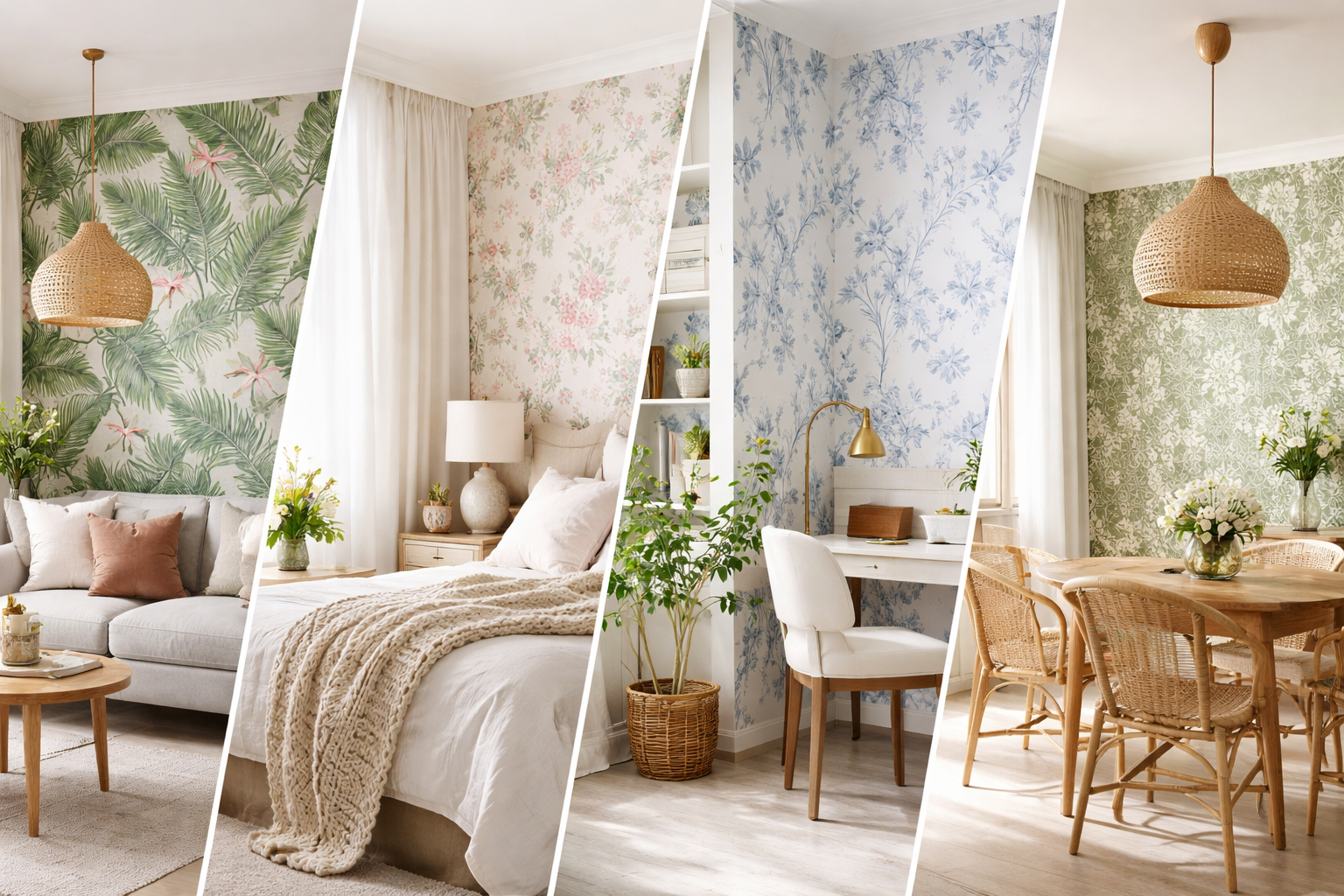
Wallpapering all four walls may make your room look luxurious, but is it necessary and budget-friendly? Let’s find out along with some cost-saving strategies:
- Focus on one or two walls such as the walls behind the bed, sofa, or TV unit that naturally draw attention.
- Leave the secondary walls neutral and paint them in a solid colour to balance the space, reduce wallpaper material and installation expenses.
- Avoid wallpapering low-visibility areas such as the wall behind the wardrobe or large furniture that obscure the design and unnecessary waste spend.
- Reserve full-room wallpapering for smaller spaces such as bathrooms, compact bedrooms, or nooks that require less wallpaper material and deliver maximum visual impact for that area.
Hidden Costs to Watch Out For
While wallpaper pricing might be straightforward, there are many hidden costs that add up quietly if you aren’t aware of them sooner. Here are some of those hidden costs:
- Wall Preparation: Before you install a wallpaper, the wall needs to be even, primed well, cracks and old paint need to be taken care, which adds to the overall cost.
- Labour Charges for Complex Designs: Large-scale murals or textured wallpaper patterns need to be precisely and skillfully installed which increases the labour costs.
- Post-Installation Maintenance: In case you installed the wallpaper by yourself, minor issues like peeling edges may require you to purchase adhesive.
The Magicdecor Method: Smart Budgeting Checklist
- Measure Right: Measure wall dimensions correctly and factor in additional inches at the seams to avoid material shortage.
- Decide Coverage Wisely: Choose between full-room wallpaper coverage or single statement wall based on visual impact and budget comfort.
- Pick Materials That Balance Cost and Longevity: Opt for wallpaper materials that offer longevity, durability, and easy maintenance.
- Choose Design Complexity as Per Your Budget: While large-scale murals, textured or customised designs might look stunning, they, however, need to align with your budget.
- Plan for Wall Preparation: Account costs for wall preparation, from sanding, putty work to priming, ensure the wall surface is smooth for better adhesion.
- Choose Installation Smartly: Consider DIY for simpler designs and professional installation for full-room coverage or complex designs.
- Stay Rental-Aware: For rented homes, opt for peel and stick wallpapers to keep the moving-out costs under control.
- Always Keep a Buffer: Set aside a certain amount of money for additional or unexpected adjustments or expenses that may come around unannounced.
Common Budgeting Mistakes to Avoid
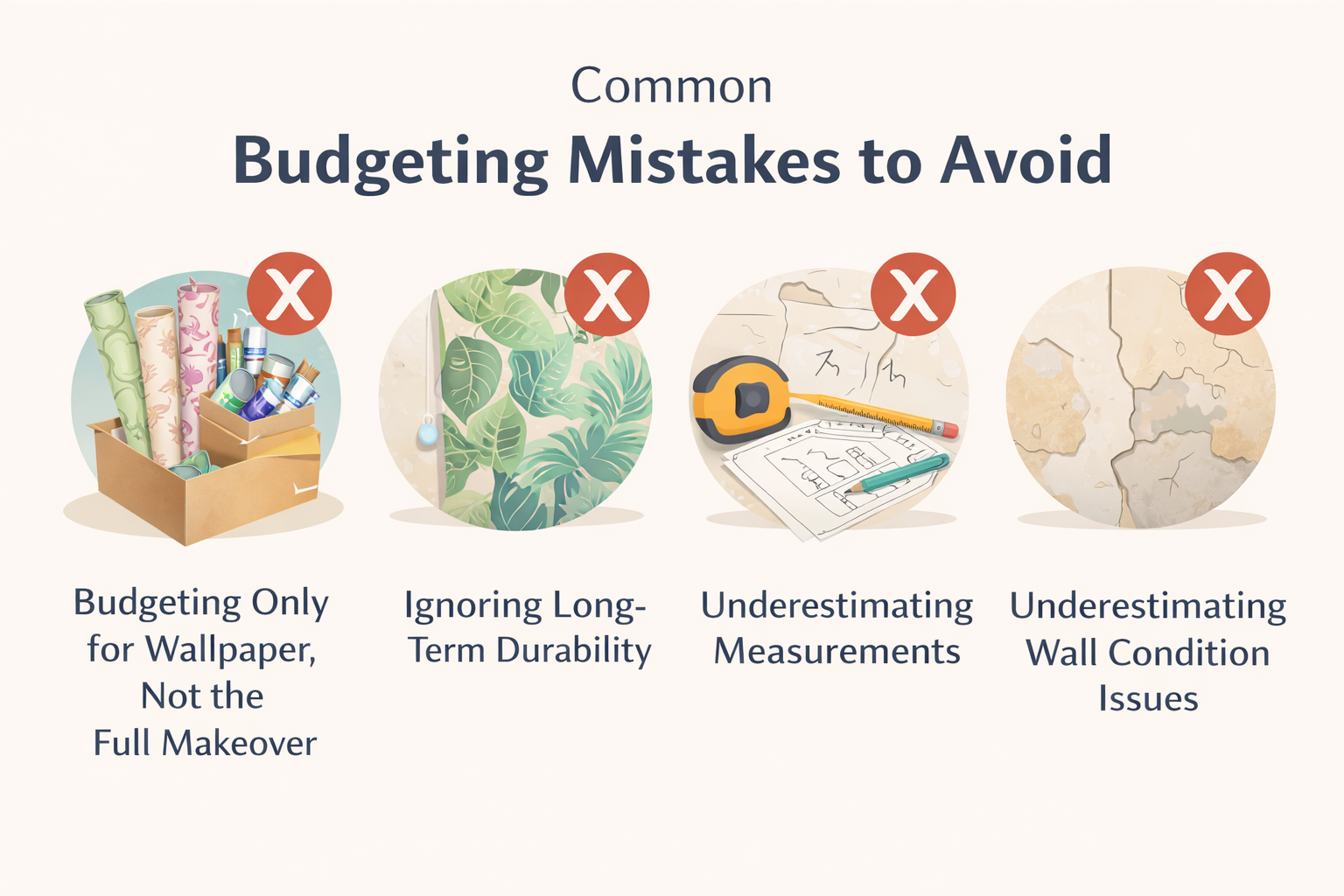
Avoid these common pitfalls and save some money in your pocket:
1. Budgeting Only for Wallpaper, Not the Full Makeover
Upgrading your home is no doubt fun and exciting, however, if you ignore costs like wall preparation, adhesive tools, professional installation, etc, it can lead to unnecessary or last-minute overspending.
2. Ignoring Long-Term Durability
Choosing cheap quality wallpapers may save upfront costs but it’s actually more expensive in the long run. For this reason, choose high-quality and durable wallpapers that have a long lifespan and save replacement costs.
3. Underestimating Measurements
If you fail to properly measure your wall dimensions or account an inch or two extra wallpaper material, you are increasing your expenditure costs. Therefore, always measure your walls precisely and add extra for seams.
4. Underestimating Wall Condition Issues
Cracks, damp or mouldy walls, and uneven surfaces can increase the preparation costs if not accounted for early on.
Is a Full-Room Wallpaper Makeover Worth the Budget?
The answer isn’t a simple yes or no, it depends on how you plan it, why you’re doing it, and what your budget realistically allows. For some, a full-room wallpaper makeover is worth it because it delivers an instant visual upgrade and long-term durability.
For others, especially those working with tight budgets or living in rental homes, wallpapering an entire room may feel unnecessary when an accent wall or partial application achieves a similar impact at a lower cost.
To conclude, a full-room wallpaper makeover is worth the budget only if it aligns with your financial comfort, lifestyle, and long-term plans for the space. You can get started with Magicdecor’s wallpapers that start at just ₹99 per sq. ft.
FAQs
- Which wallpaper material is best for a budget-friendly wallpaper makeover?
For a budget-friendly wallpaper makeover, vinyl-based, non-woven, or peel and stick wallpapers are the most suitable.
- How long do wallpapers last in Indian climate conditions?
Wallpapers last 5-10 years in Indian climate conditions, provided the fact that proper installation, use of premium quality wallpaper material, and regular maintenance were adopted.
- Can a full-room wallpaper makeover work on a limited budget?
Yes, but it requires smart choices. Opting for mid-range wallpapers, choosing simpler designs, and ensuring accurate measurements can help costs remain under control. Many homeowners also reduce expenses by wallpapering a single wall instead of the entire room.
- Is DIY wallpaper installation a good way to save money?
DIY installation can reduce labour costs, but it comes with risks such as wastage, misalignment, or air bubbles. If you’re in a rental, then you can choose to install the wallpaper yourself but for a full-room wallpapering, consider professional installation.











 Material Preview
 Digital Snapshot
 Design Selection
