









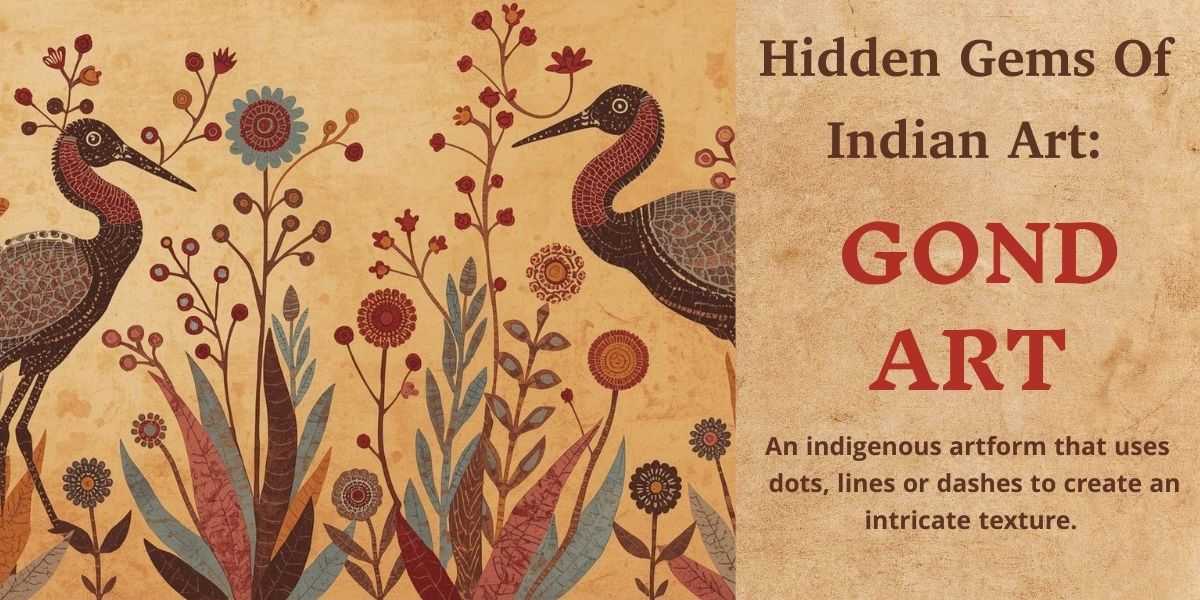
“Art washes away from the soul the dust of everyday life.”
From the simplest strokes of lines and dots, emerges Gond art that is anything but effortless. Born from the largest tribe in India, this hidden art form has quietly carried stories and traditions within its patterns.
Every tree has a spirit, every animal carries a story and within them every dot carries a significance. As we explore further, learn about the origins, characteristics and techniques of Gond art, a timeless art that stood centuries.
Understanding What Gond Art Is
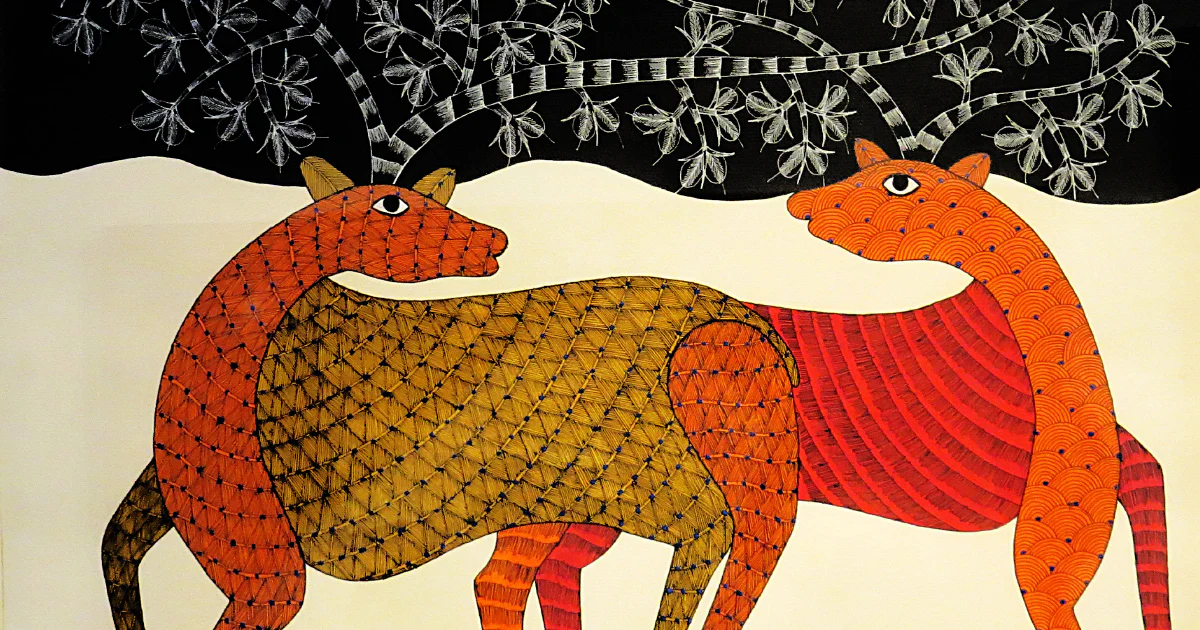
Gond art is one of the oldest indigenous art traditions of India, taking its name after the tribe that practises it–Gond tribe. The art employs techniques of filling motifs with dots, lines or dashes to create an intricate, fascinating texture.
This Indian art is also recognised as ‘Dot & Line Painting’, ‘Pardhan Painting’ or ‘Jangarh Kalam’, reflecting folklore, traditions, and festivals.
A Dip Into The Historical Origin Of Gond Art
Gond painting is a famous folk art of the Gond tribe who largely live in the hearts of the Indian forest: Madhya Pradesh. It is also found in pockets of Chhattisgarh, Maharashtra, Andhra Pradesh, and Odisha.
Derived roughly about 2000 years ago from the word ‘Kond’ which translates to ‘green mountain’ reflects the community’s deep connection and love for their forest homeland. Eventually, they used it as a medium to showcase their folklore, culture and relationship with nature.
Originating as wall art for their huts and holy places, Gond art has narrated stories of farming, hunting, deities and celebrations to record their history the only way they knew how.
Symbolism & Tales Found In Gond Art
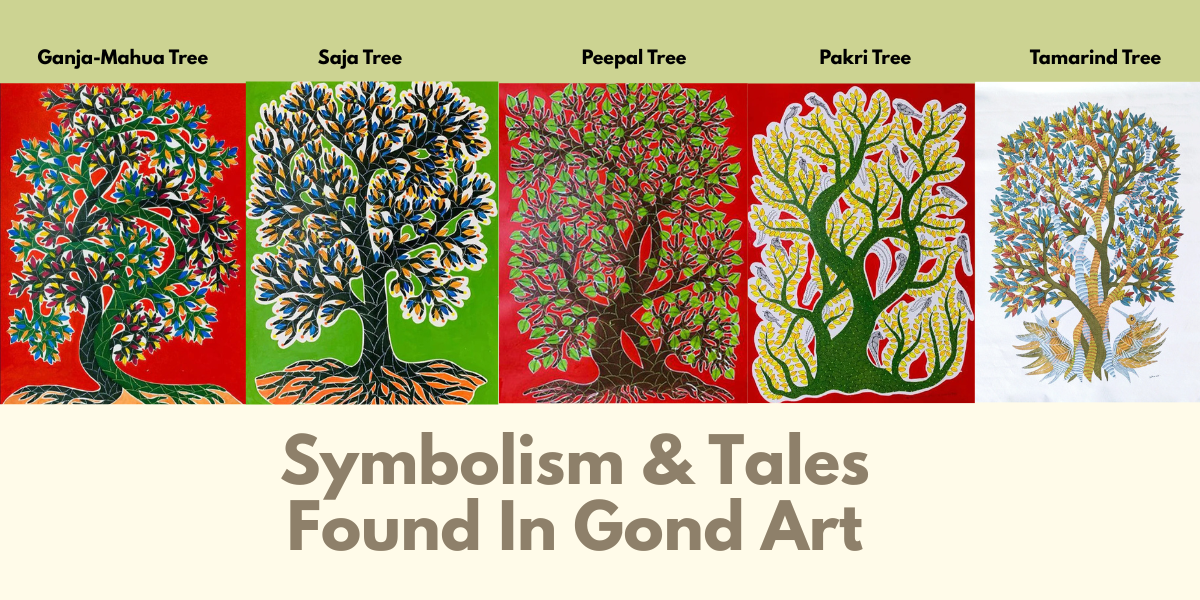
Trees are the central representation in Gond art as they are very important to the tribe, animals and birds alike. Concerning nature, gond has the following stories and symbolism:-
-
Ganja-Mahua Tree
The Gond art painting of Ganja Mahua tree narrates the story of a Brahman (upper cast) girl and Chamar (lower cast) boy, who fall in love but are unaccepted by society. So they renounced themselves and were reborn as Ganja and Mahua trees.
-
Saja Tree
Bade Dev (Big God) is believed to reside in the Saja tree and therefore many peoples of the Gond community worship this tree.
-
Peepal Tree
The home to many birds, the Peepal tree is believed to have Devtas (Gods) residing within and therefore the most important.
-
Pakri Tree
Believed to have medicinal properties, the leaves of the Pakri tree is eaten by the Gond community as a saag (dish made from the leaves) to protect them from diseases and illnesses.
-
Tamarind Tree
Although this tree is not linked with deities, it is however very essential for the Gond cuisine. The tribe makes chutneys and sells its fruits to earn for their livelihood.
Characteristics And Style: What Makes Gond Art Unique
While many artists bring their own creativity and imagination to the table, certain characteristics and styles are constant. Here are the elements of Gond art:-
1. Micro-Detailed Patterns
Gond art is notable for lines, dots and dashes creating striking imagery with texture and depth. The paintings are brought to life with repeated dots using a variety of colours.
2. Vibrant Colours
Bold and bright colours are a hallmark of Gond art and add to the mix natural colours, bringing more genuineness to the painting.
3. Motifs Inspired From Nature
Every pattern and motif drawn in Gond art holds some meaning. Trees, birds and landscapes reflect the interaction with nature and culture.
The Man Who Flourished Gond Art
A 17-year old artist, Jangarh Singh Shyam, changed the trajectory of once a confined art of the locals to now a national and international platform. Emerging from the Pradhan-Gond community, he was first discovered by J. Swaminathan, who brought him to his Bhavan in Bhopal. There, he developed his own Gond art style, blending tribal and contemporary themes together.
Artistic Process & Techniques Behind the Art of Dots
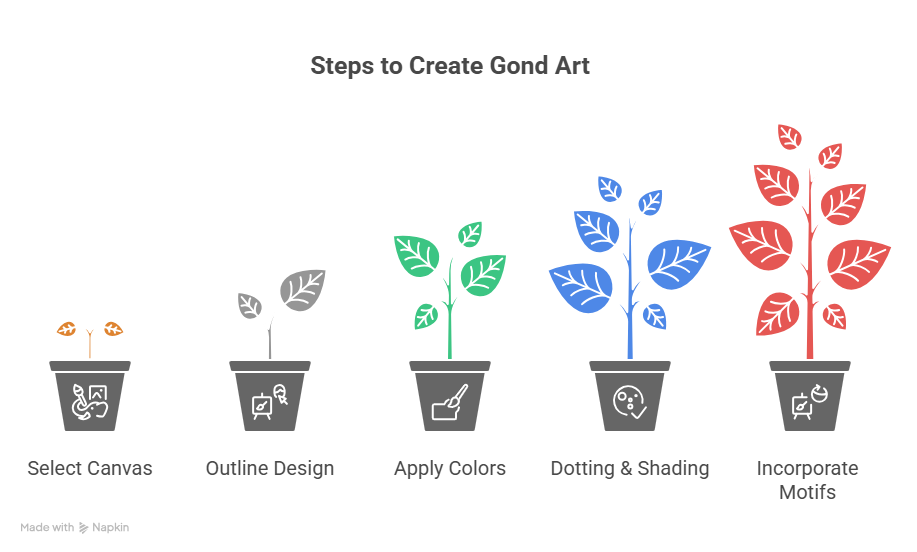
“Art in India does not wait for a canvas or paint. Rock surfaces and caves, a village wall, the floor, a palm leaf, a piece of wood, or even the palm of a hand is space enough…”. Gareeba Singh Tekam, an artist from the Gond community, beautifully expresses the freedom of creativity wherever space allows. Here is his and many other Gond artists’ technique:-
1. Selecting the Canvas
The artist first begins selecting their desired canvas, which typically entails cloth or handmade paper which is then coated with tamarind seed paste for a smoother painting base. However, in ancient times, Gond art was practiced on mud walls and floors with natural colours.
2. Outlining
The next step is to outline the image or design roughly using a fine-tipped brush. The outline has to have a bold border to define the image that will be painted.
3. Colours
Gond art is popular because of its vibrant colours made out of natural materials. While modern artists might use synthetic paints, traditional artists use natural dyes derived from flowers, leaves, spices, clay or charcoal.
3. Filling
The subsequent step to outlining is filling the pattern with vibrant colours made out of natural colours. These are evenly painted using natural brushes such as animal hair or bamboo.
4. Dotting & Shading
Gond art is synonymous with dotting. For this step, artists use a fine brush or a metal to create patterns using dots or dashes within the image and over the coloured space. Shading is also achieved by using different dark to light shades of the same colour.
5. Symbolic Motifs
Aside from the main design, artists also incorporate motifs that hold tribal significance and history. These are often motifs of everyday life or nature.
Carrying Forward This Indian Artwork With Us
Although Gond art is not on the verge of disappearing, it is, however, slowly losing its place among younger generations today. Which makes it all the more important to carry the history of Gond art forward. We ought to:-
- Purchase Gond art from artists themselves and showcase them around your home as decor and it also acts as a thoughtful gift.
- Put up Magicdecor’s wallpapers inspired by Gond art and Gond Indian wall art in your living space to appreciate this timeless art while simultaneously turning your home beautiful.
- Purchase furniture or keepsakes that have Gond art patterns on them.
Bringing Hidden Art Gems To Light
Gond art is not merely an artistic expression but rather a reflection of cultural heritage and history of the Gond community. Emerging as merely a wall painting is now an art recognized by global grounds, Gond art truly shows how important it is to recognize and preserve indigenous art.








 Material Preview
 Digital Snapshot
 Design Selection
